A Moo-ving Experience
Donna McKinnon - 30 April 2026
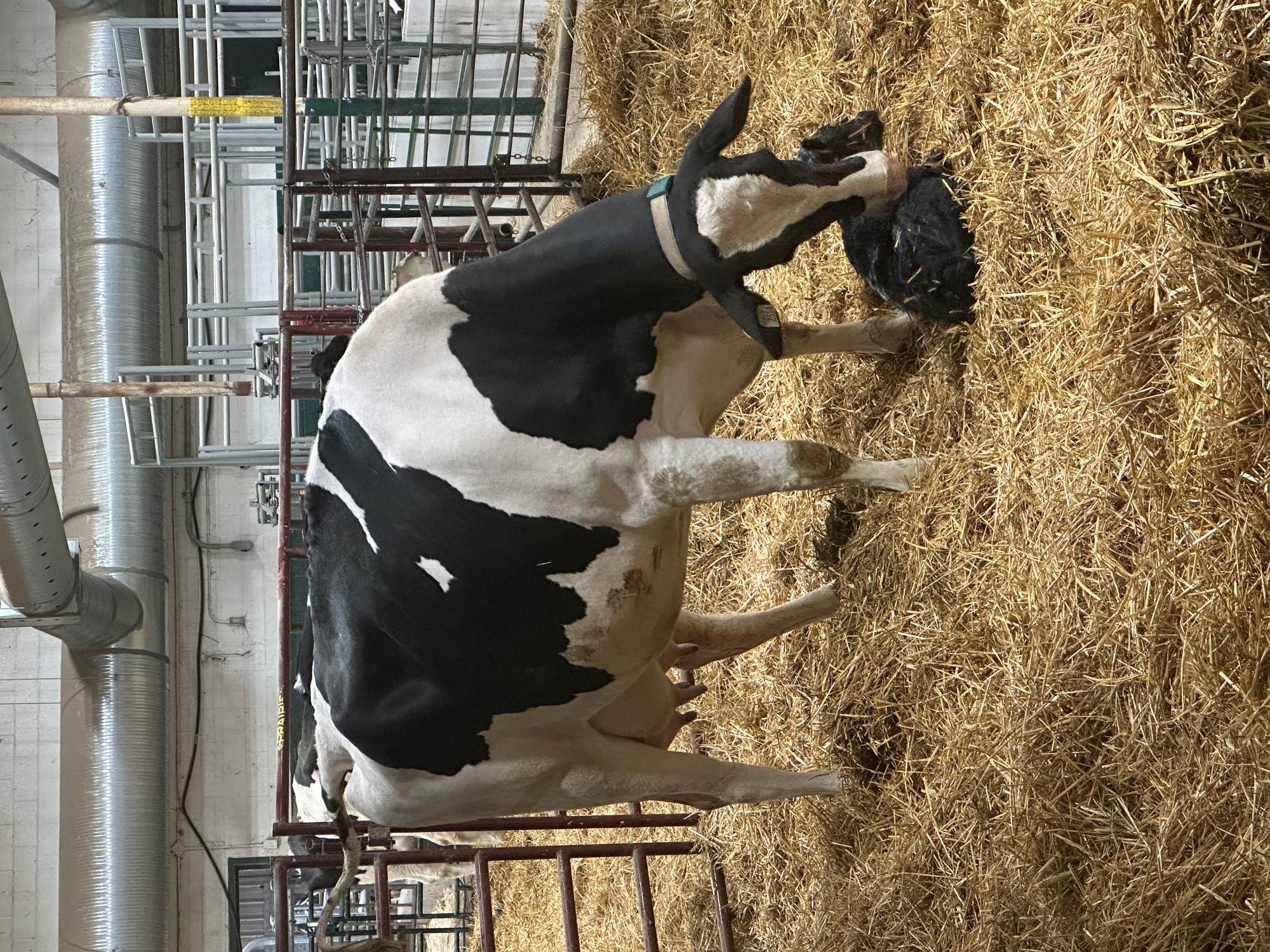
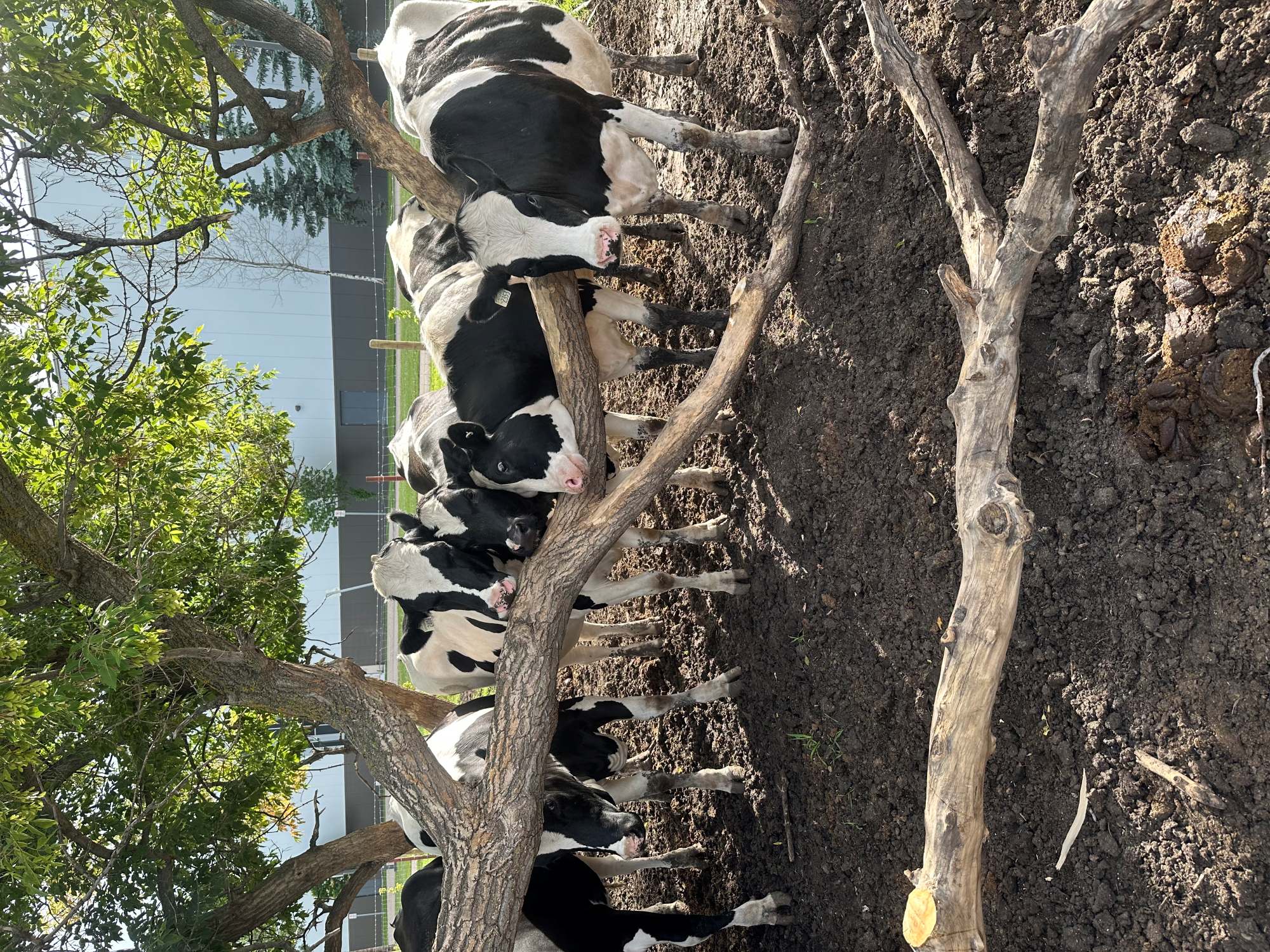
For students in the Faculty of Agricultural, Life & Environmental Sciences, the classroom just got a lot bigger. A new animal husbandry internship, launched in the Fall 2025 term, offers a unique opportunity to gain practical skills on an active dairy farm, challenging students to step out of the lecture hall and into the field where they take on essential roles in farm operations, including animal health assessments, feed quality checks and hygiene tasks.
The internship, successful in its pilot year with 15 students, is the first of its kind to be offered at the faculty. Operating out of the U of A’s Dairy Research and Technology Centre (DRTC), the program requires a weekly commitment of five to 10 hours, allowing students to integrate practical shifts into their academic schedules, giving them hands-on experience in the practice of animal husbandry.
“Many of our students have no farming background or linkage to farms at all,” says Dr. Anne Laarman, associate professor in the Department of Agricultural, Food & Nutritional Science (AFNS). “AN SC 205 - Animal Husbandry Internship is designed to fulfill that unmet need — to offer students the opportunity to learn about what life on a farm is like and what goes into running a dairy farm.”
Laarman, who developed the internship along with the DRTC’s unit supervisor, Devin Dittmer and graduate student Sadie Kientz, says the internship serves a dual purpose; offering hands-on experience for students from urban backgrounds who lack agricultural ties, and also addressing a critical "exposure gap" in the curriculum. While students enrolled in the Bachelor of Science in Animal Health program are introduced to various species in their first year and again in specialized fourth-year courses, the middle of the degree often lacks direct animal interaction, he explains. This practicum ensures that students spend consistent time in the barn during those second and third years, keeping them connected to the animals at the heart of their studies.
“They’re effectively shadowing the existing staff, learning anything from how to assess animals for health to vaccination protocols,” says Laarman, adding (with a laugh), “Students also clean out a lot of stalls, which is less glamorous, but important for hygiene.”
At the end of the term, interns give a short presentation to the management of the facility explaining one thing they really like about how the barn does things, and one thing they would change or implement to make it even better. “It’s a miniature version of what we do in case studies and senior courses, and what we found is that the recommendations are all extremely applied and implementable.”
Life on a dairy farm
Seeking a deeper connection to her field than the classroom alone could provide, second-year Animal Health student Aislyn Fritz was thrilled to learn about the internship, especially once she discovered it was located at the DRTC. The program offered her the perfect opportunity to transition from theory to practice through direct experience on an active dairy farm.
“I did not grow up on a farm,” she says. “It is very challenging to gain large animal experiences without something more formal than ‘I help on my Uncle's farm’, and most producers will question your abilities without that experience. “I do not want to be a veterinarian, with a passion for farm animals, without much understanding of the industries or the producer perspective. I specifically majored in Food Animals in hopes of bridging this gap.”
The DRTC has been one of Canada’ leading centres for dairy research and education for almost 30 years. According to Dittmer, the interns’ engagement and hard work also supports the day-to-day operations of the farm, while also building knowledge, confidence, and hopefully, a lasting passion for the dairy industry.
This was certainly the case with Aislyn. Her experiences proved so compelling, she found herself researching dairy operations in her free time.
“Whenever an opportunity arose to learn a new skill, the DRTC staff always sought out the internship students,” she says. “The staff were all wonderful teachers, and made you feel welcomed regardless of experience level. I asked many questions, and as for the course itself, reflective discussions and knowledge-building lectures allowed me to apply my experiences to the classroom setting.”
Dittmer agrees, noting that the dairy barn brings classroom concepts to life and is an essential component of the course.
“Watching students connect theory to real-world dairy management is one of the most rewarding parts of hosting this course,” he says. “We truly value the contribution of ANS205 students at our facility.”
Beyond the obvious benefits for the students, the course also helps in summer hiring decisions for the facility and for recruitment for graduate school and more specialized positions in the industry. These students, says Laarman, have ‘demonstrated grit’ and resilience in showing up even when things aren’t pretty and it’s minus 30C.
Another benefit, he notes, is its broader service to the agricultural industry, which is currently facing an urgent demand for experienced, field-ready professionals, recognizing that most of the students enrolled in animal science programs have aspirations of becoming veterinarians.
“My suspicion is that the reason they want to become a vet is because they grew up liking animals,” says Laarman. “What this practicum is doing is not just helping them get some hands-on experience, it is also building their awareness of other careers in the animal science space that most students are just completely unaware of, and that really helps with the career transformation. We’re helping them make more informed and contextualized choices as to what careers they might want to pursue.”
This vision is already bearing fruit in the experiences of the inaugural cohort. For students like Aislyn, the program has provided the exact clarity and connection the department hoped to foster.
“I have already reached out to Devin with hopes of returning as a volunteer in the fall,” she says. “The hands-on skills and connections I made (with staff and cows!) will always hold a special place in my heart, and have made me even more passionate about pursuing a DVM.”
If the timing doesn’t line up, interested students can still get involved. Contact Devin Dittmer to learn more about volunteering with the Hands-On A Holstein program. The barn door is always open!