Convocation ‘26: Ziyu Shao, BSc Forestry
Donna McKinnon - 18 March 2026
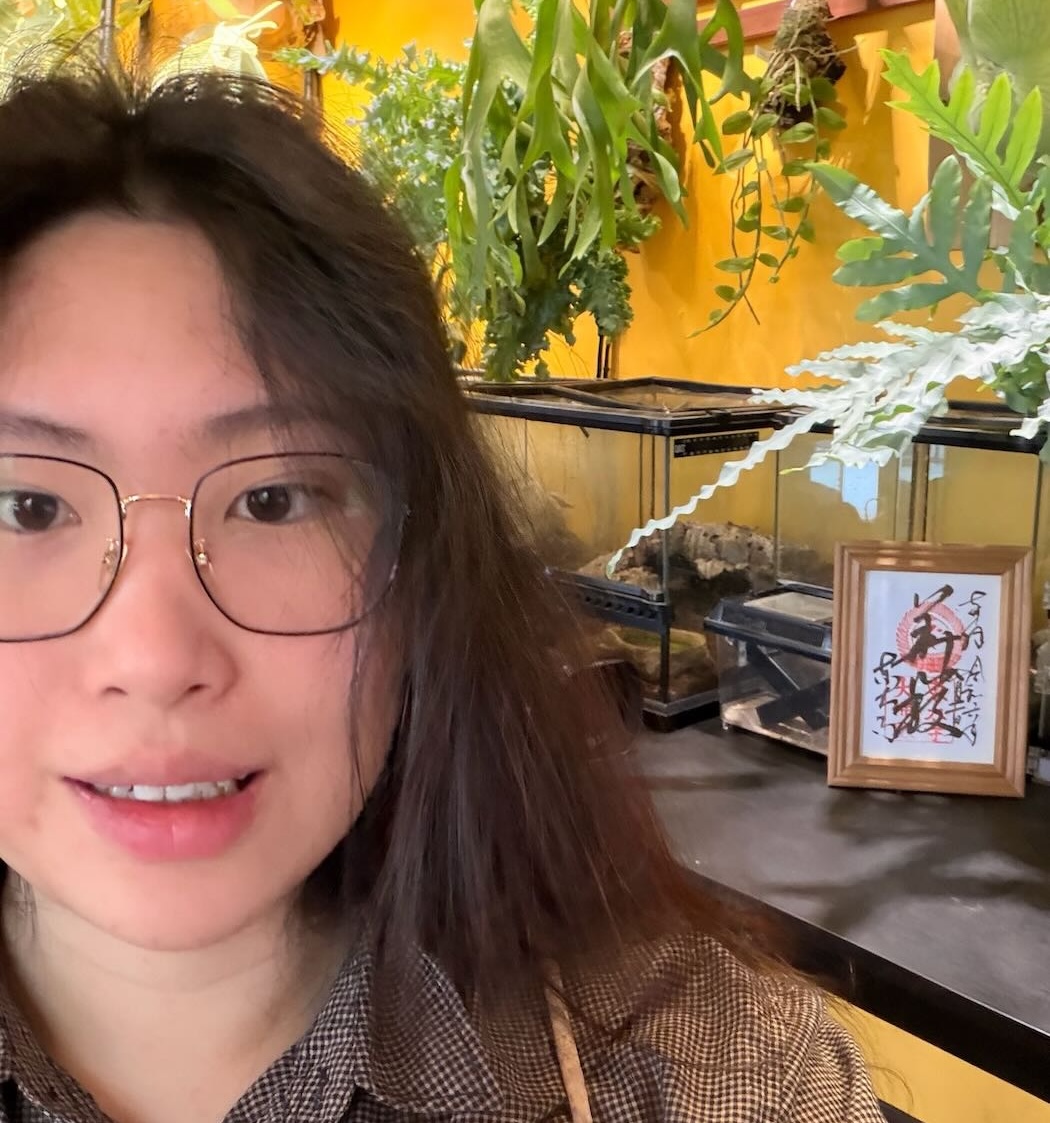
Ziyu Shao, BSc Forestry
From plant enthusiast to forestry scholar, Ziyu Shao finds purpose in the exploration of forest ecosystems.
Ziyu Shao's decision to pursue forestry may seem rooted in a simple, lifelong fascination with trees, but it has evolved into a deep commitment to understanding and preserving our natural world. Captivated by the vibrant diversity of plants, she discovered through her forestry degree a much broader lens: the opportunity to study how these organisms can be managed for the collective benefit of humankind.
Under the "transformative" mentorship of professor Nadir Erbilgin, Ziyu learned to navigate the complexities of research with a critical and patient mindset — a formative experience that cemented her dedication to a career in science. This passion for discovery extended beyond the lab into the community, where among her activities, she led a plant ecology field trip for a seniors association, which gave her the opportunity to share her love for Edmonton’s river valley and witness the profound way nature connects people.
These experiences reinforced Ziyu’s belief that science and education are most powerful when they benefit real people in real places.
Ziyu plans to continue her educational journey in a master’s program under the supervision of assistant professor and plant ecophysiologist Shan Kothari.
Congratulations Ziyu!
Which program and department are you graduating from?
I am graduating from the Bachelor of Science in Forestry program in the Department of Renewable Resources.
What led you to choose this area of study, and why the U of A?
My reason for choosing forestry might sound a bit impuslive — I love plants, especially trees! They are vibrant and allow me to truly appreciate the diversity and beauty of nature. I am filled with curiosity about everything to do with them. The forestry major allows me to engage with and learn about a multitude of fascinating plants and how to use them for the benefit of humankind. I also appreciate the scientific and practical nature of forestry; it requires a foundation in meticulous, cutting-edge biological and ecological science. It also explores the practices of ecosystem management, as well as the social, ethical, political and Indigenous issues related to the forestry industry. By studying forestry, students not only learn what exists in nature but also how we should treat the natural world.
As for my choice of university, the decisive factors were the U of A's rigorous, honest and demanding academic atmosphere, as well as the friendly faculty, staff and students. I felt it was a place where I could truly learn, not just obtain a degree. One small detail particularly touched me: in addition to my acceptance letter, I received a Christmas gift containing some university merchandise. This thoughtful gift made me realize that the U of A is not only academically strong but also incredibly welcoming. This feeling was one of the main reasons I chose the U of A.
Tell us about your favourite professor and/or class.
Several professors and their courses have impressed me. In REN R 101 (Introductory Forestry Field School) led by associate professor Brad Pinno, I explored boreal forests and the forestry industry in real life for the first time, which greatly deepened my interest in the major. REN R 215 (Forest Measurements) with professor Robert Froese, introduced me to quantitative tools for understanding forest structure and growth. REN R 321 (Tree Physiology) and REN R 421 (Advanced Tree Physiology) taught by professor Janusz Związek, allowed me to dive deeply into plant science, and helped me realize what kind of researcher and learner I want to become. In REN R 440 (Disturbance Ecology Fundamentals) with professor Nadir Erbilgin, we discussed both facts and opinions about the boreal ecosystem in an open and relaxed atmosphere, and the course taught me how to think more clearly and systematically.
It is really hard to pinpoint one professor or class that I like the most, but professor Erbilgin was undoubtedly the person who helped me the most. By giving me the opportunity to carry out independent research during my undergraduate studies, he opened the door for me to step into the world of scientific research, and I discovered that this is the career path I want to dedicate my life to. Under his patient supervision, I learned how to think independently, how to ask questions and how to accept that science is not always straightforward. Having a mentor who both supports and guides you is truly invaluable.
Did you take on any leadership or volunteer roles while you were a student?
In addition to leading research on symbiotic fungi in mountain pine beetles under the guidance of professor Erbilgin, I also actively participated in educational activities. For example, I led a field trip with the ICAN Seniors Association, introducing the plant ecology of Edmonton’s river valley. This was a very special experience for me. I love plants, and I also love seeing other people become interested in them. During the field trip, I could feel that the seniors slowed down and looked closely at what was around them, remembering their own experiences, connecting to the landscape. Seeing the smiles on their faces satisfied me so much! Therefore, I plan to continue using my beloved knowledge to benefit the community, because knowledge is more powerful when it is shared. I believe science and education should be connected to real people and real places, not only inside university buildings.
Did you face any significant challenges while you were a student, and if so, how did you respond?
As an international student, the frequent feelings of homesickness are perhaps the most severe challenges I faced in my studies. Studying across the ocean often made me feel lonely and helpless, especially when I was tired and stressed. But, the U of A is a warm and inclusive family and interacting with professors and classmates made me feel truly integrated into this environment. Over time, I found comfort in routines, friendships and the feeling that people here genuinely care. This warm and humanistic environment was my greatest help in overcoming homesickness. It is also one of the reasons I want to stay and continue my studies here, because it feels like a place where I can grow as a person, not only as a student.
How do you hope your work could contribute to the world or society, even the UN Sustainable Development Goals?
By devoting myself to forestry and ecological science, I hope to contribute to a future where people can live more prosperous and happy lives under truly sustainable development. I believe we cannot live in peace with nature unless we understand how it works and why it matters.
Ecological research is not only about understanding nature in theory; it can also help solve real problems in a changing climate, from conservation to industrial forestry. A more comprehensive and in-depth understanding of forests could shape better decisions by governments, businesses and individuals, and help us avoid mistakes that damage ecosystems and harm human well-being. I also hope that ecological research and education can enrich public understanding of biodiversity and ecological protection, and encourage a more harmonious, inclusive and respectful relationship between humanity and the rest of life on Earth.
What advice do you have for current or future students?
Forestry is not a simple major. Studying it requires not only patience, meticulousness and perseverance, but also passion. If one can truly love life, feel and enjoy the miracles of nature and the complex and interesting relationships between them, it will definitely make studying this major much more effective! If you're willing, perhaps keep some plants and animals at home to help understand them more deeply and maintain your passion.
How do you plan on celebrating convocation?
Big Meal! YEAH!!!!!!!!!!
What's next after graduation?
I am going to stay at the U of A to study plant ecophysiology with assistant professor Shan Kothari, further exploring the fascinating natural world.