Convocation Spotlight 2025: Santwana Carstensen-Sinha
Donna McKinnon - 19 November 2025
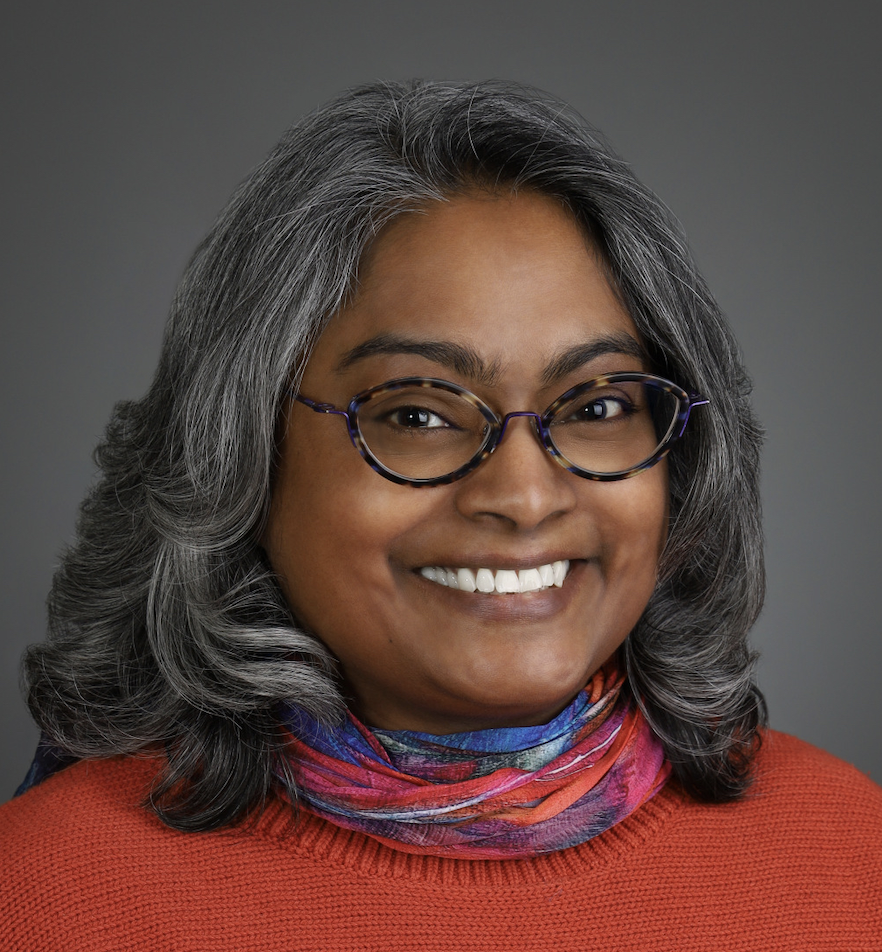 Personal experience often guides a student's academic path. For Santwana Carstensen-Sinha, her decision to pursue graduate research on Autism and neurodiversity in the classroom was a direct result of two deep wells of experience: her role as the mother of an autistic child and her career as an occupational therapist working with Autistic children and their families.
Upon returning to her practice after raising her son, Santwana recognized that her profession urgently needed better resources and training specifically focused on autism. Obtaining a master’s degree seemed like an ideal opportunity to explore these ideas and discover meaningful ways to make classrooms a more inclusive space for all.
Under the supervision of Sandy Thompson-Hodgetts, Santwana’s thesis focused on piloting a peer-focused, neurodiversity-affirming educational program (in partnership with Edmonton Catholic School Division) aimed at increasing the sense of belonging among elementary school-aged autistic children.
Alongside her clinical practice, Santwana is now pursuing a PhD in rehabilitation science to further deepen her knowledge and drive transformative change in the classroom for children with Autism and neurodivergence, as well as their families.
Congratulations Santwana!
What led you to choose this area of study, and why the U of A?
I completed my undergraduate degree in occupational therapy at the U of A in 1996 and loved my time here. I began my practice as an occupational therapist in Alberta and worked for years with Autistic children and families, and then I became the mother to an Autistic son (now an adult) and dedicated even more years to parenting. During that time I learned the joys and challenges of supporting my son and his autistic peers as they found their way in the world.
Returning to occupational therapy practice, I realized we had much to learn in our work with Autistic children and so I embarked on a MSc in Rehabilitation Sciences at the U of A so I could contribute to this work.
Tell us about your favourite professor and/or class.
I thoroughly enjoyed the course INT D 500 - An Introduction to Community-Based Participatory Research with Maria Mayan. She offered us engaging readings and facilitated rich discussion as we navigated the many gifts and challenges of participatory research. I was inspired to design a research study that was community-driven and immediately relevant to the practice.
Did you take on any leadership or volunteer roles while you were a student? If so, please share your experiences.
I was invited to co-teach the course OCCTH 543 - Autism - The Role of Occupational Therapy (2024, 2025). I was also invited as a guest lecturer for OCCTH 555 - Occupation Across the Lifespan: Children (2024, 2025) and PTHER 563 - Gross Motor Development and Pediatric Physical Therapy (2024, 2025). I had the privilege to be part of a team of presenters who provided a year-long series of professional development sessions to the Westwind School Division on neurodiversity-affirming educational practices in schools.
Did you face any significant challenges while you were a student, and if so, how did you respond?
As a mature student, I was juggling graduate studies with parenting and supporting aging parents. Like many graduate students, I maintained a clinical practice alongside full-time studies.
What advice do you have for current or future students?
Connect with what matters most to you and allow this to guide and shape your life.
How do you plan on celebrating convocation?
My family and friends have supported me at every step of this process and I will celebrate with them.
What's next after graduation?
I have begun a PhD which will keep me busy for the next several years!