Reimagining the future
19 November 2025
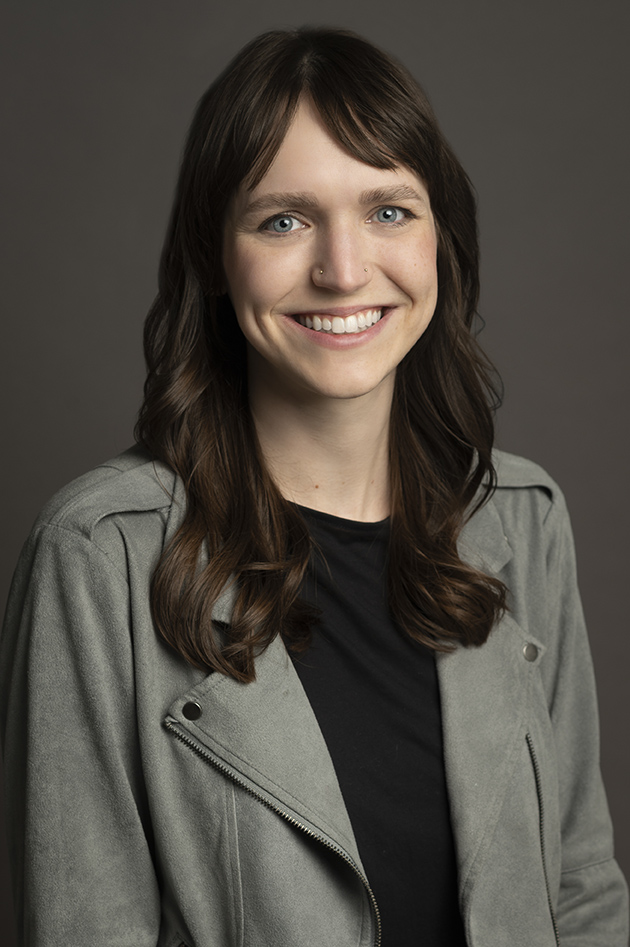
How many PhD grads can say that Marty McFly helped shape their research path? For Kathryn Lambert, a childhood crush on the Back to the Future character — and the later discovery of actor Michael J. Fox’s Parkinson’s diagnosis — planted an early seed of curiosity that would follow her into adulthood.
That early interest eventually aligned with years of focused study, culminating in the moment Lambert learned her thesis work on motor imagery in Parkinson’s disease had earned the Governor General’s Gold Medal, one of the highest honours a Canadian graduate student can receive.
For the recent PhD in occupational therapy graduate, the news confirmed that her exploration of the neurological mechanisms of movement — and her dedication to mentoring underrepresented groups in STEM — had made a genuine impact. But the story behind her groundbreaking work began much earlier, shaped by formative experiences that sparked curiosity, unease and a desire to understand the unfamiliar.
The seed of interest
Lambert’s connection to Parkinson’s disease traces back decades to a family member in Ireland. Wheelchair-bound and dependent on a caregiver, their struggles left a vivid impression on young Lambert.
“My main memory was that I was nervous around them because I didn’t understand their illness,” she says.
Having seen her family member’s advanced symptoms, she now had a visceral sense of what the disease could become. When she learned of Michael J. Fox’s diagnosis and watched him navigate its early stages, Parkinson’s suddenly felt real, relatable and impossible to ignore. It nudged her toward a field where she could help.
Occupational therapy became her path. Rooted in cognition, function and the pursuit of meaningful activity, it offered the chance to support people in rebuilding or discovering the everyday tasks that matter most.
“The goal is trying to get people back to activities that are meaningful to them or introducing them to new ones,” Lambert explains. That can mean everything from cooking meals or getting dressed to playing pool with friends. She quickly came to admire how nimble and adaptive her clinical peers were — always tailoring their approach because, as she puts it, “two people may have the same disease, but their experiences are so different.”
The gold medal breakthrough: Motor imagery
Lambert was an undergraduate student at the University of Alberta when she first began to study what occurs in the brain when people imagine movements, a process that is known as motor imagery. The mental rehearsal of movement is shown to induce plastic changes in the sensorimotor regions of the brain. Subsequently, motor imagery has been identified as a potential rehabilitation for individuals with neurological conditions.
As an occupational therapist, Lambert was struck to observe that many clinicians encouraged patients to mentally rehearse a movement before its execution. For example, a person with Parkinson’s disease might be prompted by their clinician to imagine themselves taking a very large step prior to walking, as people with the disease often walk with short, shuffling steps. However, the term “motor imagery” was rarely used in practice.
“It was very encouraging to see that clinicians are using this technique already,” she says. “I went back to my PhD feeling that my work was very relevant.” This alignment of research and practice helped pave the way for her gold medal distinction.
Now, with her PhD complete and her gold medal earned, Lambert is beginning a post-doctoral fellowship to research motor learning in stroke recovery. While she remains deeply connected to the Parkinson’s community, she felt ready to “try something different” and apply her expertise to a new population.
While Marty McFly needed a flux capacitor to change the future, Lambert is doing it with something far more powerful — science, empathy and a deep belief in the brain’s ability to re-learn. With a Governor General’s Gold Medal behind her, her next chapter promises to be just as groundbreaking.