Convocation ‘26: anne drew potter, MSc in Physical Therapy
Donna McKinnon - 13 March 2026
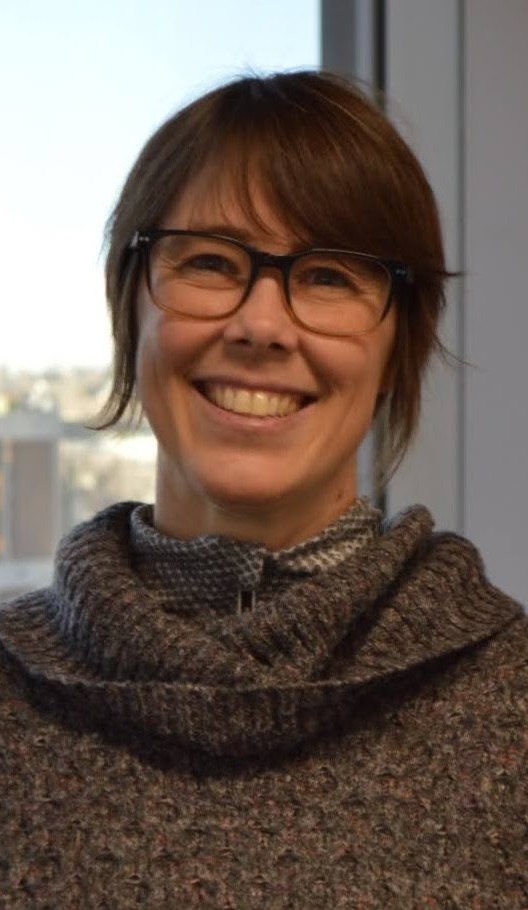
For many years, anne drew potter's work has been centred on the human body and how it shapes our lived experience. This fascination began in the arts, specifically sculpture, but as they witnessed their parents navigate chronic health conditions, this curiosity expanded to include the biological, mechanical and psychological aspects of wellness.
Transitioning from life as a figurative sculptor and university instructor to an educational program and career in physical therapy was the realization of a dream, says anne drew — one that allows them the ability to balance artistic form with the science of healthy aging. Beyond the classroom, they found that cultivating a sense of community was the key to managing their own health and multifaceted roles as a mother, caregiver, volunteer and student.
For anne drew, convocation is a multigenerational milestone. Accompanied by their mother and two children, they and her family will collectively celebrate the successful culmination of a three-year journey.
Congratulations anne drew!
Which faculty, program and department are you graduating from?
The Masters of Science in Physical Therapy program in the Faculty of Rehabilitation Medicine.
What led you to choose this area of study?
I have a long time interest in the body and how it mediates and creates our lived experience. I am curious about the biology, mechanics and psychological aspects of the body and have witnessed the interplay of these as my parents have both coped with chronic health conditions. As a result, I'm pretty convinced of the critical importance for activity and bodily engagement in support of our aging process as well as the plastic nature of both the body and mind.
My background is in figurative sculpture and I have worked as a studio artist and university instructor, but when it seemed possible to pursue this degree in the city where I'm settled, it felt like an opportunity to fulfill a lifelong dream.
What is your favourite memory from your time at the faculty?
When I successfully helped clients on placements. For example, reassuring return-to-work clients with respect to their pain, teaching them methods to cope with it and reminding them of their ability to recover.
Did you take on any leadership or volunteer roles while you were a student? If so, please share your experiences.
Caretaking children and an older adult is not considered leadership or volunteer work, but it took up a significant amount of time and energy during my education. Within the school, I partnered with my colleague and friend Stephanie Elanik to help the department work on Reconciliation goals — identifying opportunities and strategies for growth in this area.
I also supported our remote cohort rep to gather student feedback and, at one point, organized an intergenerational music-and-movement group at my local community centre to support activity across family generations (a challenge faced in my own family). I continued to volunteer for the Alpine Club of Canada where I steward a Womxn's Mountain Mentorship Group and volunteer lead at the General Mountaineering Camp. These were all ways I attempted to combine my own health maintenance with that of my family and community.
Did you face any significant challenges while you were a student, and if so, how did you respond?
I have three dependents — two young children and an elderly mother who moved in with us during the program. I felt frequently overwhelmed and inadequate and struggled with the constant criticism of school and placement. I formed close relationships with a few other students, including some other parents and we worked to support one another through all the challenges. I also made a concerted effort to stay involved with work that was meaningful to me — such as the Reconciliation work and volunteer work outside school.
What advice do you have for current or future students?
When I look back at what a struggle it was for me, I don't feel very entitled to give advice. I felt that most of my colleagues coped with the challenges of school amazingly well.
I would offer instead an ask — consider what radical inclusion means. How can you proactively include the people around you even if they are different?
Difference doesn't always show up in terms of our "box" categories such as racialization or gendering. It can be about age, background and many other things.
It made all the difference for me when a colleague invited me to practice or study with them or sit at their table rather than ignoring me, turning their back, looking past me, or telling me I was in their way. The people who helped me feel included weren't necessarily folks with whom I had anything "in common," just people who made the effort to treat me as an equal and a colleague.
How do you plan on celebrating convocation?
My mom said that seeing me graduate is one of the things she wants to stay alive for, having been very present in my daily life throughout the struggle of school. She and my two kids will attend graduation. I have been celebrating ever since completing my licensing exam by getting back to physical activities and social relationships that I have had to ration for the last three years. I'm already enjoying walking my six-year-old to school in the mornings.
What's next after graduation?
I am awaiting the results of my licensing exam to be able to start applying for work. We have some family trips planned.