Alumni Spotlight | Reanne + Laurel
“We tried”
Two members of the OT class of 1968 look back
By Erika Nakatsui · October 2026
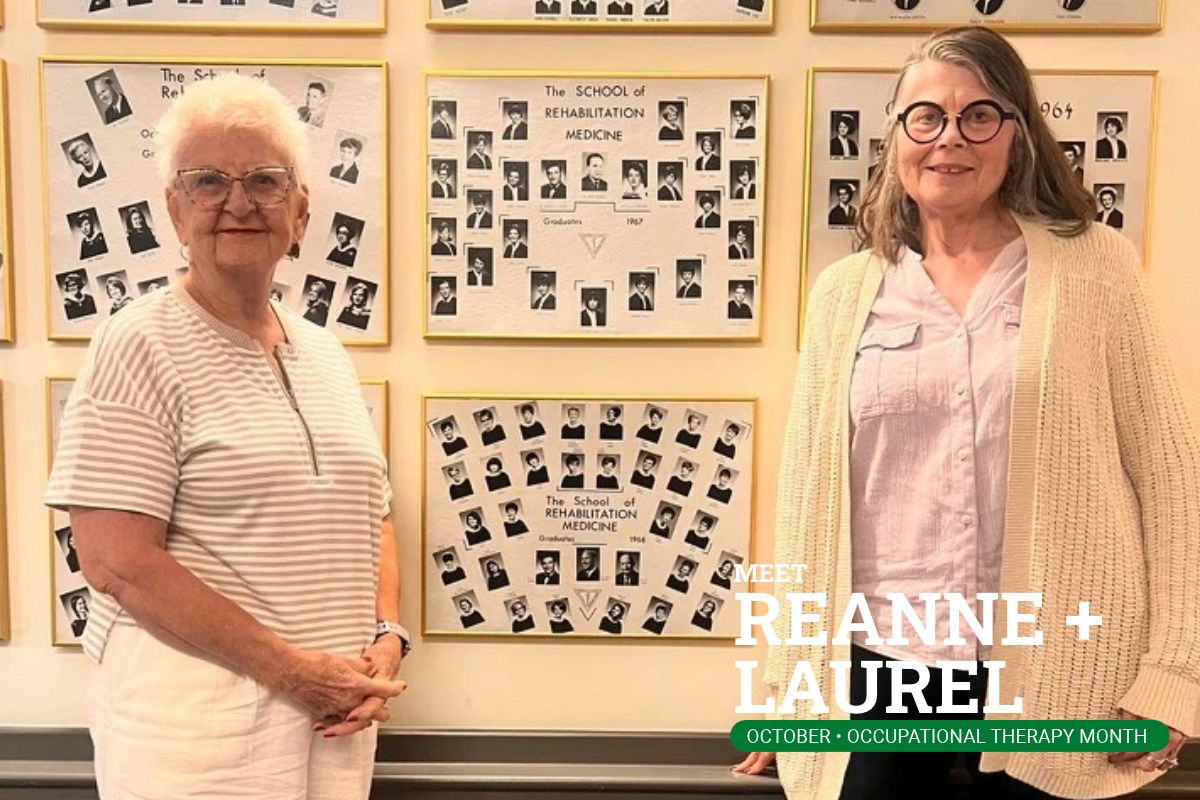
Reanne and Laurel, OT class of 1968
When Laurel Erickson and Reanne Shea graduated from our occupational therapy program in 1968, they were two of 10. That number sounds small until you learn the program started in 1960 with five students. Their class was the largest the program had seen.
“You made it fashionable,” I told them.
“We tried,” they said.
Finding OT
In the mid-1960s, young women weighing their futures were steered toward three careers: nursing, teaching or secretarial work. Reanne ruled out all three. She didn’t want to work shifts, so nursing was out. As an only child, she was “terrified of children,” so teaching was out. And she couldn’t type. “It was hopeless,” she said.
Luckily, her next-door neighbour was Elizabeth Rowan, an instructor in the U of A’s OT program. A conversation over the fence about what to do after high school became a career.
Laurel found occupational therapy in a binder of professions at her hometown library. She had never heard of it. What caught her eye was the mix: serious medical training on one side and creative, hands-on work on the other.
Cadavers and baskets
The medical side arrived quickly. The OT students worked in pairs on cadavers in the anatomy lab, finding the muscles and nerves that medical and dental students would later study. Their knowledge was tested in “bell ringer” exams, where students had two minutes at each station to write everything they knew about a muscle or ligament before the bell rang and they moved on.
“I remember reading about it thinking, oh, that can’t really be what’s going to happen,” Laurel said.
The creative side came through basketry, leatherwork, weaving and pottery. To an outsider, the archive photos of OT students weaving baskets can look puzzling. To Reanne, the purpose was always clear.
“Occupational therapy is kind of like doing something to make you feel worthwhile,” she said. Weaving helped people who had been injured rebuild the movements they needed for daily life and work, one stage at a time. Creative work also opened conversations. Patients in psychiatric care often talked more freely with their hands busy.
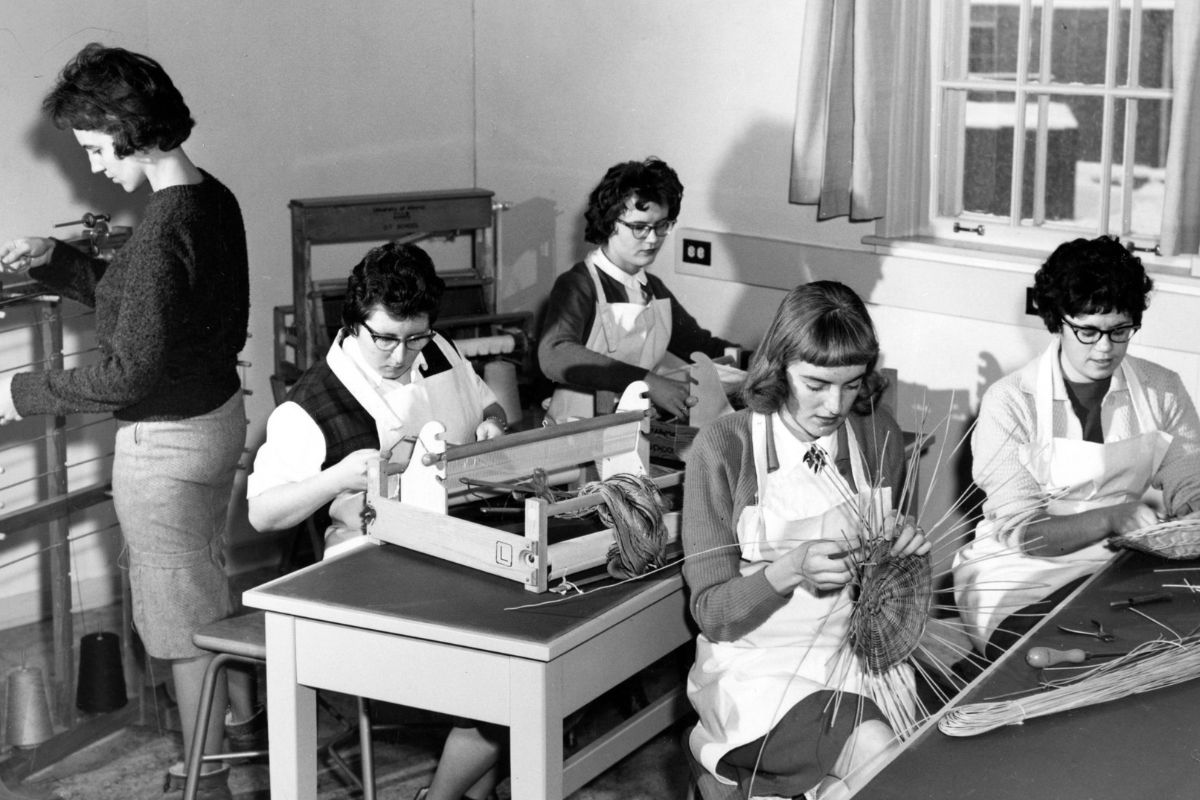
OT students learn basketry in the 1960s. (Photo: University of Alberta Archives)
The program was small enough that three instructors carried the OT teaching, all originally trained in the United Kingdom. Along with Rowan, there was Benita Fifield, who brought sexuality and disability into the curriculum at a time when few people would talk about either. And there was Dr. Leonard Allbon, who founded the program.
Allbon holds a special place for Reanne. After she failed first-year biology, he called her in and offered a deal. She could stay if she earned more than 75 per cent in every class in the first semester of second year.
“I said, done. No problem,” she recalled. Once the coursework turned to anatomy and OT, she loved it.
“Occupational therapy is kind of like doing something to make you feel worthwhile.”
Reanne Shea, OT class of 1968
Two very different careers
Laurel’s career had one address. Her final placement, first job and last job were all at the Glenrose Rehabilitation Hospital, where she worked in pediatrics. At the time, the Glenrose ran a school hospital for children with disabilities from kindergarten to Grade 12, with small classes, specially trained teachers and therapy built into the week. She remembers the teamwork there as something rare, with every profession respected and every voice heard at the table.
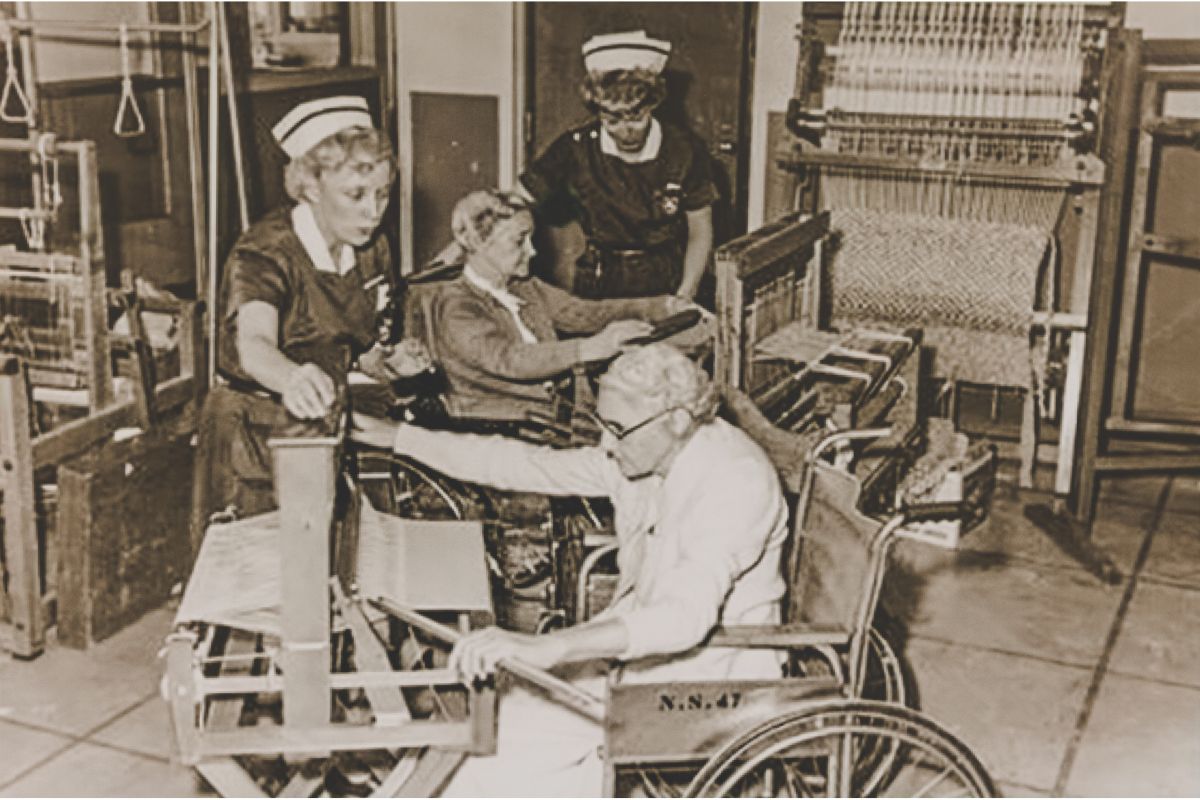
An occupational therapist works with a client in the 1960s. (Photo: University of Alberta Archives)
She supervised two or three students a year right up to retirement. “They’re learning and teaching you at the same time,” she said. Her one detour was two and a half years in Saudi Arabia with her husband, who also wanted to live and work abroad.
Reanne’s career had many addresses. She moved to Calgary right after graduation, then to British Columbia, where she worked for the Arthritis Society in Vancouver and later opened a clinic for it in Prince George. After 20 years in orthopedics and arthritis care, she earned a master’s in health administration and spent her last 10 years as a senior administrator with Interior Health. She credits OT with giving her the communication, team-building and problem-solving skills that made the move possible.
After the 2004 tsunami, she joined a group from Kamloops building homes in Sri Lanka. She kept going back, retired in 2007 and moved there in 2010. She built and ran a small hotel, then stepped in to lead a local rehabilitation centre when its executive director became ill.
There, she hosted UBC occupational therapy students on their final placements. With no supply stores or referral networks to lean on, they had to make everything themselves, from scratch. One project was building a raised toilet seat to fit over a squat toilet so a stroke survivor could manage at home. The students told her it taught them more about real OT than any other placement.
After 15 years away, Reanne moved back to Edmonton this April.
Still a class
Their classmates scattered just as widely. One consulted on accessible seniors’ housing on Vancouver Island. Others worked in home care, family planning, pediatric intensive care and career development, and one became a teacher who prepared students for life after school. All of them, Reanne said, took their OT skills into different corners of society.
Since their 40th reunion, the class has made a point of getting together. A group of them now meets several times a year in Edmonton, and they share a weekend away each year. They have travelled to Sri Lanka and Laos together. Laurel put together a book of class photos and stories, then and now, and every classmate has a copy.
They will be at the Faculty of Rehabilitation Medicine’s 50th anniversary celebration on Nov. 5, and they are already thinking about 2028, when they hope to mark 60 years alongside the physical therapy class of 1968.
“We were talking in the car on the way here about how we were fortunate to live in the best of times and work in the best of times,” Reanne said.
Your perspective shapes the profession
Do you have a story? Whether you’re a student, graduate, faculty member or friend of FRM, we’d like to hear it.