Following the LEGO brick road
In 2012, a boy named Harsh Beesoon was dragged to a robotics lab at the University of Alberta by his older sister. He did not want to go. But within a couple of hours, Beesoon knew he was exactly where he belonged. He stayed for eight years.
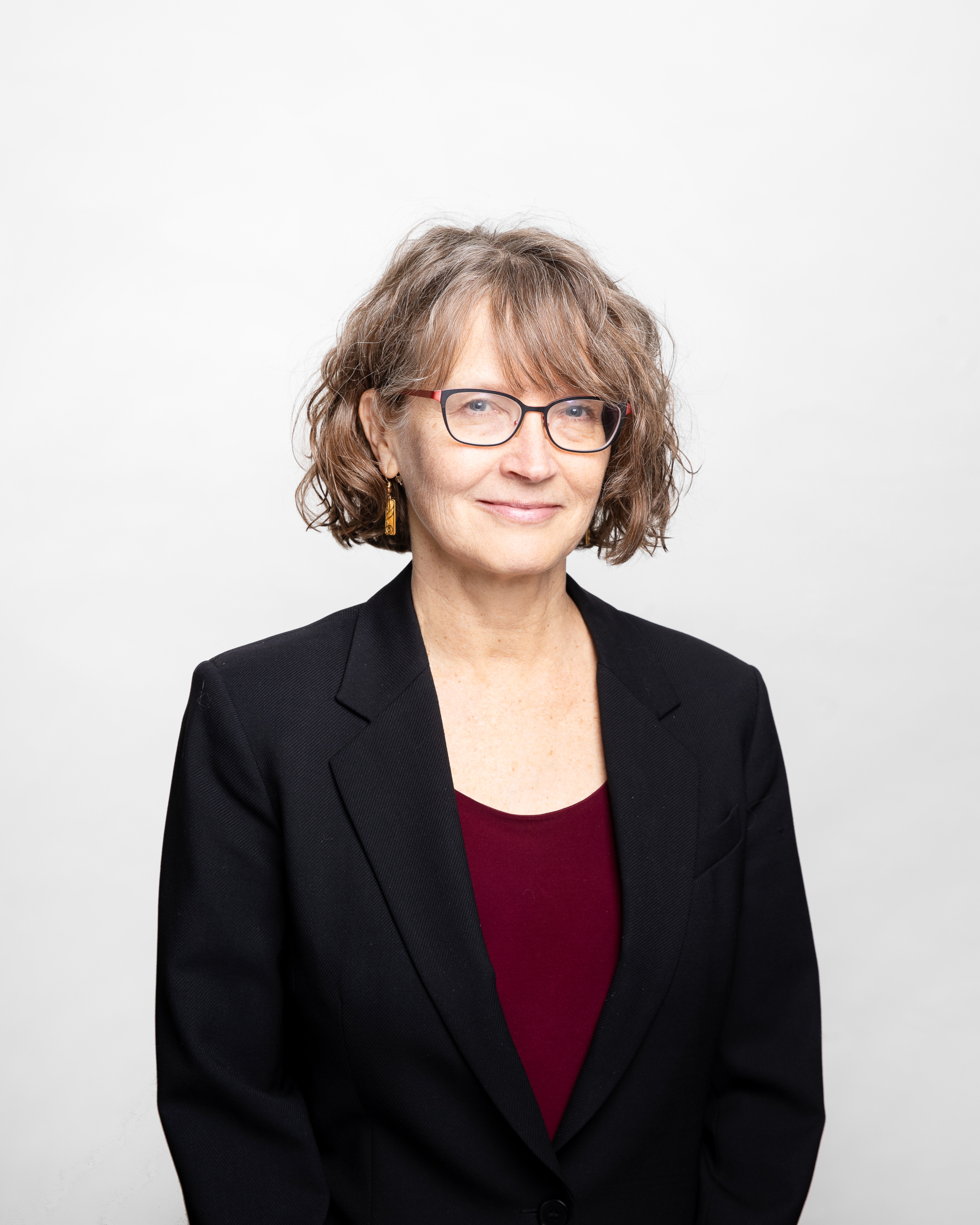
Dr. Kim Adams welcomed FIRST LEGO League teams into her rehabilitation robotics lab for more than a decade.
The lab was run by Dr. Kim Adams, a researcher in the Faculty of Rehabilitation Medicine who built assistive robots — machines that help children with physical disabilities play and learn.
Starting in 2012, Adams planted something that would still be growing a decade later. Every season until her retirement, she opened her lab to FIRST LEGO League teams: kids aged 9 to 14, drawn from the surrounding community, home-schooled children and children with disabilities — some of them joining their first real team of any kind.
That inclusiveness wasn’t an accident. It was the design. The kids researched a real problem, built a robot, programmed it and pitched their solution to judges. In 2013, Adams described the whole enterprise as “the highlight of my week.”
Building more than robots
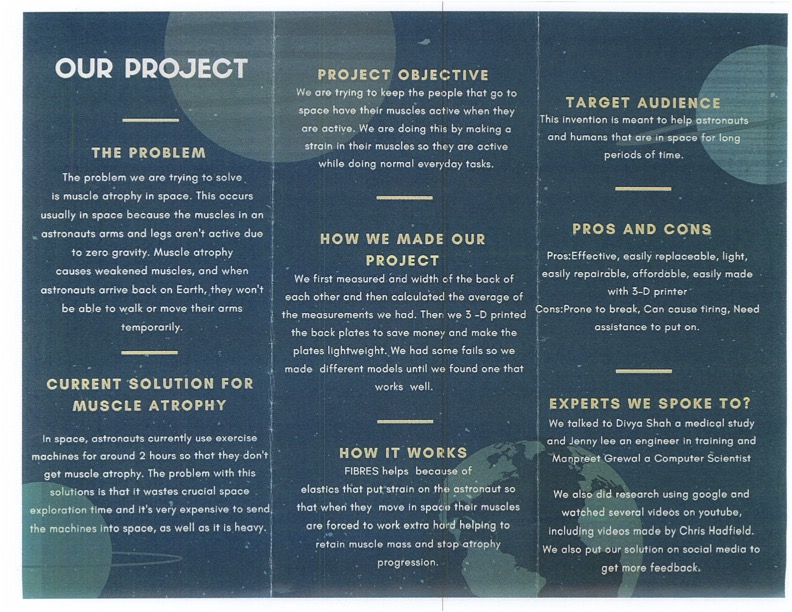
Linda Tang’s three children joined in 2016. One season, competing as the Space Spectres, their team tackled muscle atrophy in space — the loss of muscle astronauts experience in microgravity.
They designed FIBRES, a wearable concept that used elastic resistance to keep muscles working, complete with 3D-printed prototypes and a brochure.
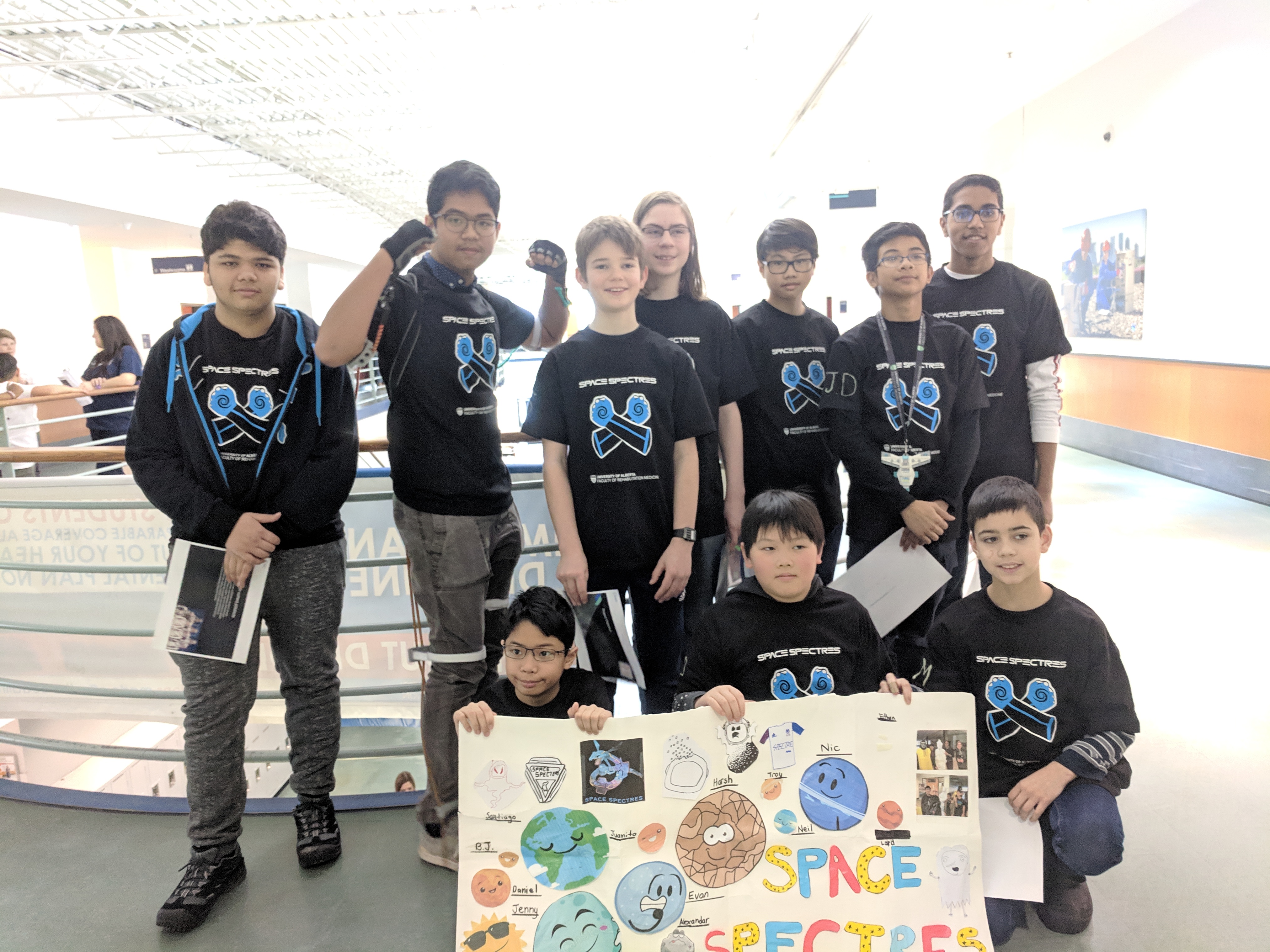
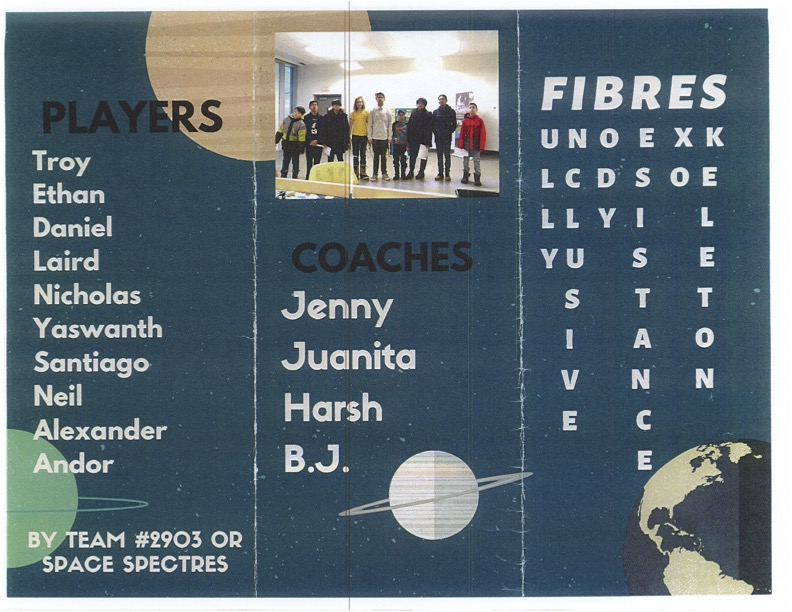
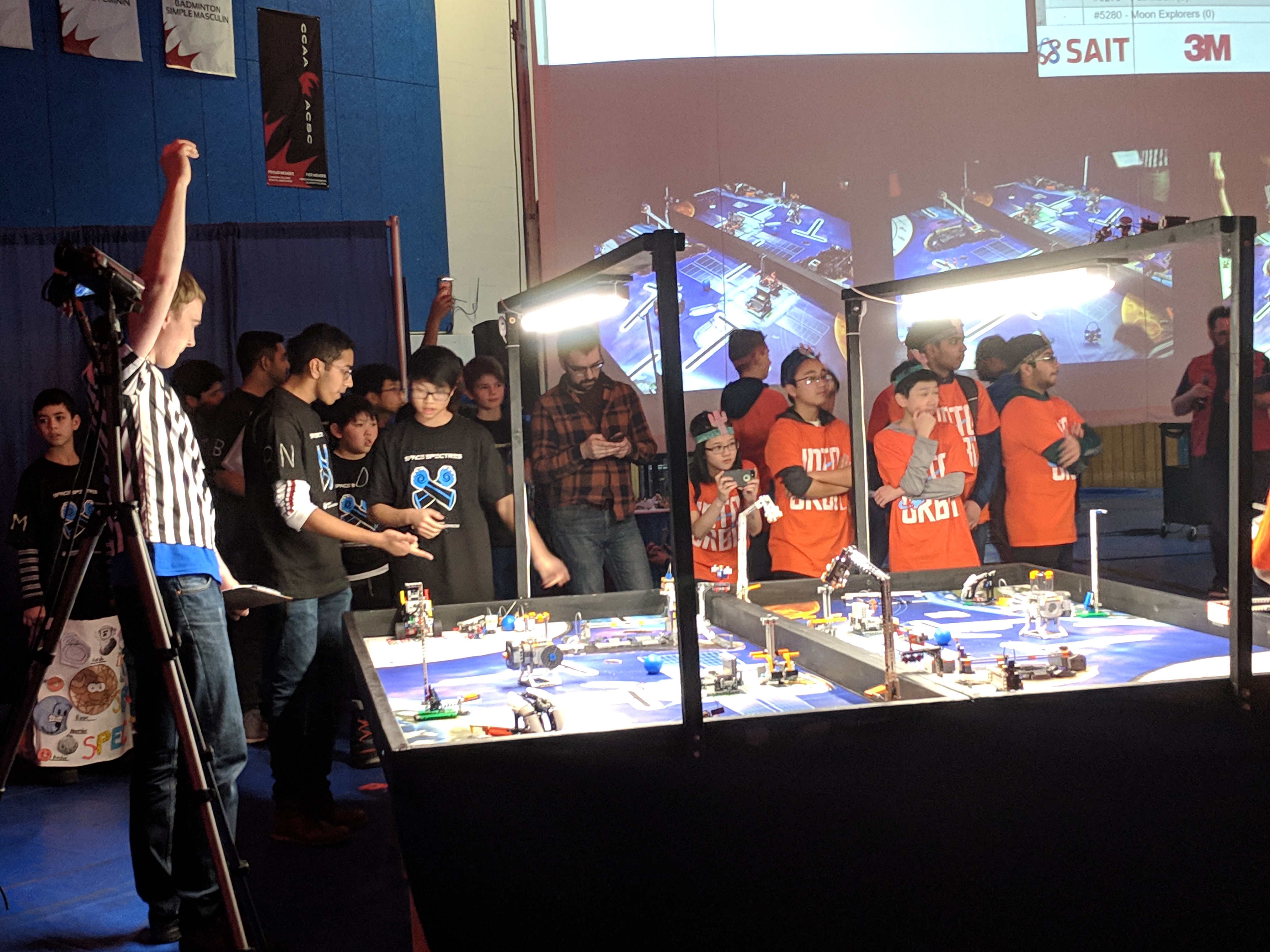
Years before he became a mentor, Harsh Beesoon stood where these students once did. Here, he coaches Ethan Tang and the Space Spectres as they present FIBRES, their solution to muscle loss in microgravity.
Which is impressive. But here’s the thing: the competition may have been the least important part.
Between builds, the kids toured the research surrounding their LEGO tables — the testing equipment and assistive technology being developed for children exactly like their own teammates.
Seeing how robotics is applied in real clinical and research settings helped connect what we were building to real-world impact.
— Ethan Tang, former FIRST LEGO League participant
They thought they were building robots. The lab was building something else.
The ripple effect
The season ended every February.
The program didn’t.
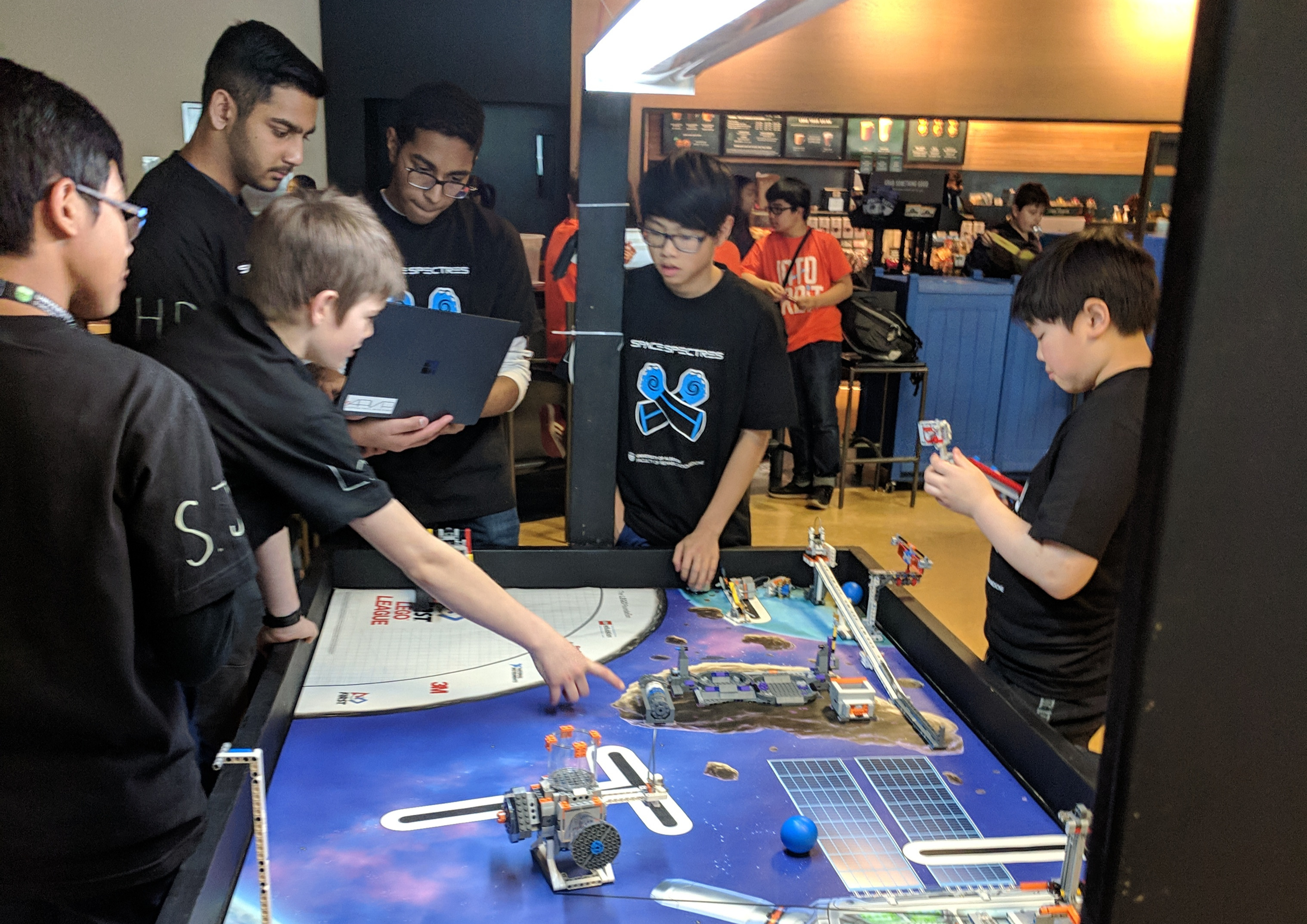
Team members put their designs and programming skills to the test during a FIRST LEGO League challenge.
Beesoon aged out, came back and mentored for years. The kids nominated him for a best-mentor award, and he left calling the mentoring, yes, “the highlight of my week,” hoping to teach and coach a team of his own someday.
Nicholas, Linda’s eldest, followed the same arc: participant, then mentor. Today, he is a kinesiology student at the U of A, volunteers at a physiotherapy clinic, coaches volleyball and is working toward a Master of Science in Physical Therapy — at the Faculty where he once built robots.
Coming full circle
And then there’s Ethan. He arrives at the U of A this fall to study computing science, and this year he wrote to Dr. Adams.
Not a nostalgic note. A request.
He wants to work on assistive technology for children with physical disabilities. The research that hummed in the background of his childhood Saturdays — the work he walked past on the way to the LEGO table — is the work he is now asking to do.
I would love the opportunity to give back and contribute to the faculty that inspired me.
— Ethan Tang, former FIRST LEGO League participant
We assume institutions make their mark through their official channels: the degrees, the clinics, the published papers. But sometimes the most durable thing a faculty ever builds is a room where a researcher keeps showing up on Saturday mornings — and a decade later, the kids come back as clinicians, coders and coaches.