Crafting Interdisciplinary Research Collaborations and Approaches (CIRCA)
Circa Workshop 1: Creating & Maintaining Interdisciplinary Research Teams
Friday, March 20, 2026, 9:00 a.m. - 12:30 p.m. MST (coffee and snacks provided)
Room: EDUC Rm 122
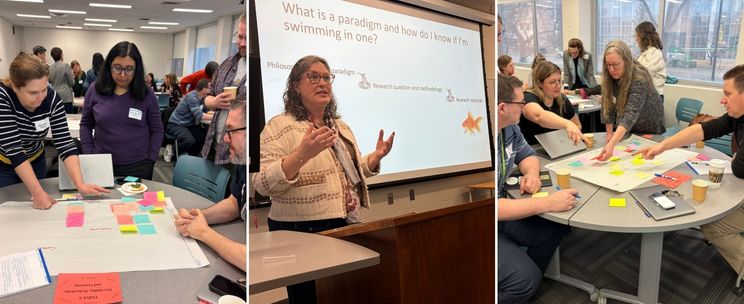
In collaboration with the Office of VP-Research, the TRSI Hub is excited to offer the first workshop in the CIRCA series, following up on a panel discussion on the same topic in Fall 2025.
This in-person workshop offers an intensive, hands-on co-learning opportunity for U of A research faculty and staff who are currently participating in, planning, or leading interdisciplinary teams, especially those preparing for interdisciplinary funding competitions or cross-faculty initiatives (e.g. Kule, SRIF, NFRF-Exploration, CIHR Team, SSHRC Insight, NSERC Discovery Horizons).
Limited space will be available for individuals or team representatives, so register soon by filling out the pre-workshop survey.
Co-led by colleagues with interdisciplinary research experience and expertise, this workshop will tackle several key issues that interdisciplinary research teams encounter:
- conceptualizing interdisciplinarity
- conducting collective self-discovery across differing and sometimes unequal (disciplinary) positions and perspectives
- structuring dialogue and communicating effectively
- organizing a team and structuring an agreement for ongoing relational work.
NOTE: This workshop is in person. We are exploring future online options - if interested, please let us know by contacting trsihub@ualberta.ca.
Draft Workshop Agenda:
|
Introduction |
Inclusive Facilitation: Creating a reflexive, EDI-centered team culture. |
Reflexive Practice Framework |
|
Part 1: Relationships |
Disposition Mapping: Identifying how to find and create connections across different experiences, values, and knowledge. |
Contribution Matrix |
|
Part 2: Communication |
Concept Attunement: Finding shared language amidst disparate vocabularies. |
Team Glossary |
|
Part 3: Collaboration |
Governance Design: Introducing common barriers and potential strategies for sustainable teams. |
Collaboration Agreement Checklist |
|
Post workshop |
Workshop Synthesis: Sharing how others can replicate these exercises. |
Open Access Workshop Guide |
To secure your spot, complete the pre-survey and register here.
We look forward to enjoying this co-learning journey with you!
For further information or questions, please contact trsihub@ualberta.ca.
Sign up for the TRSI Mailing List to learn about upcoming workshops and events!
Circa Panel 1: Creating & Sustaining Interdisciplinary Research Teams - a panel discussion
Wednesday, October 29 2025, 12- 1:30 p.m. MST
Hybrid Seminar
In person: T 1-103 ( Tory building, University of Alberta) | Virtual: Zoom link
Inter-disciplinary and trans-methodological research teams are a key ingredient in impactful inquiry. How do you form relationships in such teams? Organize for success? Ensure meaningful collaborations across disciplines and approaches? In this lively moderated panel discussion, U of A members of the NFRF-funded “Smartwear Revolution” project share their insights.
Panelists

Vivian K. Mushahwar
CRC in Functional Restoration & Professor, Medicine and Neuroscience & Mental Health Institute; Director, iSMART; and Project Leader of Smartwear Revolution
Dr. Mushahwar’s work focuses on developing intelligent wearable and implantable neuromodulation devices that restore mobility and prevent secondary complications. She also focuses on developing activity-based therapy rehabilitation interventions that are both efficacious and cost-saving. She initiated the development of micro-implants for stimulating the spinal cord to restore standing and walking after complete spinal cord injury, and demonstrated the benefits of simultaneous arm and leg cycling for improving walking capacity after incomplete spinal cord injury. She and her group invented the wearable garments, Smart-e-Pants and the SOCC, for preventing pressure injuries and deep vein thrombosis, respectively. She also holds 7 patents, has published >120 peer-reviewed journal articles, and delivered >230 invited talks at international and national venues.
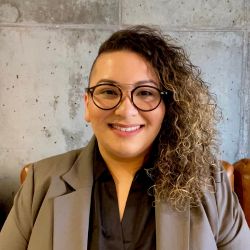
Taymy Caso, PhD
Associate Professor, Counselling Psychology; Director, IREACH Lab; Vice Director, iSMART, University of Alberta
Dr. Caso’s research focuses on minority health disparities, intersectionality, identity-based marginalization within LGBTQ+ BIPOC communities, gender and sexual fluidity, social determinants of health, and legislative and public policy advocacy. Their advocacy work utilizes anti-oppressive and decolonizing pedagogies to deconstruct structural and systemic barriers to health equity and develop community-based interventions for underserved communities. Dr. Caso serves as the Director of the Intersectional Research, Empowerment, Advocacy, and Community Health Promotion (IREACH) Lab; the Vice-Director of Inclusion and Accessibility for the Institute of Smart Augmentative and Restorative Technologies and Health Innovations (iSMART) and a co-applicant on the Smartwear Revolution project, co-leading the Social Justice Working Group.

Marilène Oliver, MA, MPhil, and MSc Imaging
Associate Professor, Department of Art & Design, University of Alberta
Oliver’s artistic research is at a crossroads between new digital technologies, traditional print and sculpture, with her finished objects bridging the virtual and the real worlds. She works with the body translated into data form to understand how it has become “unfleshed,” in the hope of understanding who or what it has become. Oliver uses various scanning technologies such as MRI, CT, and PET to reclaim the interior of the body and create works that allow us to materially contemplate our increasingly digitized selves. She has exhibited widely in the UK, Europe, and North America in both private and public galleries, and her work is held in a number of private and public collections. Oliver currently leads the research projects Dyscorpia: Future Intersections of the Body and Technology, Know Thyself as a Virtual Reality and is the lead of the Art & Working group for the Smartwear Revolution project.
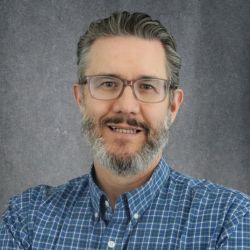
Adalberto Loyola-Sanchez, MD, MSc and PhD
Associate Professor, Physical Medicine and Rehabilitation, Department of Medicine, University of Alberta
Associate Professor, Dr. Loyola-Sanchez, works on developing a program of mixed methods research to design, implement, and evaluate community-based rehabilitation programs for individuals with disabilities resulting from chronic illnesses in outreach communities. He is currently working in the Spinal Cord Injury program at the Glenrose Rehabilitation Hospital in Edmonton and provides care to people with SCI in acute, inpatient rehabilitation and community settings. Dr. Loyola-Sanchez leads several community-based participatory mixed methods research projects directed to improve participation of people living with complex disabilities in rural Mexico and in Alberta. He serves as the Clinical Vice Director of U of A’s iSMART and as a co-lead of the Social Working Group within a transdisciplinary-based project to create a revolution in clothing to improve participation in life.

Michelle Whaling
Senior Research Administrator, Faculty of Medicine & Dentistry
Whaling is an accomplished professional with over 15 years of experience spanning strategic planning, multidisciplinary project management, business development, and quality assurance in regulated research, technology, and healthcare environments. She is recognized for building high-value partnerships, leading complex initiatives, and ensuring compliance with international quality standards. She is also skilled in developing interdisciplinary collaborations, securing funding, and managing multimillion-dollar budgets to drive organizational growth and innovation. With a background in animal health technology and medical research, Whaling brings a unique blend of technical expertise, regulatory knowledge, and leadership capability to foster operational excellence and advance transformative projects.

Anastasia Elias
Professor, Faculty of Engineering - Chemical and Materials Engineering Dept; Associate Dean (Research Strategy), Faculty of Engineering - Deans Office
Dr. Anastasia Elias is a Professor at the Department of Chemical and Materials Engineering and Associate Dean, Research Strategy. She holds a PhD in Electrical Engineering (U of A, 2007). From 2007-2008, she was a postdoctoral fellow in the Materials and Interfacial Chemistry Group at the NRC National Institute for Nanotechnology (NINT) in Edmonton. From 2016-2017, she was a visiting scientist at the Leibniz Institute of Polymer Research, Dresden, Germany. Dr. Elias’ work is recognized by numerous awards, including the APEGA Early Accomplishment Award, NSERC Discovery Accelerator, and a Humboldt Fellowship for Experienced Researchers. The overall purpose of Dr. Elias’ research is to develop functional polymers, nanomaterials and nanomaterial-polymer composites. She develops processing, patterning, and chemical-modification techniques to control and manipulate the surface and bulk properties of soft materials. Her group studies polymer-nanoparticle composites, graphenic nanomaterials, degradable biopolymers, and hydrogels..