Methods Seminar
2026-27 Seminar Schedule
October 28, 2026, 11 a.m - 12 p.m.
Listening as Method: Lessons from Courageous Voices
Courageous Voices is a community-engaged listening and discernment process developed through Bissell Centre and Boyle Street Community Services. Grounded in Indigenous guidance, circle process, participant feedback and iterative sense-making, the project engaged staff, community members, Elders, Knowledge Keepers, supporters and partners over two years. This session explores what it means to treat listening not simply as consultation, but as a rigorous relational method for surfacing community knowledge, deepening accountability and informing change.
September 28, 2026, 10 a.m
Recapping the 2026 Applied Social Research Methods Institute
This session explores key findings of an evaluation of the TRSI Applied Social Research Methods Institute (ASRMI) — an intensive week-long methods institute held in May 2026 that emphasized interdisciplinary and community engaged research using collaborative co-learning approaches. It captures insights and opinions from students, community partners, instructors, and institute organizers, as it relates to their experiences with the Institute. Recommendations on the way forward for future Institutes will also be shared.
2025-26 Seminar Schedule
September 26, 2025, 10 - 11 a.m
Survey Data Collection in Polarized Times: Insights from Viewpoint Alberta
Dr. Feo Snagovsky and Evan Walker will be discussing surveys, which remain one of the most widely used tools for studying how people think and act. They will examine the strengths and limitations in understanding political attitudes and behaviours, particularly in contexts of high political polarization.
October 28, 2025, 10 - 11 a.m
Community-Engaged Research: The What, the Why and the How -POSTPONED
Dr. Bethan Kingsley will provide a simple overview of community-engaged research for those who may be new to it and/or unfamiliar with this approach to research. Specifically, we will review the purpose of community-engaged research and its core principles along with examples of some projects that use a community-engaged approach
November 18, 2025, 11a.m - 12:15 p.m.
Integrating AI Into the Qualitative Analysis World: Methodological Implications
AI is now a potential feature of every stage of qualitative research activity. What does this mean for how we make design decisions, frame analysis, navigate ethics, or even describe what we do? In this session, we will together watch a short webinar, Integrating AI into the Qualitative Analysis World, by Dr. Christina Silver, an expert in computer-assisted qualitative data analysis. Following the video, Dr. Silver and Dr. Maria Finnsdottir from the UA Digital Research Service will have a conversation about what it means to be and remain “methodologically-grounded” in the context of AI.
March 23, 2026, 12:00 - 12:30 p.m.
When Data Fails, Design Delivers: Trauma-Informed Measurement that Works
Omar Yaqub will present on how to redesign measurement systems in social services to be more effective, trauma-informed, and genuinely engaging. Omar will examine how design, strengths-based metrics, and the people-first data charter can transform data from an administrative burden into a tool that improves care, strengthens equity, and generates evidence that truly informs policy and practice.
March 27, 2026, 2:00 - 3:00 p.m.
Lessons for Longitudinal Data Collection from the Edmonton Transitions Study
AI is now a potential feature of every stage of qualitative research activity. What does this mean for how we make design decisions, frame analysis, navigate ethics, or even describe what we do? In this session, we will together watch a short webinar, Integrating AI into the Qualitative Analysis World, by Dr. Christina Silver, an expert in computer-assisted qualitative data analysis. Following the video, Dr. Silver and Dr. Maria Finnsdottir from the UA Digital Research Service will have a conversation about what it means to be and remain “methodologically-grounded” in the context of AI.
Listening as Method: Lessons from Courageous Voices
October 28, 2026, 11 a.m - 12 p.m.
In person only: Kipnes Health Research Academy, Room 2-137
Courageous Voices is a community-engaged listening and discernment process developed through Bissell Centre and Boyle Street Community Services. Grounded in Indigenous guidance, circle process, participant feedback and iterative sense-making, the project engaged staff, community members, Elders, Knowledge Keepers, supporters and partners over two years. This session explores what it means to treat listening not simply as consultation, but as a rigorous relational method for surfacing community knowledge, deepening accountability and informing change.
Panelists
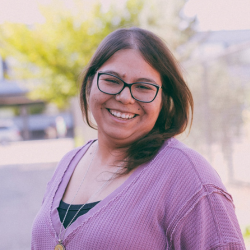
Heather Goings-YoungChief (she/her)
Senior Manager of Cultural Practices and Programs, Boyle Street Community Services
Rooted in Kehewin Cree Nation and southern Saskatchewan, Heather Goings-YoungChief carries teachings from her family, Elders, and lived experience as a descendant of residential and day school survivors. A mother and auntie, she has facilitated circles since 2019. Her circle work emphasizes kinship, connection to land and spirit, and shared responsibility. Every circle is unique, guided by intention and care. Questions are always welcome. Heather currently serves as the Senior Manager of Cultural Practices and Programs at Boyle Street Community Services.
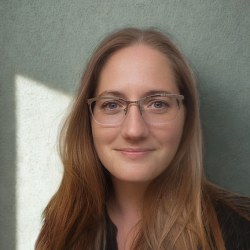
Kelly Hoskins (she/her)
Director of Resource Development, Bissell Centre
Kelly Hoskins, CFRE, is a nonprofit leader whose work spans philanthropy, community engagement, organizational development, partnerships, and strategic fund development. Originally from Saskatchewan and now rooted in Edmonton, Kelly is a lifelong learner, and someone who believes deeply in people and the value of relationships. Her approach to leadership is grounded in curiosity, listening, and honouring multiple truths and perspectives. Kelly currently serves as Director of Resource Development at Bissell Centre, where her portfolio includes philanthropy, community engagement, and analysis and evaluation in support of people experiencing poverty and homelessness.
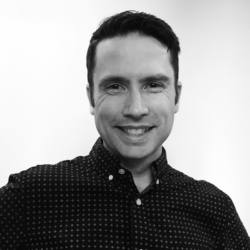
Ian Mathieson (he/him)
Director of People and Organizational Development, Boyle Street Community Services
Ian Mathieson (B.A., M.A.). Ian has provided facilitation, management and leadership expertise for numerous organizations including universities, corporations, law enforcement, educational boards, health care institutions and community NGOs. His academic background includes studies in anthropology and international peace and conflict. Ian currently holds the position of Director of People and Organizational Development at Boyle Street Community Services, a large inner-city agency that assists people challenged by homelessness and poverty.
Recapping the 2026 Applied Social Research Methods Institute
Monday, September 28, 2026, 10 a.m. (MT)
Virtual: Zoom link
Presenters: Charlotte West & Leigh-Ann Waldropt-Bonair
This session explores key findings of an evaluation of the TRSI Applied Social Research Methods Institute (ASRMI) — an intensive week-long methods institute held in May 2026 that emphasized interdisciplinary and community engaged research using collaborative co-learning approaches. It captures insights and opinions from students, community partners, instructors, and institute organizers, as it relates to their experiences with the Institute. Recommendations on the way forward for future Institutes will also be shared.
Notes: Free to attend and no registration required.
Lessons for Longitudinal Data Collection from the Edmonton Transitions Study
Friday, March 27, 2026, 2:00 - 3:00 pm (MT)
Hybrid Seminar
In person: T 1-61 ( Tory building, University of Alberta) | Virtual: Zoom link
Add event to calendar
Register for the event
This seminar will focus on the benefits and challenges in longitudinal research. Longitudinal research projects that collect data from the same individuals over time are the only way to understand within-person development across the life course. However, recontacting study participants at each wave of data collection can be a challenging task. In this seminar, the speakers will review best practices for sample retention, present lessons learned from the Edmonton Transitions Study, a 40-year longitudinal cohort study conducted by researchers at the University of Alberta, and discuss future directions for longitudinal data collection.
Panelists
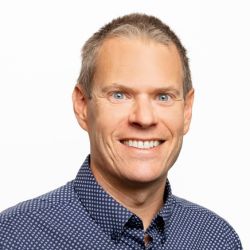
Matt Johnson
Professor, Department of Human Ecology, University of Alberta
Matt Johnson is a Professor of Family Science at the Department of Human Ecology (University of Alberta). Prof Johnson is the co-director of the Edmonton Transitions Study and studies the development of couple relationships.
Samuel Braden
PhD student, Department of Sociology, University of Alberta
Samuel Braden is a second-year PhD student at the Department of Sociology (University of Alberta). Braden is working as a research assistant on the Edmonton Transitions Study. His research focuses on determinants of fertility intentions in contexts of low fertility.
When Data Fails, Design Delivers: Trauma-Informed Measurement that Works
Monday, March 23, 2026, 12:00 - 12:30 pm (MT)
Online Seminar
Add event to calendar
Register for the event
Omar Yaqub, Servant of Servants with IslamicFamily and co-founder of flourishing.systems will present on the Transform project and the people-first data charter. The presentation will focus on how data is failing everyone! Funders can’t see real impact, researchers work with incomplete or distorted inputs, frontline workers are burned out by extractive reporting, and most of all the people seeking help whose stories are fragmented into checkboxes. In this session Yaqub will explore how to redesign measurement systems in social services to be more effective, trauma-informed, and genuinely engaging. Drawing from IslamicFamily’s foray into building impact-tech (Transform flourishing.systems) Yaqub will examine how design, strengths-based metrics, and the people-first data charter (share.islamicfamily.ca/datacharter) can transform data from an administrative burden into a tool that improves care, strengthens equity, and generates evidence that truly informs policy and practice.
Panelists
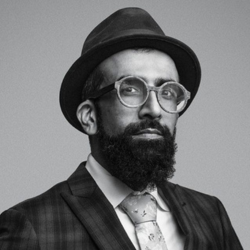
Omar Yaqub
Servant of Servants with IslamicFamily
Omar Yaqub (@somaryaqub X, LinkedIn), is the co-founder of flourishing.systems, a company using design, data justice and innovation to unlock the superpowers of frontline workers. He also serves the team at IslamicFamily, a social change organization that is disrupting systemic inequity through service, research & beauty. During his time with IslamicFamily the organization has become a multi-award winning Imagine Canada & Great Places to Work accredited charity. He is a former Historian Co-Laureate for the City of Edmonton & past instructor in the MBA program at the University of Alberta. He has two decades of experience in the for-benefit sector. Omar has been awarded a Doctor of Sacred Letters from St Stephen’s College, EMCN’s RISE award for Community Leadership, and the University of Alberta’s Co-op Mentorship Award. He is a settler on Treaty 6.
Integrating AI into the Qualitative Analysis World: Methodological Implications
Tuesday, November 18, 2025, 11am -12:15 pm (MT)
Hybrid Seminar
In person: T 1-61 ( Tory building, University of Alberta) | Virtual: Zoom link
Add event to calendar
Register for the event
AI is now a potential feature of every stage of qualitative research activity. What does this mean for how we make design decisions, frame analysis, navigate ethics, or even describe what we do? In this session, we will together watch a short webinar, Integrating AI into the Qualitative Analysis World, by Dr. Christina Silver, an expert in computer-assisted qualitative data analysis. Following the video, Dr. Silver and Dr. Maria Finnsdottir from the UA Digital Research Service will have a conversation about what it means to be and remain “methodologically-grounded” in the context of AI.
Panelists

Christina Silver
Associate Professor (Teaching), Sociology; Director of CAQDAS Networking Project; University of Surrey, UK
Dr. Silver has been working with the CAQDAS Networking Project (CNP) since 1998 and now manages the project. The CNP provides platforms of debate concerning the use of Computer Assisted Qualitative Data AnalysiS (CAQDAS) packages. Dr Silver advises and trains research teams on their use of CAQDAS software. Dr Silver has been commissioned to carry out research projects for a number of independent organisations, including a collaborative Action Research Project between East Sussex Hospitals NHS Trust, the Centre for the Development of Health Care Policy and Practice (CDNPP) at Leeds University and the Facilities Management Graduate Centre (FMGC) at Sheffield Hallam University. Dr Silver came to Surrey and obtained an ESRC-funded PhD comparing the development of school-based sex education in England and Wales and the Netherlands in 2002.

Maria Finnsdottir
Humanities & Social Sciences Specialist, Digital Research Services, University of Alberta
María Sigríður Finnsdóttir is the Humanities & Social Sciences Specialist with Digital Research Services at the University of Alberta. She is also the chair of the Digital Research Alliance of Canada’s national humanities and social sciences team. Prior to this position with the U of A, María held a postdoctoral fellowship on the Borders in Globalization project at the University of Victoria. María holds a PhD in Sociology from the University of Toronto, awarded in 2024. Her research interests are in political communication, gendered representation, far-right and populist politics, and computational social science.
Community-Engaged Research: The What, the Why and the How - POSTPONED
Thursday, October 28, 2025, 10 - 11 a.m.
Hybrid Seminar
In person: T 1-61 ( Tory building, University of Alberta) | Virtual: Zoom link
Add event to calendar
Register for the event
This seminar will provide a simple overview of community-engaged research for those who may be new to it and/or unfamiliar with this approach to research. Specifically, we will review the purpose of community-engaged research and its core principles along with examples of some projects that use a community-engaged approach.
Panelists

Bethan Kingsley
Rresearch Associate at the Women and Children’s Health Research Institute (WCHRI)
Dr. Bethan Kingsley is a Research Associate at the Women and Children’s Health Research Institute (WCHRI). She completed her PhD using a community-engaged approach to explore issues relating to accessibility and marginalization in sport and recreation for young people living with lower incomes. Following her PhD she did a postdoctoral fellowship with the Community-University Partnership (CUP) for the Study of Children, Youth and Families, working on the Evaluation Capacity Network with Dr. Rebecca Gokiert along with a number of community partners from non profits, government, and funding agencies. Prior to moving to WCHRI, she also worked with Dr. Maria Mayan on a research program to explore the development of inclusive economies in partnership with End Poverty Edmonton and Drayton Valley.
Survey Data Collection in Polarized Times: Insights from Viewpoint Alberta
Friday, Sep 26, 2025, 10 - 11 a.m.
Hybrid Seminar
In person: T 1-61 ( Tory building, University of Alberta) | Virtual: Zoom link
Surveys remain one of the most widely used tools for studying how people think and act. This session examines their strengths and limitations in understanding political attitudes and behaviours, particularly in contexts of high political polarization. We will consider the practical and methodological difficulties of online survey research, including recruitment, response bias, data quality, and tracking attitudes over time. Drawing on evidence from Viewpoint Alberta, a large, multi-year survey project examining the political attitudes and behaviours of Albertans, we will discuss lessons for designing surveys that balance rigour with feasibility in contemporary political research.
Panelists

Feo Snagovsky
Assistant Professor, Department of Political Science
Dr. Feo Snagovsky is an Assistant Professor in the Department of Political Science at the University of Alberta. His research focuses on the comparative analysis of elections and political behaviour – particularly in the role that political elites play in shaping identity and public opinion. His work has been published in Party Politics, Parliamentary Affairs, Government and Opposition, Electoral Studies, the Canadian Journal of Political Science and the Australian Journal of Political Science. His current research examines conspiracy theory belief and support for democracy.

Evan Walker
PhD student, Department of Political Science, University of Alberta.
Evan Walker is a PhD student in the Department of Political Science at the University of Alberta. Having completed his Master's studies at the U of A, Evan’s research interests centre around populism, political behaviour, and occasionally political economy. Evan aims to mesh his background in Political Science, Economics, and Geography to help better understand public opinion.