Corrosion + Wear
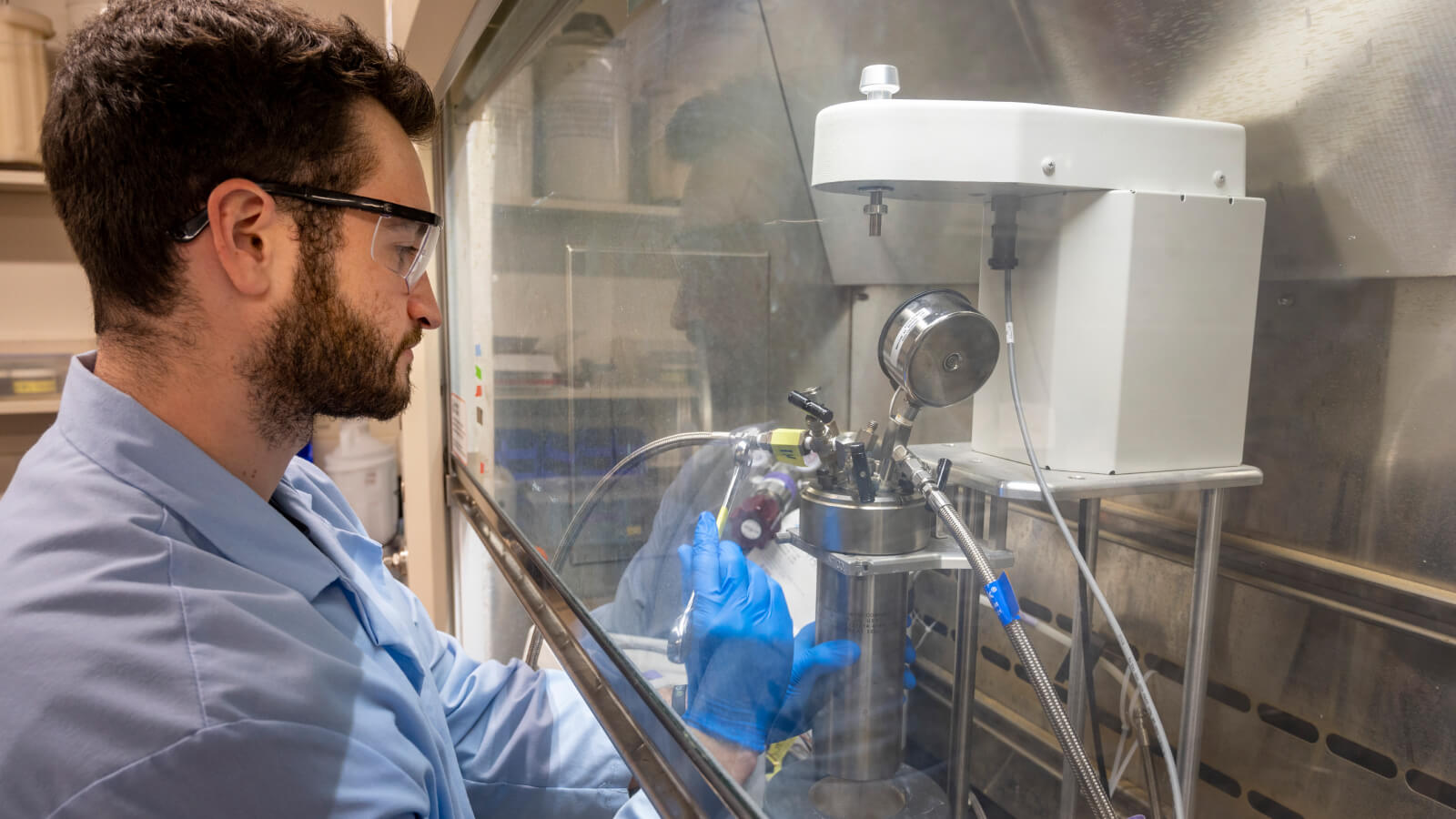
Research in corrosion and wear investigates how materials degrade due to environmental exposure, mechanical strain and the effects of processing. This includes studying the electrochemical, mechanical and microstructural factors that lead to material breakdown over time. Understanding these fundamental mechanisms allows us to design stronger, longer-lasting materials and protective strategies.
Our work has important applications across various industries. For example, we study corrosion in pipeline steels used in the energy sector, develop advanced coatings to improve the durability of industrial components, and engineer materials suited for renewable energy technologies like wind turbines and solar panels. We also explore wear-resistant materials used in transportation, aerospace, manufacturing and biomedical devices where reliability and longevity are critical. Students involved in this research gain hands-on experience with advanced analytical techniques and materials testing, preparing them for careers in materials engineering, sustainability and innovation. This area is vital to building a more resilient, efficient world.
Possible Careers
- Materials engineer
- Corrosion engineer
- Failure analysis engineer
Current Research
Join us to tackle the multi-billion-dollar challenge of materials degradation across extreme industrial and environmental settings. Our Corrosion & Wear researchers extend asset life from wellhead to refinery, covering high-pressure transmission lines, gathering systems, downhole tools, and high-temperature process equipment. We integrate electrochemistry and tribology with advanced alloy and coating design, leveraging high-entropy and refractory systems, surface engineering, and in situ/operando characterization. Current projects address sour service corrosion, erosion–corrosion in sand-laden multiphase flow, hydrogen embrittlement in H2 transport, microbially influenced corrosion, and protective coatings for combustion engines. Using multiscale modeling, data-driven materials discovery, and accelerated laboratory and field testing, we reveal failure mechanisms and engineer durable solutions. Close partnerships with pipeline operators and oil sands producers ensure impact, while our safety- and sustainability-focused research supports CCUS, geothermal, and low-carbon fuels. Students join a collaborative, industry-engaged environment to develop technologies that maximize reliability and reduce lifecycle emissions across energy infrastructure.