Masters of Engineering: Structural

At the U of A, structural engineering is more than just a discipline — it’s a legacy. Our department’s roots run deep, with many of our original founders in the early 20th century being visionary structural engineers who laid the groundwork for our enduring excellence.
Today, we continue this proud tradition, offering unparalleled expertise across a spectrum of materials such as steel, concrete, masonry, timber and composites. We maintain an outstanding reputation for leadership in structural design, leading research, community outreach and critical code development.
Our program is home to the C.W. Carry Chair in Steel Structures, the Steel Centre, the Nasseri School of Building Science and Engineering, the Advanced Research in Timber Systems (ARTS) Group, the Masonry Centre and the MCAA Endowed Chair in Masonry Structures.
Structural engineers design buildings, bridges, gymnasiums, towers and structures of varying proportions. Structural engineers are trained to determine the materials and dimensions of elements in a structure so that the structure can perform safely. Leveraging both traditional knowledge and the latest technologies, structural engineers play a crucial role in designing the resilient and sustainable cities of the future.
Featured Facility
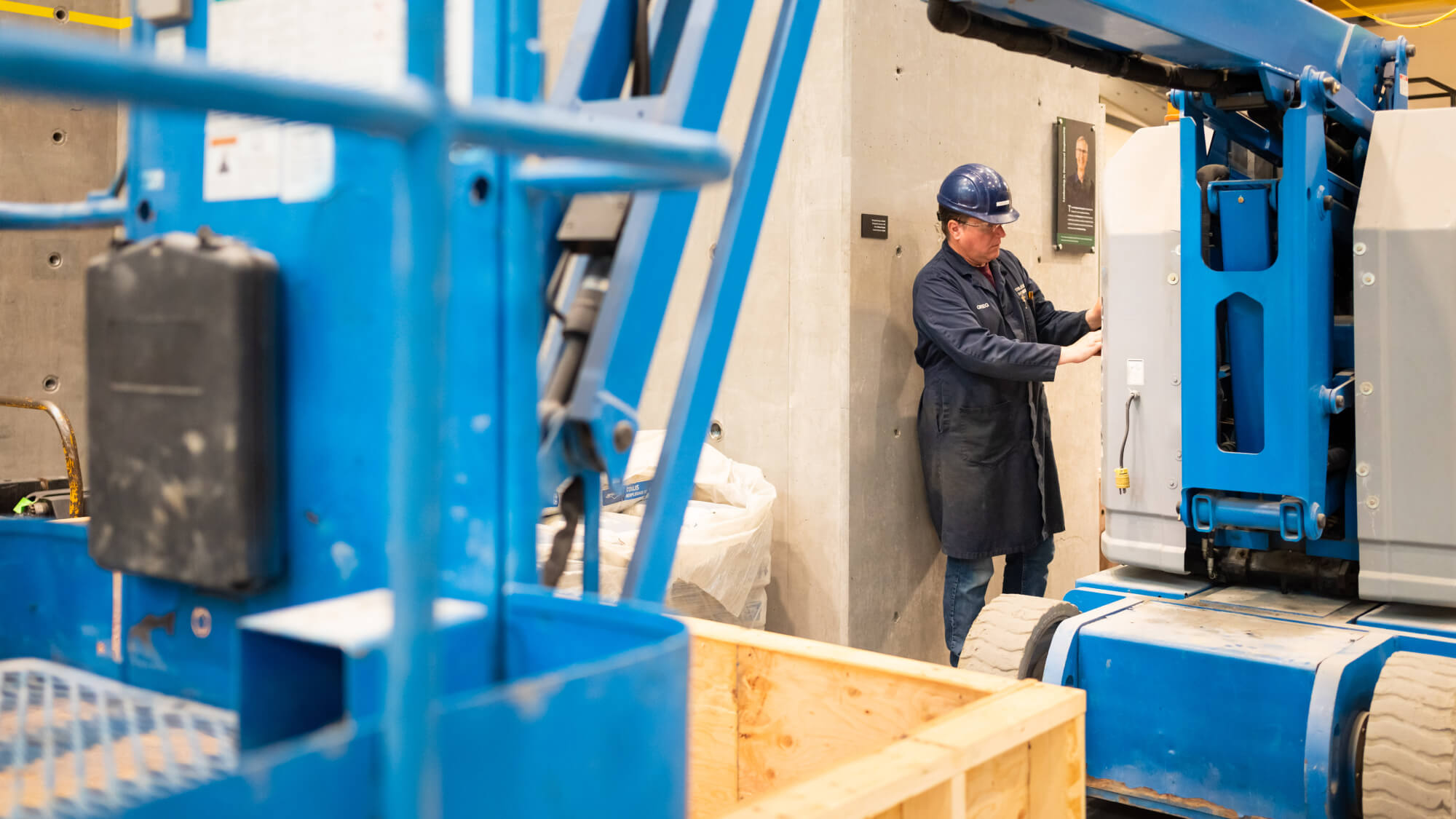
I.F. Morrison Structures Lab
For more than 60 years, the program’s I.F. Morrison Structures Lab has nurtured generations of engineers, including renowned alumnus and professor Jim Montgomery, whose innovative work on steel plate shear walls helped shape modern structural design. Following a major upgrade, the lab now features the Jim Montgomery Strongwall: a nine-metre tall, L-shaped testing wall capable of simulating earthquake-level forces. This facility supports full-scale structural research, enabling graduate student and industry partner studies on lateral load-resisting systems, AI-integrated monitoring and more.
Program Objectives
- This masters program is designed to prepare students for engineering practice in modern Structural Engineering, involving areas of design, analysis, inspection, monitoring, maintenance and retrofit of civil structures.
- It will also equip students with the required knowledge, skills, methods, tools, experience, and professional communication capability to contribute to the civil engineering industry and society at large.
- The program prepares the students for an entry career in the structural engineering industry.
Learning Outcomes
- Gain and apply knowledge of mechanics, analysis, design, and data analytics in engineering practice for a variety of civil structures (e.g., concrete, steel, timber, masonry and composite).
- Understand and follow national or international standards, codes and industry manuals to design safe and economical structural components (e.g., members, joints) or systems (e.g., buildings, bridges).
- Obtain relevant knowledge about emerging technologies and techniques to manage infrastructure assets in modern society.
- Collaborate effectively with team members on capstone projects and communicate to team members as well as other target audiences.
- Develop the foundational knowledge and awareness for life-long learning to continue professional growth, thus being adaptable to the ever-evolving industry needs.
- Understand ethical and professional responsibilities and make informed judgments considering the impact of engineering solutions in global, economic, environmental, and societal contexts.
Careers
- Structural design and construction
- Construction companies
- Public works and transportation departments
- Resource industries
- Developers
- Consultant
- Government
Course highlights
- CIV E 660 - Advanced Structure Analysis
- CIV E 670 - Behaviour and Design of Steel Members (Steel Structures)
- CIV E 661 - Dynamics of Structures
- CIV E 665 - Introduction to the Finite Element Method
- CIV E 662 - Structural Timber Design
- CIV E 779 - Advanced Topics in Structural Engineering (Machine Learning for Engineers)
- CIV E 900 - Directed Research Project (Capstone – Structural section)

Connect with us
Given the large volume of applications we receive, we are unable to provide updates or feedback for individual applications. Reach out to the university’s graduate and postdoctoral studies (GPS) team or use the link below for questions about the application process.
Contact the department: engg.gradadm@ualberta.ca