Construction
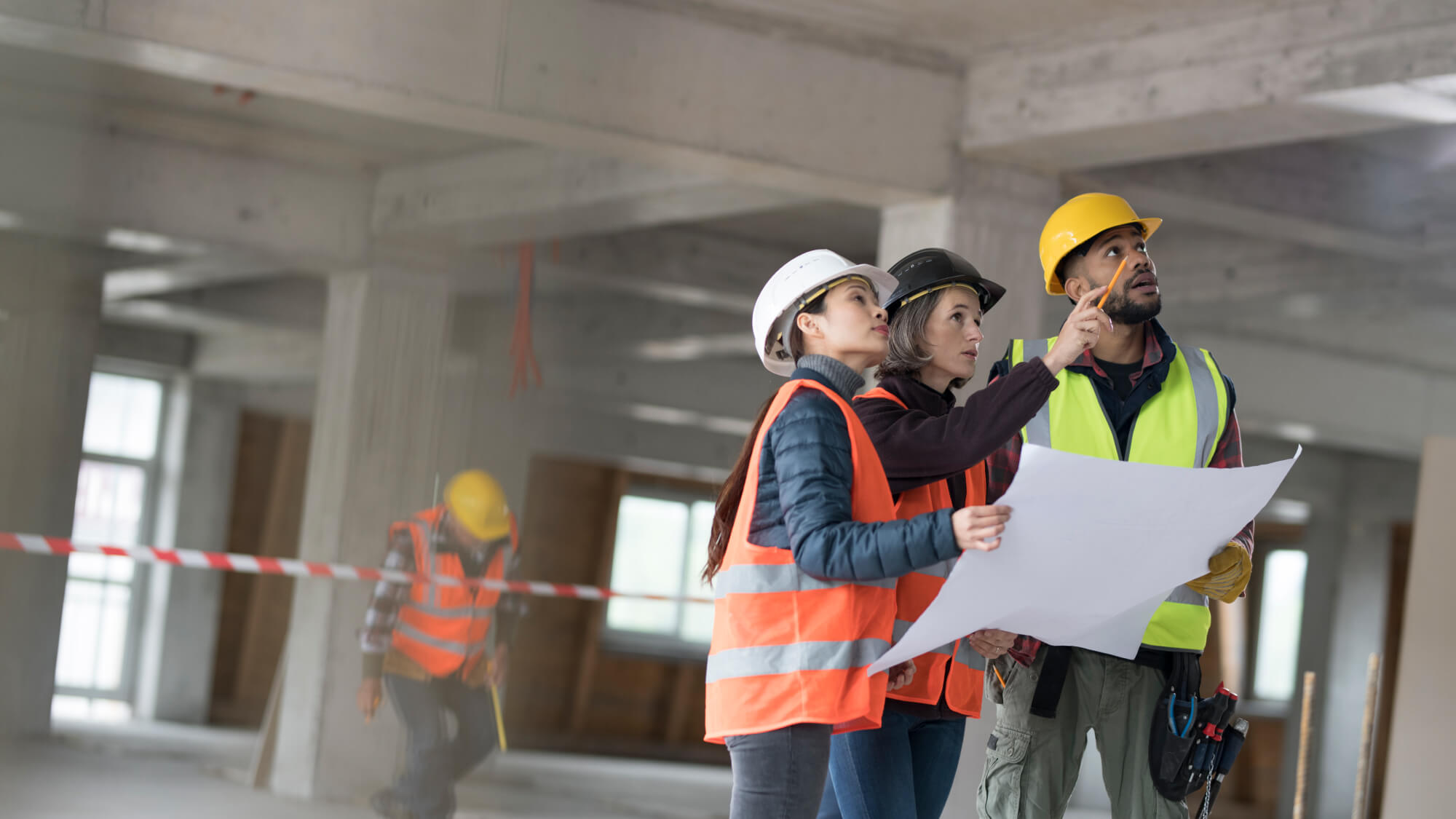

Construction engineers are problem solvers who combine critical thinking, project management, and communication skills with their knowledge of construction and engineering methods to build facilities that are safe and on budget.
In this dynamic and innovative field, you may be involved as a planner or site engineer for various large or small-scale projects.projects. These may include municipal and energy projects, modern commercial buildings, housing development systems, or road infrastructure.
Possible Careers
- Construction consultant
- Construction project manager
- Construction-related start-up entrepreneurs
- Cost estimator/controller
- Project coordinator
- Project controls manager
- Project planner/scheduler
- Safety inspector
- Site engineer
- Site manager
Featured Facility

The Hole School of Construction Engineering and the Construction Innovation Centre (CIC)
The Hole School of Construction Engineering is supported by the Construction Innovation Centre (CIC) to bring construction engineering research and expertise together under one umbrella, to innovate processes, enhance construction efficiency and safety.
Areas of Specialization
Subfocus areas address the complex, interwoven, and diverse challenges of modern construction engineering and management. Across the industry, successful project delivery requires highly interdisciplinary approaches that integrate diverse technical, operational, environmental and human factors. Our research team spans a wide range of core specialties to foster deep internal collaboration. We also actively partner with allied disciplines, including computer science, robotics, electrical engineering and the social sciences. Our program builds safe, resilient, and optimized construction systems by integrating artificial intelligence (AI), automation, and Industry 5.0 with a focus on decarbonization and strong corporate partnerships.
Artificial Intelligence (AI) and Digital Transformation in Construction
Investigating the integration of diverse AI algorithms, predictive analytics, and digitalized platforms throughout the project lifecycle to automate complex design decision-making, optimize resource allocation, and manage project risks. This research aims to support a shift from traditional workflows to fully integrated, AI- and data-centric management ecosystems.
Automation and Robotics in Construction
Developing, testing, and deploying autonomous mechanical systems and collaborative robotics—such as drones, exoskeletons, and automated heavy machinery—to execute repetitive or hazardous tasks, fostering safe human-robot collaboration that augments worker capabilities, increases onsite precision, and mitigates critical skilled labour shortages.
Construction Simulation and Modelling
Creating high-fidelity multidimensional spatio-temporal simulations to virtually construct, analyze, and optimize project schedules, site logistics, and spatial constraints before physical execution, minimizing costly rework, facilitating productivity, and enhancing collaboration.
Extended Reality and Human-Computer Interface for Construction
Designing and evaluating augmented, virtual, and mixed reality applications alongside intuitive interaction paradigms. This research aims to seamlessly overlay critical digital project data onto the physical job site to improve design review, spatial comprehension, remote inspection and real-time operational guidance.
Human Factors for Worker Productivity and Safety
Monitoring, modelling, and simulation of the socio-cognitive, neural, and psychophysiological states of workforces interacting with dynamic site environments. This research aims to mitigate accidents and mental and physical illnesses to improve onsite productivity, safety and job satisfaction.
Lean Construction
Applying advanced production management principles to optimize the continuous flow of materials, information, and labour across the supply chain. This research works to systematically eliminate physical and process waste while maximizing value generation from conceptual design through project handover.
Decarbonization of Construction
Advancing the adoption of low-carbon materials, circular economy principles, and energy-efficient lifecycle operations. This research supports work to systematically measure, reduce, and eliminate greenhouse gas emissions associated with both the embodied carbon of material production and the operational carbon of the built environment.
Modular, Offsite, and Industrialized Construction
Re-engineering the traditional supply chain by transitioning site-built operations into controlled factory environments through design for manufacturing and assembly, enabling the rapid, high-quality production of standardized volumetric modules and panelized components for efficient on-site integration.
Resilient Infrastructure Construction and Post-disaster Recovery
Leveraging advanced analytical approaches to optimize infrastructure planning, construction, and rapid recovery under intensifying climate risks, designing robust mitigation and adaptation strategies that enable effective capital investments and inform evidence-based policy decisions for long-term societal resilience.