Environmental Engineering and Science
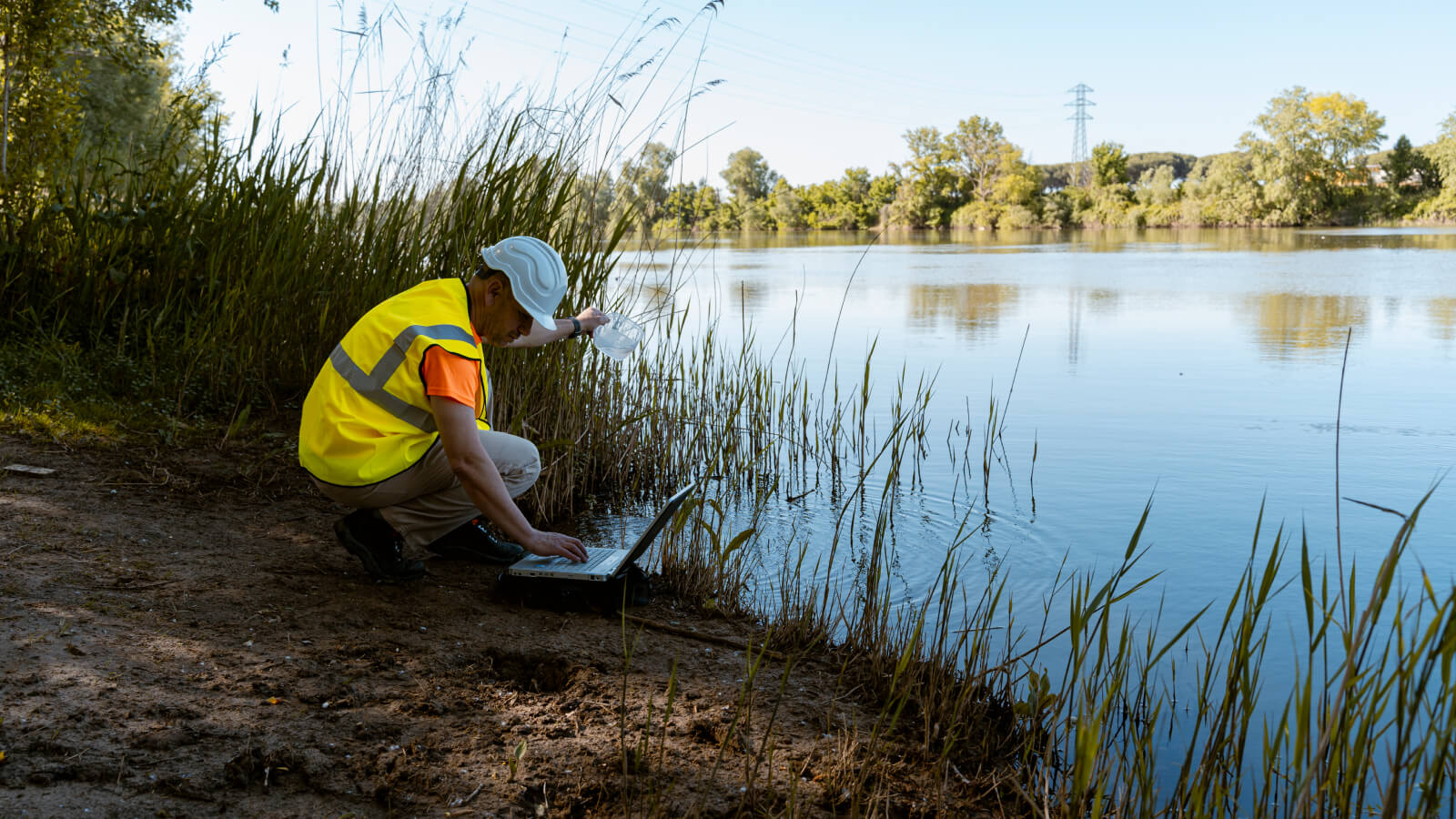
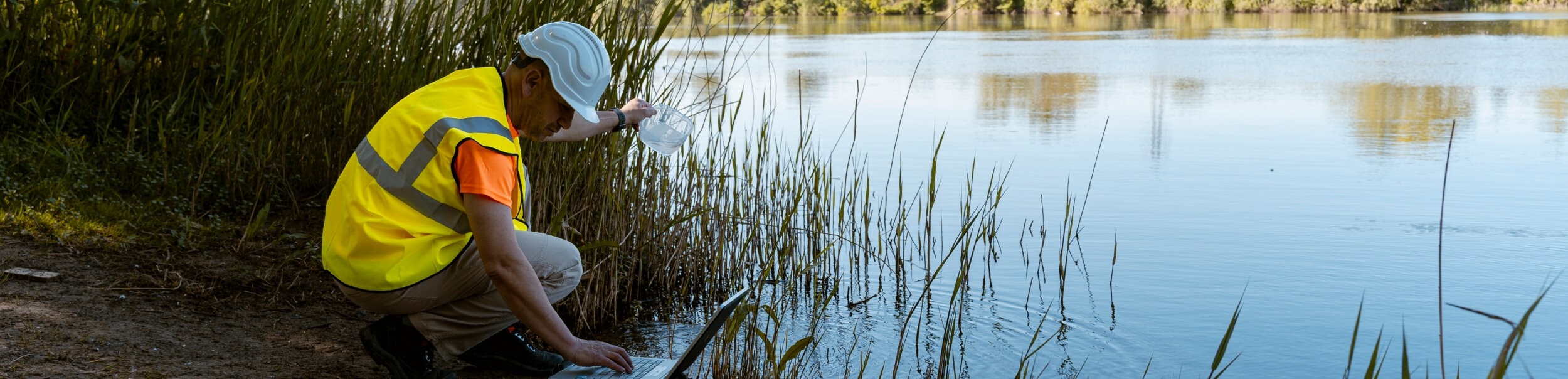
We are honoured to be one of the largest and best-equipped environmental engineering programs in Canada. Environmental engineers apply their knowledge of the natural sciences — chemistry, biology and microbiology — to solve environmental and public health-related problems.
As an environmental engineer, you might perform environmental site assessments, site remediation and impact assessments. You might also develop or design water distribution and sewerage collection systems, design and manage water treatment and wastewater treatment facilities for cities and industries, design and manage stormwater retention ponds and reclamation wetlands, design and operate landfills, or assess and control emissions of air pollutants and greenhouse gases.
Possible Careers
- Air quality engineer
- Air quality engineer
- Civil engineer
- Environmental engineer
- Environmental monitoring specialist
- Environmental process design engineer
- Government policy consultant
- Green entrepreneur
- Groundwater resources engineer
- Process engineer
- Project manager/engineer
- Reclamation engineer
- Remediation engineer
- Solid waste management engineer
- Water quality management or modelling specialist
- Water/wastewater engineer
- Soil remediation specialist
Areas of Specialization
Leading the Future of Environmental Innovation. As home to one of Canada’s largest and most advanced environmental engineering programs, we don’t just study the environment —we protect it. By fusing mastery in chemistry and microbiology with innovative engineering, our researchers are developing the high-impact solutions necessary to safeguard global public health and our natural ecosystems.
Circular Economy and Sustainability
Environmental engineering challenges are addressed through circular economy principles that aim to minimize waste, extend material life cycles and promote resource recovery within closed-loop systems. In water and wastewater treatment, these principles are implemented through the development of materials derived from abundant biomass waste, including agricultural residues, sludge, and other organic waste streams, and their conversion into value-added materials. These materials are integrated with chemical or biological treatment solutions to enhance performance. By coupling advanced material design with sustainable treatment strategies, these approaches improve system resilience, reduce environmental impacts and support efficient water management.
Water and Wastewater Treatment
We develop next-generation water and wastewater treatment technologies, including advanced physicochemical, biological, and hybrid processes, to address emerging and persistent contaminants in complex matrices and improve overall treatment performance. Integration of innovative materials with advanced process design and engineering enables efficient contaminant removal across a range of conditions. Performance is validated in real water matrices under environmentally relevant conditions to ensure reliability and practical applicability. These efforts support the development of safe, scalable, and cost-effective treatment solutions that address modern water challenges, facilitate water reuse and resource recovery, and contribute to protecting public health and aquatic environments for both urban and remote communities, including Indigenous communities.
Other sub-focus areas also include:
- Advanced physicochemical processes
- Safe water for remote and Indigenous communities
Air Quality Management
Our research on air quality management addresses the protection of human health, the building environment, and environmental sustainability by improving how air pollution is measured, understood, and controlled. We conduct research on pollution control technologies, urban air quality, indoor air quality, and the health and environmental impacts of air pollutants. A particular strength is our work on wildfire smoke under a changing climate, including its effects on outdoor and indoor environments and wildfire pollutant control. Through integrated studies of emissions, atmospheric processes, exposure, and mitigation strategies, our research supports cleaner air, more resilient communities, and sustainable living conditions.
Other sub-focus areas also include:
- Air quality characterization
- Air pollution control
- Greenhouse gas emissions
Environmental Biotechnology
Our research in environmental biotechnology applies conventional and emerging biological processes to address challenges in environmental protection, sustainable bioenergy and resource recovery, and environmental monitoring. We investigate the role of microbial communities and biogeochemical processes in transforming contaminants, recovering resources from waste and wastewater streams, and developing low-energy treatment technologies for water, wastewater, soil, and organic solid waste. By integrating biological, chemical, and electrochemical approaches, our work supports the development of innovative and sustainable environmental biotechnologies with applications in remediation, renewable bioresources, and environmental monitoring.
Other sub-focus areas also include:
- Anaerobic biotechnologies for bioenergy and resource recovery
- Bioremediation
- Biosensing
Biomaterials for Environmental Applications
We apply principles of circular economy through the development of sustainable biomaterials from abundant biomass waste, including agricultural residues, sludge, and other organic waste streams, and their utilization for various environmental applications. These biomaterials are integrated with chemical or biological treatment solutions to enhance performance of existing treatment processes for water and wastewater treatment. In solid waste management, these materials are utilized as additives for enhancing biological activity. We examine the production of biochar as a low-cost, renewable, and waste-derived material as an adsorbent as well as a catalyst support for contaminant removal. Key emphasis is placed on material performance, functionalization, and reuse potential. By coupling advanced material design with sustainable treatment strategies, these approaches improve system resilience, reduce environmental impacts, and support efficient water, wastewater, and waste management. Furthermore, we explore sustainable treatment approaches, including biochar-amended systems to minimize the chemical and energy demand for water treatment systems. These include biofiltration and wetland-based treatment technologies.
Other sub-focus areas also include:
- Recovery of Bioproducts from Carbon Waste
Fate, Transport, and Mitigation of Emerging Contaminants
Our research addresses the occurrence, transformation, transport, and mitigation of emerging contaminants in water, wastewater, air, and natural environment. We investigate contaminants of emerging concern, including pharmaceuticals, personal care products, Per- and polyfluoroalkyl substances (PFAS), industrial chemicals, and nano/microplastics, with emphasis on their environmental behavior, treatment, and potential ecological and human health impacts. Using advanced analytical techniques and sustainable treatment approaches, our work supports the development of resilient and effective strategies for contaminant monitoring, removal, and risk reduction.
Other sub-focus areas also include:
- Occurrence and Treatment of Micropollutants
- Transformation Products and Toxicity Assessment
- Fate, transport, and mitigation of Microplastics
- Control of airborne PFAS
- Antibiotic Resistance