Masters of Engineering: Water Resources
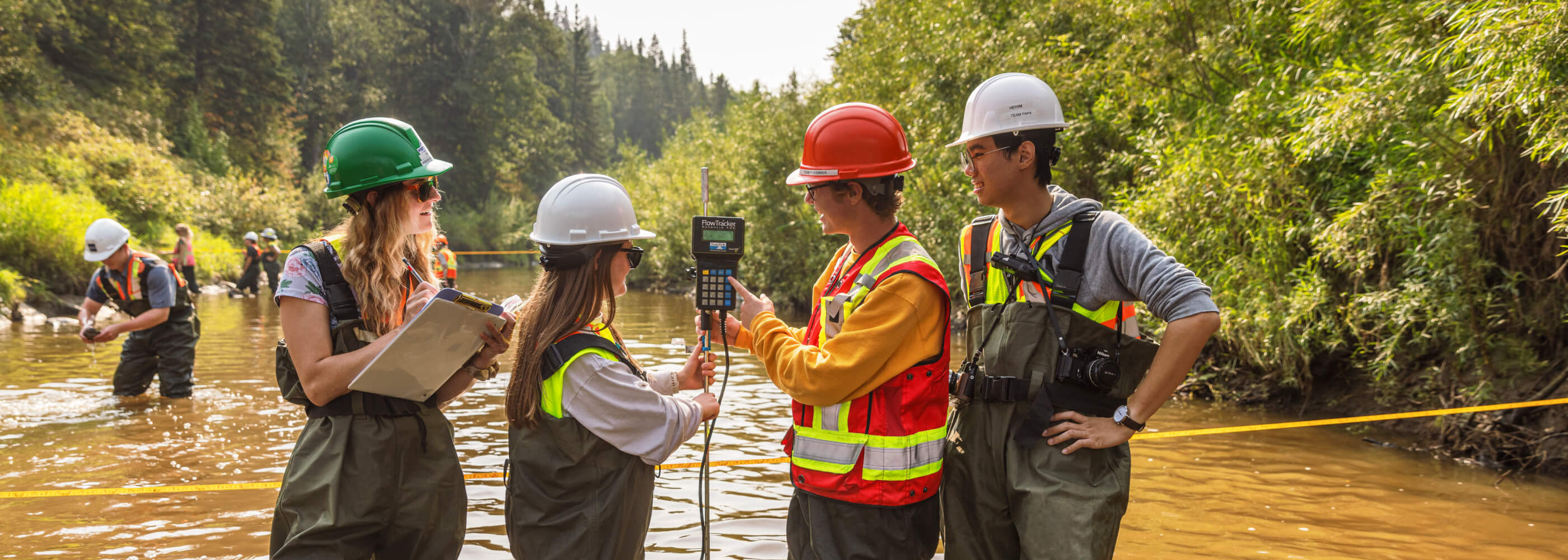
Master the science of survival by engineering resilient water systems that safeguard our environment and secure the world’s most precious resource for generations to come.
We are recognized internationally for our research contributions in cutting-edge computer modelling, innovative field measurements in natural and constructed environments and advanced laboratory experiments in the T. Blench Hydraulics Lab. At 1,240 square metres, it is one of the largest hydraulic modelling facilities in Canada.
Featured Facility
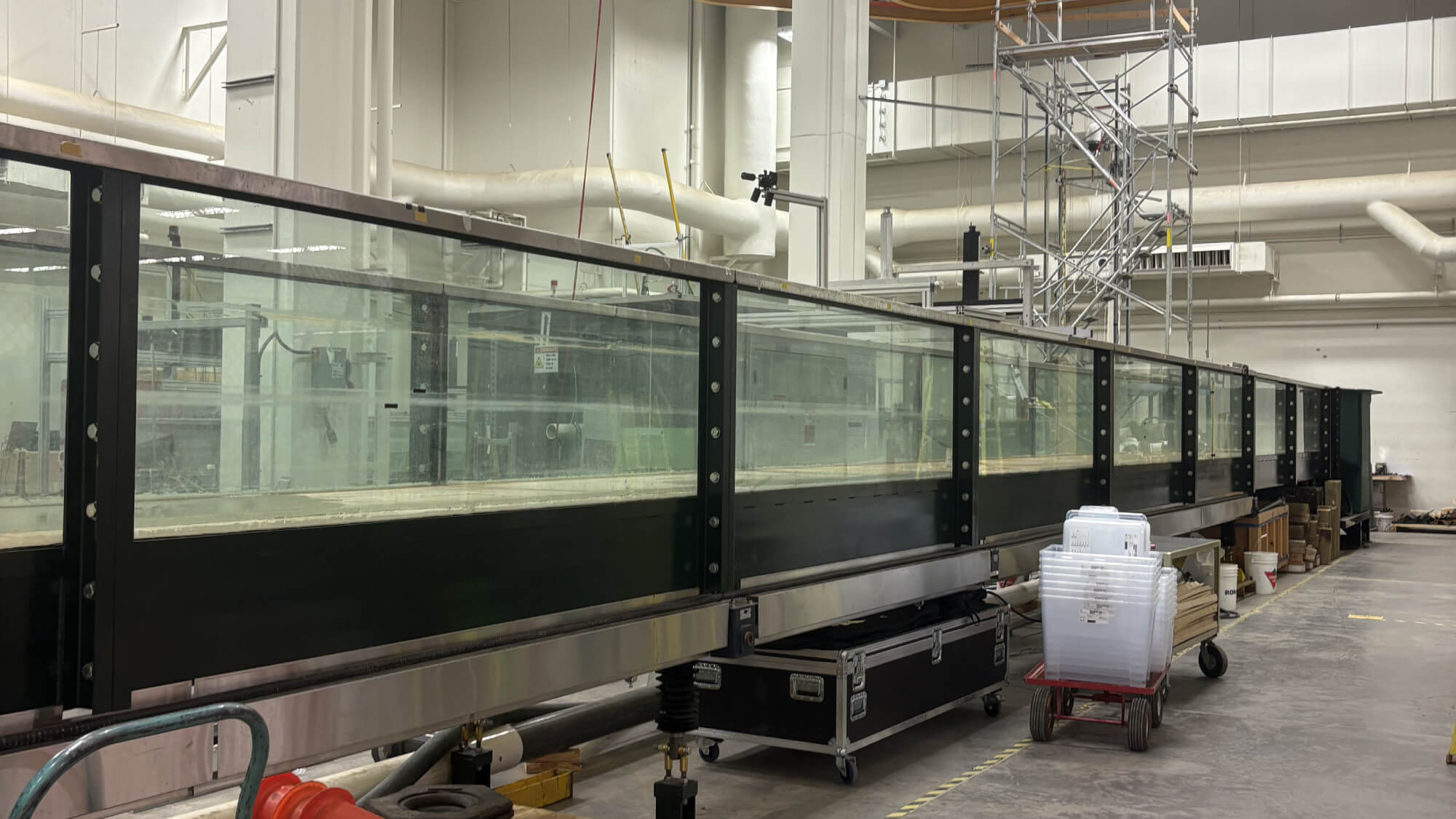
The T. Blench Hydraulics Laboratory
The T. Blench Hydraulics Laboratory uses advanced tools like a DISA two-colour LDA and FOLDA for nonintrusive, simultaneous, and directional velocity/turbulence measurement. The Ellerslie Hydraulics Laboratory features mixed, tilting and curved flumes for model studies. A specialized Ichthyo-Hydraulics (I-H) flume allows for controlled fish response observation. Other instruments include hot-wire anemometers, pressure transducers and more.
Program Objectives
- This masters of engineering program is designed to prepare students for engineering practice in modern water resources engineering, involving areas of design, analysis, monitoring, maintenance, and management of water resources systems.
- It will also equip students with the required knowledge, skills, methods, tools, experience, and professional capability to contribute to the civil engineering industry and society at large.
- Through this program, students will increase their knowledge, deepen their understanding, and upgrade their skills in subjects fundamental to Water Resources Engineering, enabling them to excel in their field.
Learning Outcomes
- Gain a comprehensive understanding of the principles, theories, and concepts relevant to water resources engineering, including hydrology, hydraulics, water quality and water management.
- Apply advanced technical skills and tools to analyze, design, and manage water resources systems effectively Integrate knowledge from multiple disciplines to develop holistic approaches to water resources management and collaborate effectively with professionals from various fields.
- Critically analyze complex water resources engineering problems, evaluate alternative solutions, and make informed decisions considering technical, environmental, social and economic factors.
- Communicate technical information clearly and effectively, both in written reports and oral presentations, to both technical and non-technical audiences.
- Prepare for professional practice in water resources engineering or further research by acquiring the necessary knowledge and skills to address real-world challenges and contribute to advancements in the field.
- Understand ethical and professional responsibilities and make informed judgements considering the impact of engineering solutions on global, economic, environmental and societal contexts.
Careers
- Water resources management and decision making
- Bridge planning and design
- Water and drainage infrastructure planning and design
- River ice hydraulics and assessment
- Stream restoration and fish habitat design
- Hydropower operations
- Dam safety and management
- Flood and drought forecasting
- Climate change resilience planning
- Hydrological modelling
- Flood risk modelling and mitigation design
- Water policy and governance
- Cumulative impacts assessment
Course highlights
- CIV E 631 - Engineering Fluid Mechanics
- CIV E 645 - Water Resources Planning and Management
- CIV E 739 - Advanced Topics in Fluid Mechanics and Hydraulics
- CIV E 636 - River Ice Engineering
- CIV E 641 - Advanced Surface Water Hydrology
- CIV E 649 - Natural Resources Management
- CIV E 900 - Directed Research Project (Capstone – Water resources section)

Connect with us
Given the large volume of applications we receive, we are unable to provide updates or feedback for individual applications. Reach out to the university’s graduate and postdoctoral studies (GPS) team or use the link below for questions about the application process.
Contact the department: engg.gradadm@ualberta.ca