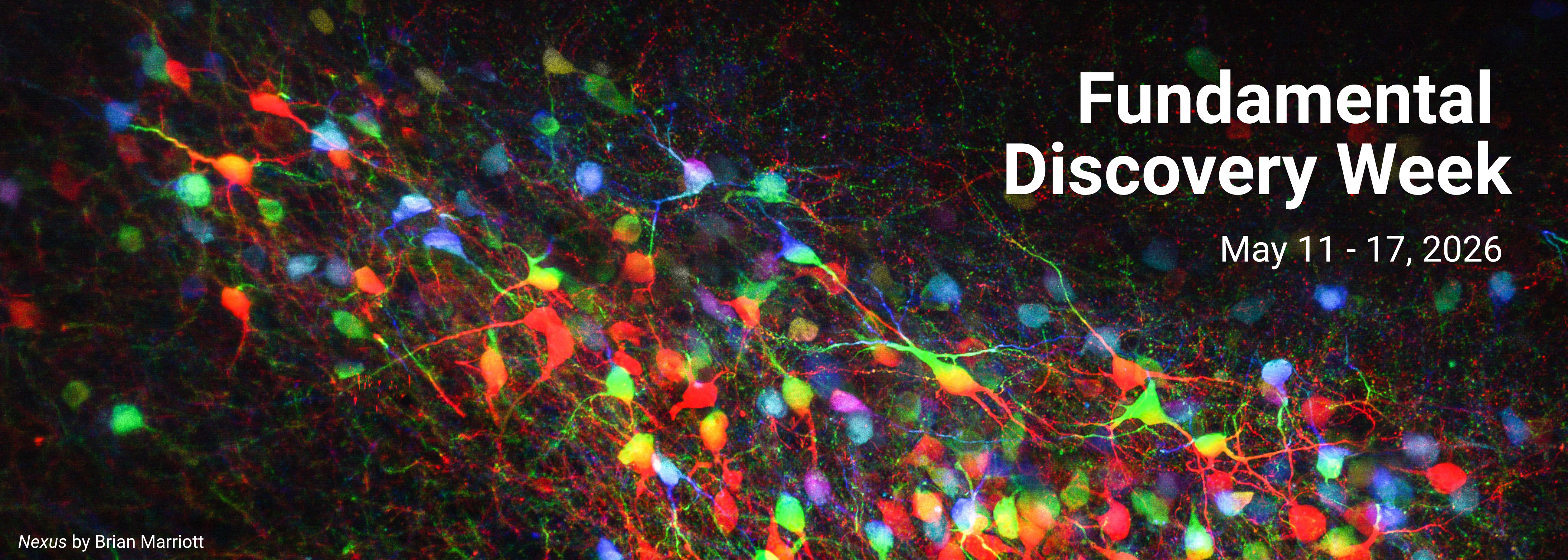
Fundamental Discovery Week—a celebration of curiosity, exploration, and the pursuit of knowledge. From May 11 to May 17, we’re recognizing the foundational research that helps shape a brighter future. This week-long initiative highlights the vital role basic science plays in society.
What is basic science?
Basic science is research that helps us understand how the world works at its most fundamental level. Sometimes called fundamental or bench research, it builds the knowledge that later leads to new medicines, technologies, and treatments.
It can include studying things like genes linked to disease, how cells and microbes behave, or how the body functions. By uncovering these basics, scientists can better understand what causes illness and how to prevent or treat it.
Why celebrate basic science?
Celebrating basic science matters because it is the foundation on which nearly all major advances are built.
Basic science seeks to understand how the world works—without necessarily aiming for immediate practical applications. That curiosity-driven work is what eventually makes breakthroughs possible. Vaccines, semiconductors, GPS, MRI machines, and the internet all trace back to fundamental research that once seemed purely theoretical.
Here’s why it’s worth celebrating:
- It enables transformative breakthroughs
Discoveries in basic physics, chemistry, biology, and mathematics often unlock entirely new fields and technologies years—or decades—later. - It fuels innovation across disciplines
Applied research depends on basic knowledge. You can’t design new medicines, materials, or climate solutions without understanding underlying mechanisms first. - It expands our understanding of the natural world
Basic science answers fundamental questions about life, matter, energy, and the universe, enriching human knowledge and culture. - It inspires creativity and future scientists
Curiosity-driven discovery motivates new generations of researchers and encourages bold, imaginative thinking. - It drives long-term societal progress
While outcomes may be unpredictable, the cumulative impact of basic research is enormous—economically, medically, and socially.
A Love Letter to Foundational Science
To begin the week, we wrote a letter to foundational science to express our appreciation for the curiosity, persistence, and discovery that move research forward. Foundational science helps us ask important questions, deepen our understanding of the brain, and build the foundation for future advances in health and medicine. This letter is a celebration of the discoveries that begin with curiosity. Join us each day as we share videos from different labs highlighting the exciting research happening across our neuroscience community.
Day 1: a matter of chemistry
The Macauley Lab studies how special sugar molecules found on cells help control the body’s immune system. By exploring how these molecules affect communication between cells in the brain and body, the team hopes to better understand diseases linked to inflammation and neurodegeneration, such as Alzheimer’s disease. Their research could help pave the way for new treatments that support brain and immune health.
Day 2: the eyes have it
The Carr Lab studies how the retina — the light-sensitive tissue at the back of the eye — develops, works, and changes in disease. The team researches conditions such as macular degeneration and inherited vision disorders to better understand how vision loss happens. Their work aims to find early signs of disease and support the development of new treatments to help protect and preserve sight.
Day 3: the wonders of the brain
The Voronova Lab studies how stem cells in the brain help it grow, heal, and repair itself. The team explores how these cells behave in healthy brains and in conditions such as autism and multiple sclerosis. Their research is helping scientists better understand how the brain develops, changes over time, and responds to injury and disease.
Day 4: Developing Development
The Munz Lab studies how the brain forms and connects during development. By exploring how brain cells grow, communicate, and build networks, the team aims to understand what can happen when these processes are disrupted in neurological disorders. Their research helps uncover the basic building blocks of how the nervous system develops and stays healthy.
Day 5: the value of stem cells
The Gupta Lab studies how the brain grows and develops, and what happens when these processes don’t work as expected. By using stem cells to create models of early brain development in the lab, called brain organoids, the team explores conditions like autism and epilepsy. Their research helps scientists better understand how the nervous system forms and could lead to new ways to repair and treat neurological disorders in the future.
Fundamental science is important because...
Thank you for joining us throughout Fundamental Discovery Week as we celebrated the curiosity-driven discoveries that move neuroscience and mental health research forward. Over the past week, we highlighted the incredible work happening across our labs and the foundational science that helps us better understand the brain, behaviour, and disease.
On this final day, our scientists share why foundational science matters — and how asking fundamental questions today leads to the breakthroughs, treatments, and innovations of tomorrow.
FEATURED RESEARCHERS
Matthew Macauley
Professor, Department of Chemistry, Faculty of Science

Meghan Connolly
Postdoctoral Scholar, Macauley Lab

Brittany Carr
Assistant Professor, Department of Ophthalmology & Visual Science, Faculty of Medicine & Dentistry

Anastassia Voronova
Associate Professor, Department of Medical Genetics, Faculty of Medicine & Dentistry

Martin Munz
Assistant Professor, Department of Physiology, Faculty of Medicine & Dentistry
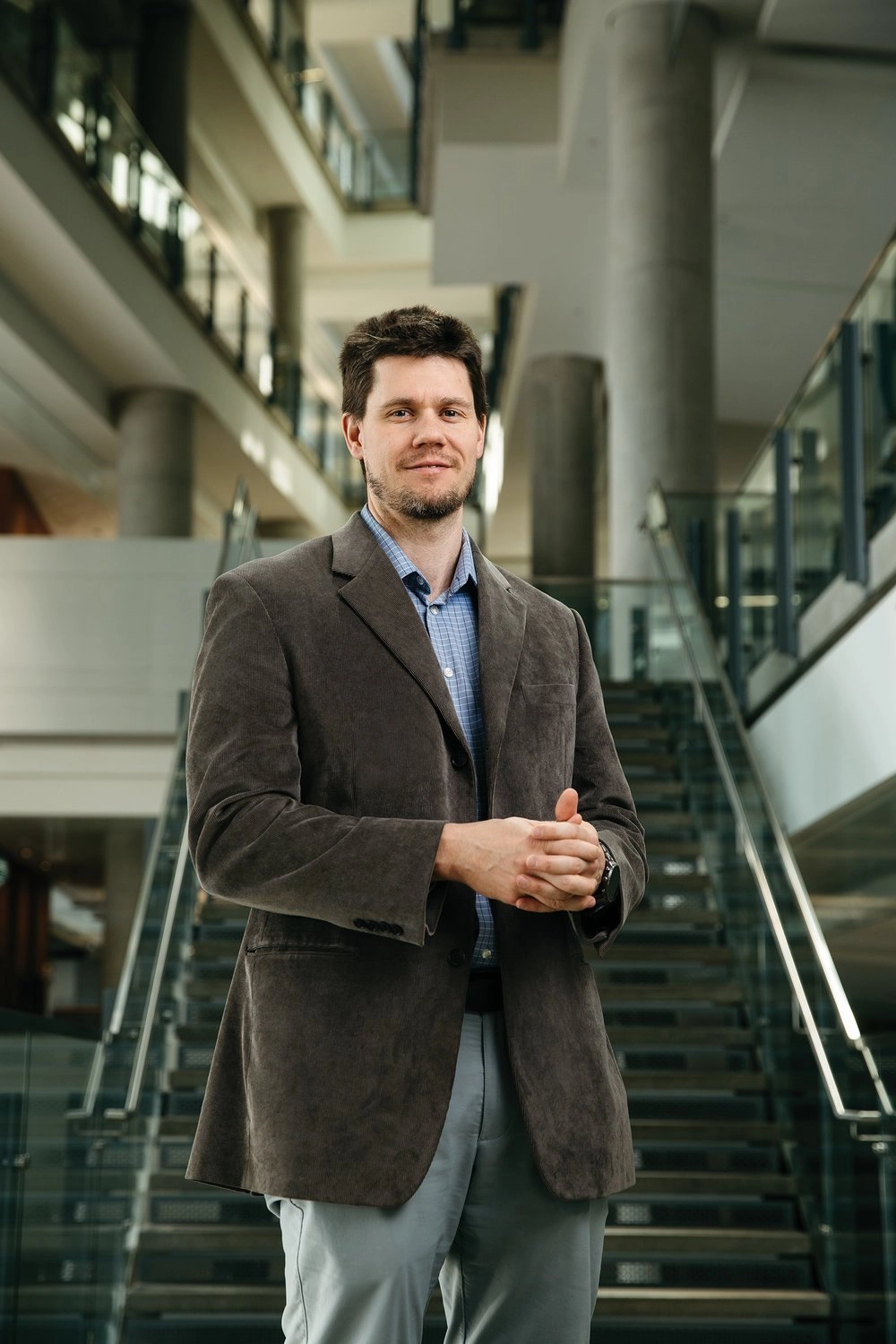
Dr. Martin Munz studies how the brain builds itself. His research focuses on how neuronal circuits form and function during early development and how genetic changes associated with autism can alter these processes. Using advanced imaging and electrophysiology techniques, his lab observes brain activity at the level of individual cells in developing embryos, helping uncover the fundamental mechanisms that shape cognition and neurodevelopment.
By understanding how brain circuits form from the very beginning, Dr. Munz's work aims to provide new insights into neurodevelopmental disorders and the foundations of brain function.
