National AccessAbility Week
This National AccessAbility Week (May 31 to June 6) we recognize University of Alberta researchers, teachers, learners and community members who are combatting ableism and removing barriers to accessibility. We also acknowledge the road ahead to become a more disability-inclusive university.
National AccessAbility Week
When Lived Experience Becomes Leadership
"After becoming disabled, I experienced firsthand what patient-centred occupational therapy can do — and it changed everything about the path I chose."
Meet MScOT student Kyra Mazer, whose experience as both a wheelchair user and future occupational therapist is helping shape a more inclusive future for rehabilitation care. After becoming disabled and discovering the impact of patient-centred OT, Kyra found a new career path — and a new purpose.
Now in the classroom, she's challenging assumptions, enriching discussions, and helping future healthcare providers better understand the realities of disability. Accessibility isn't just about removing barriers; it's about ensuring the people designing systems and delivering care reflect the communities they serve.
Read Kyra's Story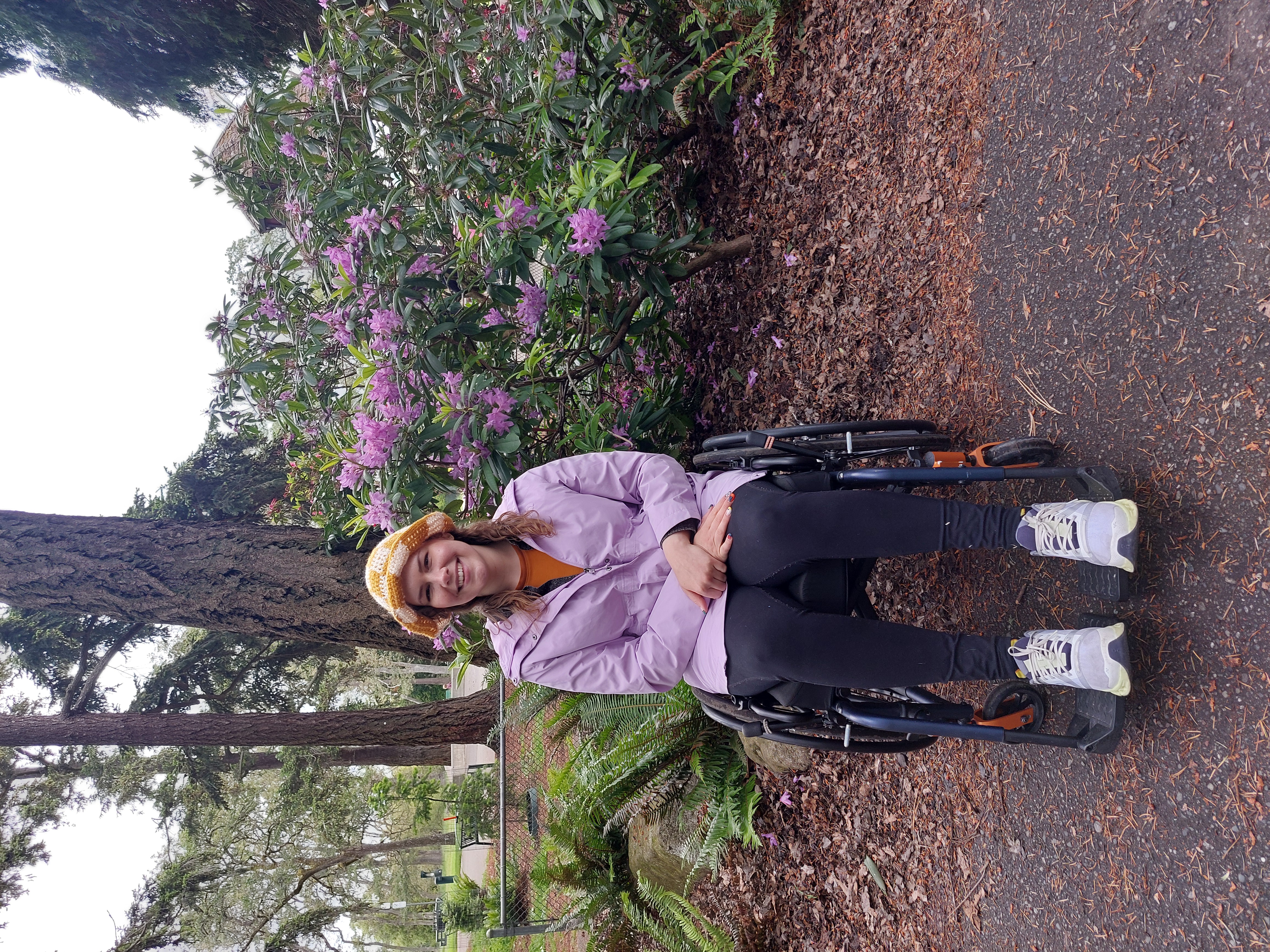
Kyra Mazer, MScOT student, Faculty of Rehabilitation Medicine

U of A community working towards better accessibility and inclusion
In recognition of National AccessAbility Week, here are eight ways U of A community members are striving to create a future accessible to all

‘Think of the whole child, not just their ears’
Joanne Weber is breaking new ground in exploring how arts-based learning can give deaf children every possible advantage in language development.
Read more
Making room for all kids to thrive
Strategies to foster inclusion and help you broaden your community.
Read moreThink of it as a traffic report for people with limited mobility: the free app Atlas, developed by Click&Push Accessibility out of the U of A's Rehabilitation Robotics Laboratory, maps physical barriers along a user's intended route — from construction and elevator closures to snow, ice, and poor accessibility. The app is crowd-sourced, letting community members report obstacles and share photos in real time, and its creators are now using machine learning to expand beyond Edmonton to communities across Canada.

Exclusive inclusion: Diverse-ability in STEM
A graduate student in the Department of Chemistry shares how STEM communities might better address inequality and barriers faced by researchers with disabilities.
Read more
Invention is designed to switch thoughts into action
Device would allow children with severe mobility issues to control toys or even powered wheelchairs with their minds.
Read more
Lifelong stutterer makes tremendous progress, becomes a donor to help others access program
John Carnegie overcame his fear of speaking at work and on the phone through the three-week intensive program at ISTAR (Institute for Stuttering Treatment and Research).

Danielle Peers: At the intersections of inclusion
Meet Danielle Peers, a former Paralympian, a scholar and professor, artist, speaker, filmmaker, performer, and activist. Peers works in the multi-disciplinary field of critical disability studies examining the practices that enable or constrain wide participation in parasport.
Read more
Being open to the unknown leads to unexpected opportunities for KSR grad
Alumna and aspiring Paralympian Sierra Roth finds deep meaning in helping others with disabilities navigate the world of sport and activity.
Read more
Study sheds light on accessibility on popular Whyte Avenue commercial corridor
Findings reveal barriers that create inequities where some people can access spaces while others cannot.
Read more
Student innovator spotlight: John Christy Johnson
A biomedical engineering graduate student is using his research on wheelchair biomechanics to help create a more accessible world.
Read more

Design expert builds quality of life into spaces for people with ‘invisible’ disabilities
Ensuring physical accessibility is only the beginning of creating places where people can “be who they are,” says design consultant and ALES PhD student Lara Pinchbeck.
Read more
From exclusion to inclusion: challenging the disability narrative
Joshua St. Pierre named Canada Research Chair in Critical Disability Studies.