News
SJC hosts lecture that brings faith and spirituality into the world of sports
Edmonton - October 23, 2026
On Oct. 8th, SJC welcomed renowned sports psychologist Dr. Mark Nesti for an in-depth
lecture titled “Flourishing of the Human Person in Sport: In Conversation with Sport
Psychologist Dr. Mark Nesti”. The lecture, which approached the world of sports and
athletics from a holistic and spiritual perspective, marked the first St. Joseph’s College
Speaker Series event of the academic year.
For the 23 persons in attendance, Dr. Nesti drew from insights by Catholic thinkers like
Josef Pieper, philosophical disciplines like phenomenology, and other sources to detail
an understanding of sports which acknowledges the reality and importance of the
human soul in athletics. Dr. Nesti emphasized that what makes a great athlete is not
merely their physical capabilities, but their whole personhood of mind, body and soul.
He had brought these same insights to bare at the Vatican in 2018, when he worked
with the Dicastery for Laity, Family and Life in Rome on their document, “Giving the Best
of Yourself”, relating to a Christian perspective of sport and the human person.
Dr. Nesti’s talk, co-sponsored by the SJC Kule Chair in Catholic Religious Education
and Newman Theological College, emphasized how much religious education extends
into all areas, including sport and athletics. We thank everyone for taking the time to
attend this unique and insightful lecture.
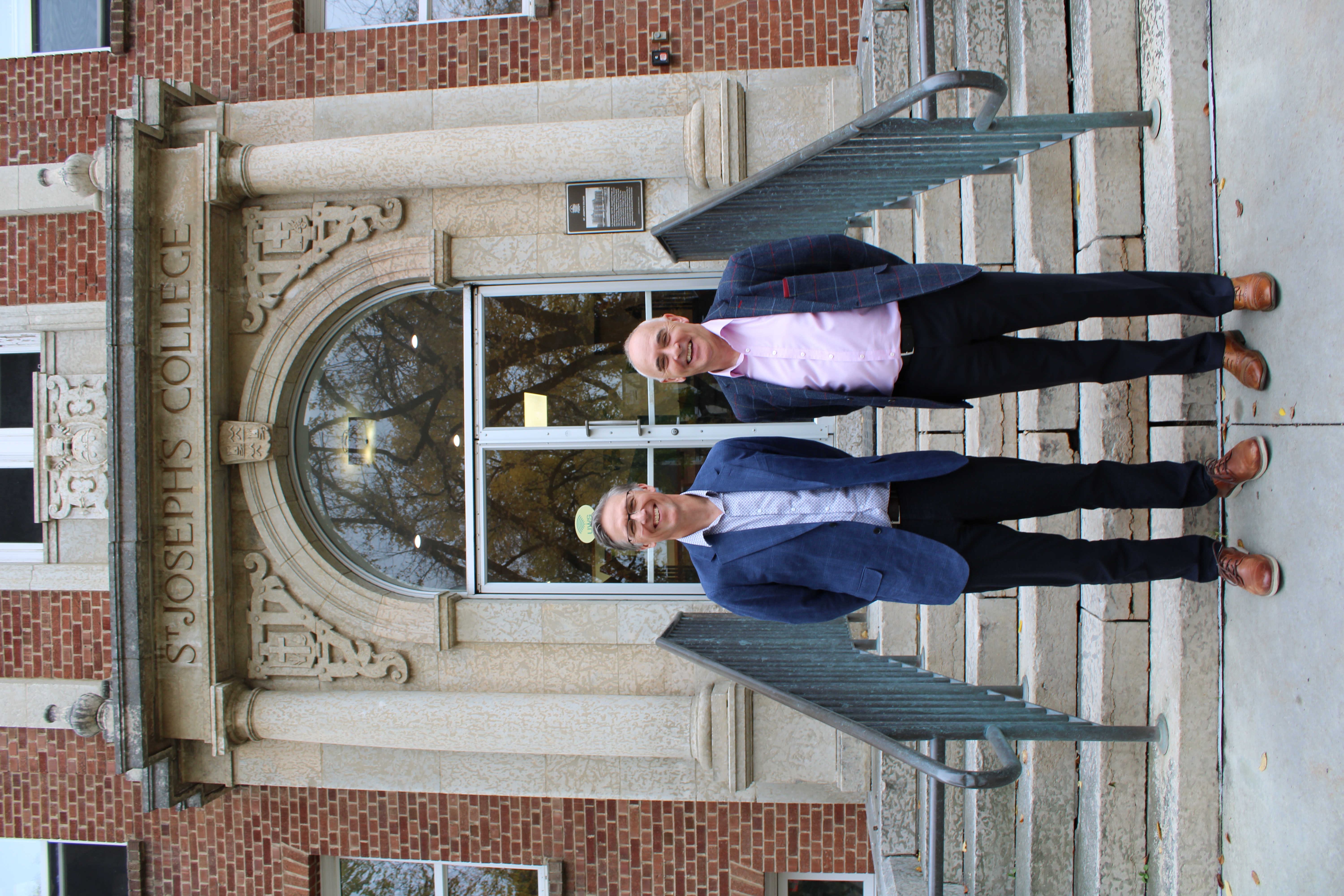
Dr. Matt Hoven & Dr. Mark Nesti
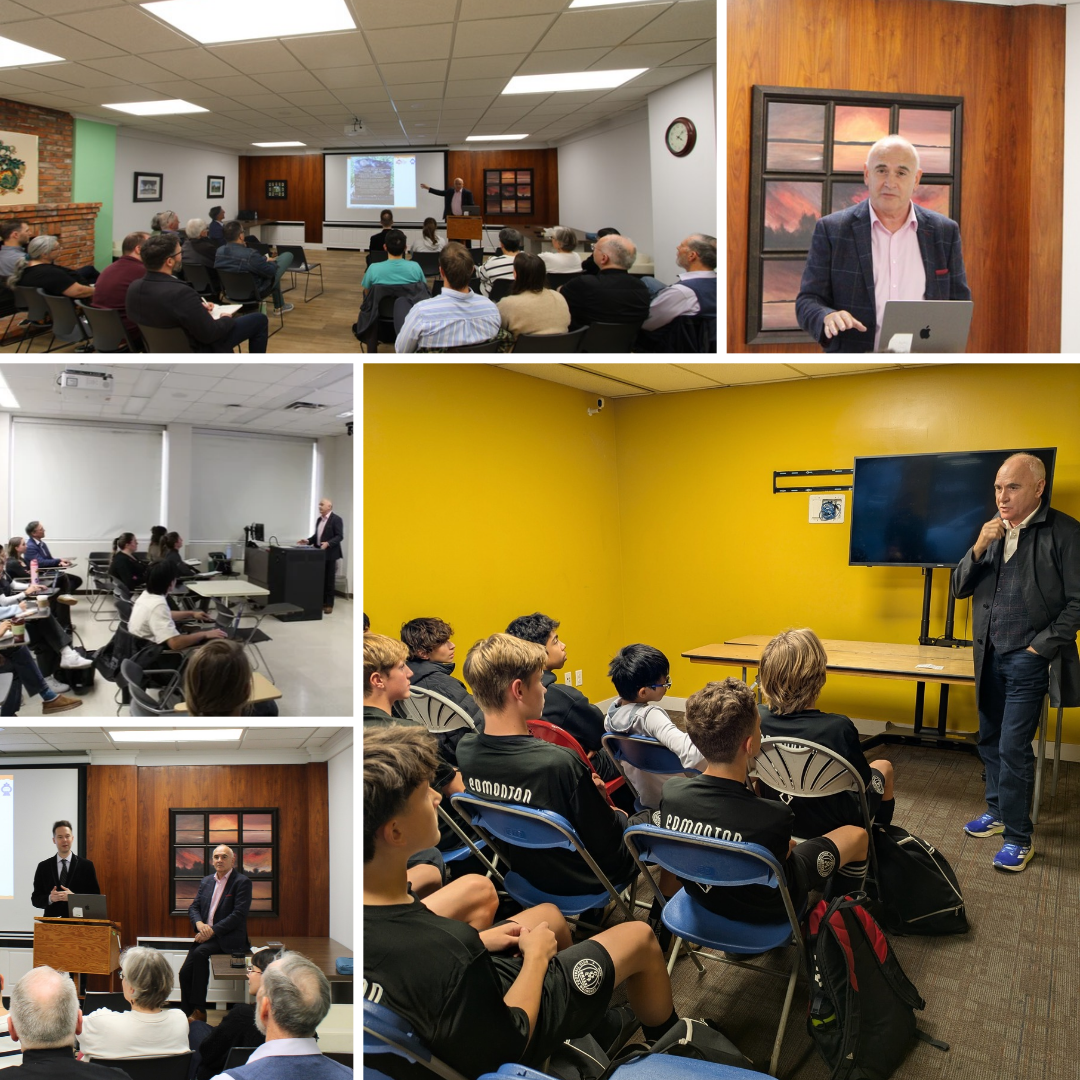
Alongside his talk at SJC, Dr. Nesti engaged in a number of other speaking
engagements in the Edmonton area. From Oct. 6-8, he spoke with coaches and
athletes at the University of Alberta, educators at Edmonton Catholic Schools and Elk
Island Catholic Schools, local high school footballers, and the Faculty of Kinesiology,
Sport and Recreation (KSR) at the U of A. In total, nearly 200 people came to hear Dr.
Nesti’s presentations. Dr. Nesti noted that his time speaking to various faculty, students
and staff of the U of A was somewhat of a “return home” for him, since he is an alumnus
of the KSR Faculty at the University.
“It’s been wonderful to be back at the University of Alberta after having studied here 38
years ago. It feels like going home again,” said Dr. Nesti. “I’ve had a fantastic program
with a range of audiences, which has kept me on my toes. I’ve gotten to speak about
my work in professional sports, sports psychology and we ended with the Kule Lecture
to talk about Catholic faith mixed with sports and morality.”
Of all these diverse audiences he had the opportunity to speak with and share his
insights, Dr. Nesti concludes that his time speaking to a group attentive high school
football players was the highlight.
“I think the standout moment was getting to speak to a group of 14-year-old football
players. They sat there attentively the whole time. It was a real Canadian moment,
because they were so polite and trying to get everything they could out of me. That was
refreshing,” he said.
SJC Speaker Series to introduce new book on Pope Francis’ historic visit to Canada at Oct. 30th book launch
Edmonton - October 13, 2026
When Pope Francis came to Canada in July of 2022, for what he called a “penitential pilgrimage” to apologize for abuses suffered in Indian Residential Schools across the country, it was met with various reactions and interpretations.
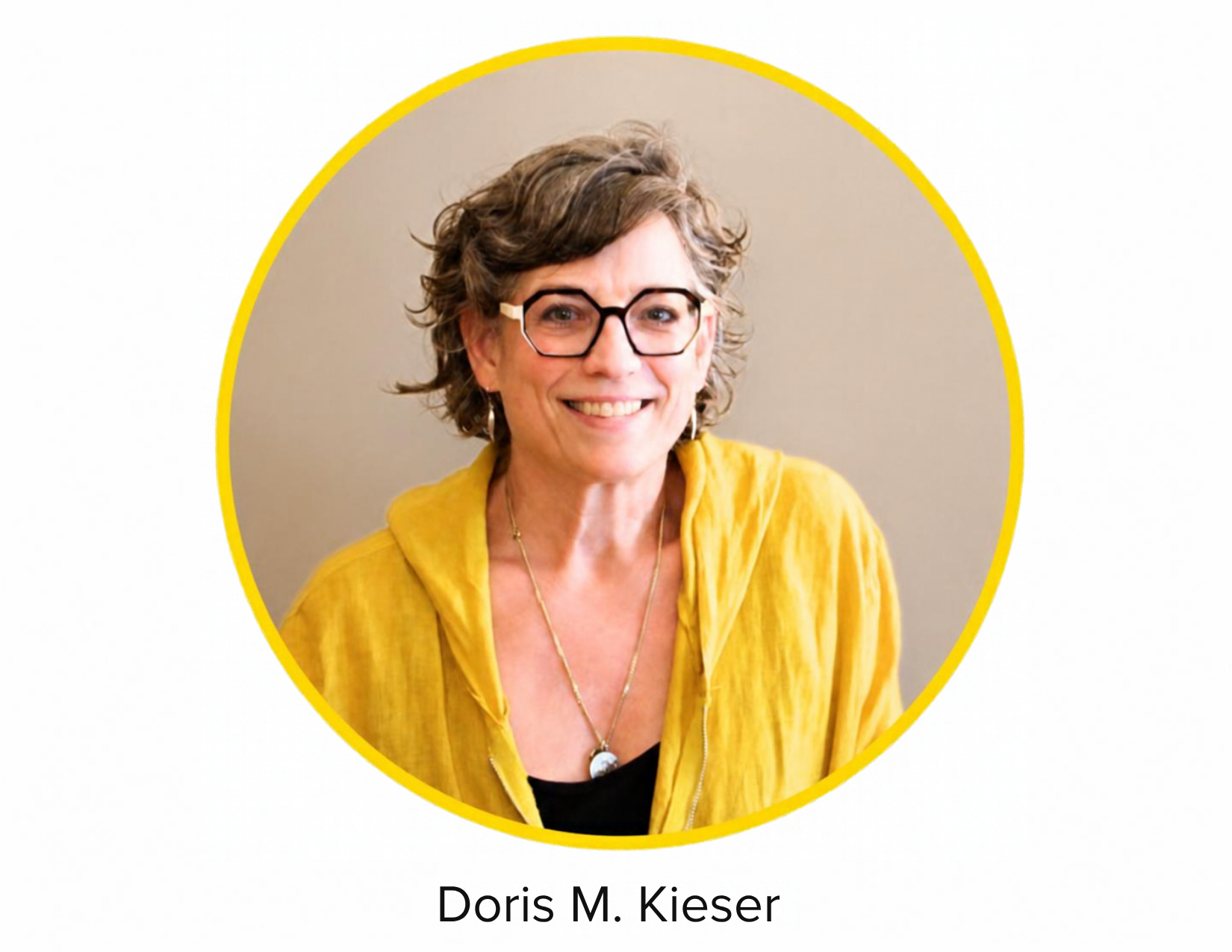
A new book co-edited by St. Joseph’s College’s Doris Kieser, Acting Vice President (Academic) and Dean, and Associate Professor, highlights some of those perspectives and shares in the mission of truth and reconciliation, of which the Holy Father’s apology was just one significant step.
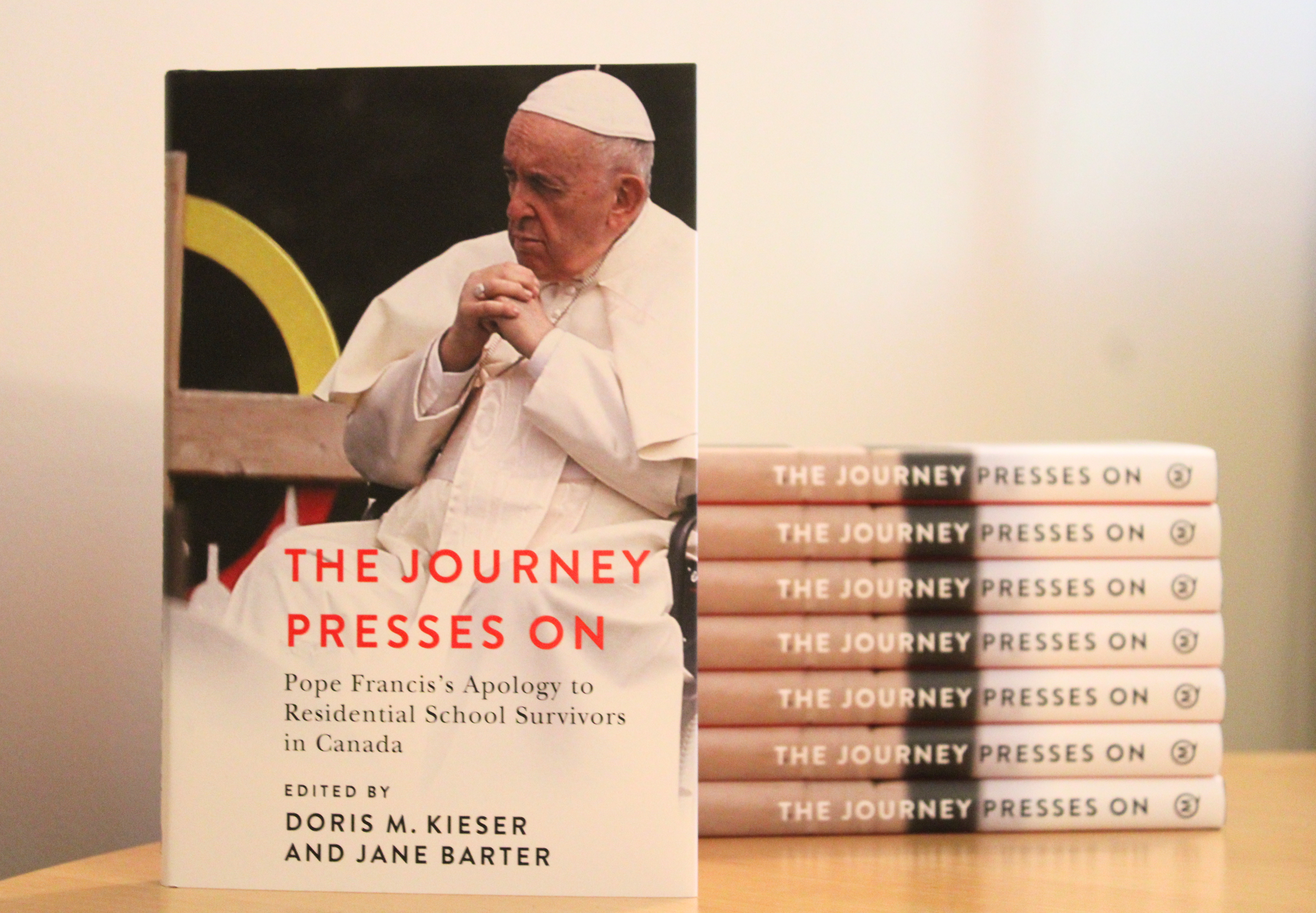
To mark the book’s release, St. Joseph’s College will host a book launch and open discussion on Friday, Oct. 30th, which will include reflections from the book’s co-editors Doris Kieser and Jane Barter, a professor at the University of Winnipeg.
The book’s title, The Journey Presses On: Pope Francis’s Apology to Residential School Survivors in Canada, is taken directly from Pope Francis’s homily at the National Shrine of Saint Anne de Beaupre towards the end of his historic visit. The title embodies one of the pope’s key messages: that his time in Canada was only one part of a continuing journey of reconciliation and healing for the Indigenous people of Canada and the Catholic Church. This book contributes to that ongoing journey of reconciliation, by detailing the impact and influence of Pope Francis’s Canadian pilgrimage, and emphasizing that there is still much work to be done on this journey.
“The journey presses on is something Pope Francis said, reflecting that this is a journey - his visit was the beginning and not the end,” Kieser said. “We hope this book will help to facilitate an ongoing journey and an ongoing dialogue, reflecting the ways people can think about the role of the Church in Canadian history.”
Much like Pope Francis’s historic visit, the new book had its own long journey in coming to fruition. It grew out of two panel discussions organized by Kieser and Barter and hosted by the Canadian Theological Society. The first panel came in the months immediately following the Pope’s initial apology in Rome with the delegation of First Nations, Métis and Inuit peoples in the spring of 2022, and the second panel was held after the Pope’s visit to Canada later that summer and the Vatican’s official repudiation of the Doctrine of Discovery in March 2023. A special edition of the Journal of Moral Theology was published that included several of the papers from the first panel.
After the second panel, Kieser and Barter felt encouraged to expand these efforts into a book. To ensure a diversity of perspectives, the pair recruited theologians, Indigenous scholars, a Canadian Catholic bishop, and other scholarly voices to offer their perspectives on the Holy Father’s penitential pilgrimage, to discern what it means for the universal Church, for Canadians, and for all Indigenous and non-Indigenous peoples.
The book’s contributors include Christine Jamieson, an Indigenous Catholic theologian at Concordia University; Chantal Fiola, a Métis professor at the University of Winnipeg; Niigaanwewidam Sinclair, an Indigenous professor at the University of Manitoba; Archbishop Don Bolen of the Archdiocese of Regina, who played an important role in bringing the pope to Canada; Annie Selak, a feminist theologian and scholar of ecclesiology; Timothy Harvie, a professor of philosophy and ethics at St. Mary’s University in Calgary; Jeremy M. Bergen, a professor of religious and theological studies with expertise in the history of church apologies; and Darren Dias, executive director of the Toronto School of Theology. Along with editing each contribution, Kieser and Barter provided an introduction and afterward to the book.
Though the perspectives espoused are as diverse and multifaceted as the authors, each essay centers on Pope Francis’s time in Canada, and how this important event intertwines with the long and often contentious history and relationship of the Catholic Church with the First Nations, Métis, and Inuit peoples of Canada.
“Because of its diversity, the book offers really broad and multifaceted perspectives on the pope’s visit. There really is an open dialogue taking place,” Kieser said. “We wanted the book to be published in Canada, to be written in a way that’s accessible to all and not just academics, and to appeal to Indigenous peoples as well. People can see within the work the variety of responses and lenses by which you can view the papal visit and contribute to the conversation.”
Editing the book was its own learning experience for Kieser, particularly in seeing just how vast and diverse the responses were to the Pope’s visit. She notes that at one end of the spectrum there was total indifference, while at the other end it was a life-changing moment of immense impact.
“Some were not interested at all and to some people it meant the world. To some his visit fell short and to others it was everything they had hoped for. There are Indigenous people in Canada who are not interested in what the Church has to say – apologetically or otherwise – and there are Indigenous people in Canada within the Catholic tradition who really needed that apology as part of their own faith journey; it was very important to them,” Kieser noted.
Since it was published this September, the book has garnered a significant amount of interest. Alongside the upcoming book launch at SJC on October 30th, there are other related events to be held over the coming months, including a similar book launch at the University of Winnipeg and an upcoming webinar with the book’s contributors, to be held through the newly launched Pope Francis Institute at St. Jerome’s University in Waterloo, Ontario.
Kieser believes the book has generated this interest not only because of its historic significance, both for the peoples of Canada and for the Church, but because of the book’s diversity of perspectives, providing new paths to dialogue on the legacy of Pope Francis’ pilgrimage to Canada, and on the Church’s difficult legacy with Indian Residential Schools in Canada.
The Oct. 30th book launch and discussion will be held in the SJC Board Room, beginning at 4:00 pm. The event is open to all and copies of the book will be available for purchase.
To register to attend by Zoom Book Launch
Fall Retreat helps bring students closer to God and to one another
Fall 2026 - Edmonton
“Hearts are transformed, deep connections are forged, and the next generation of faithful Catholics are built up in their faith.” These words were one student’s way of encapsulating the immense impact made by the recent fall retreat hosted by St. Joseph’s College Campus Ministry, held at Star of the North Retreat Centre in St. Albert.
The retreat provided the opportunity for U of A students to come together in faith and community, and centered around “The Universal Call to Holiness” - the theme SJC’s Campus Ministry has chosen for the 2026-2027 academic year. For each student who prepared a talk for the 44 participants, this theme meant showing that holiness is not simply reserved for people who take religious vows or for the saints who lead extraordinary lives, it is something all people are called to. The call to holiness is something every person can live out in their day-to-day ordinary life.
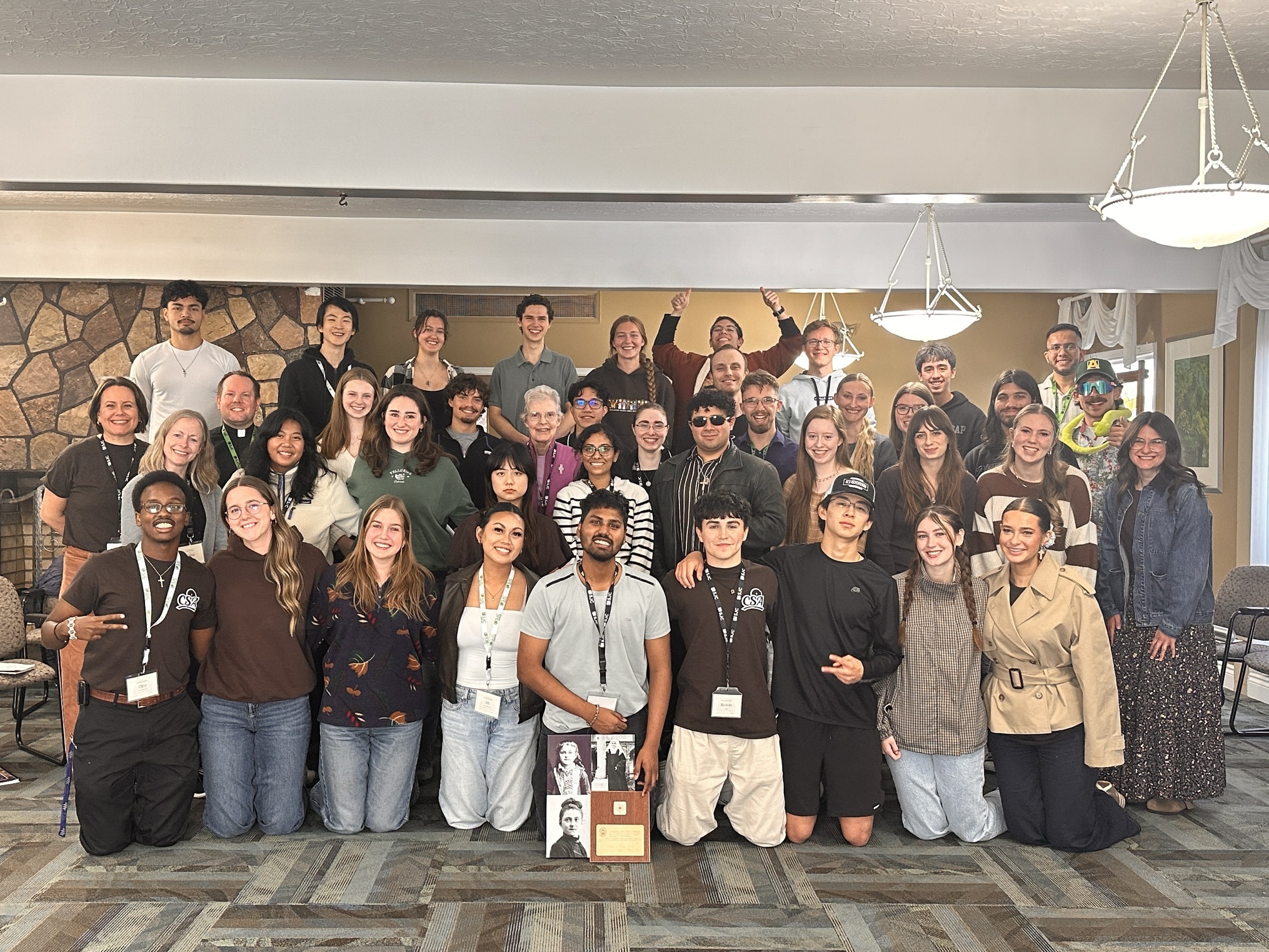
This year’s fall retreat was held from Sept. 25-27, bringing together students for a number of student-led talks and discussions, games and meals, and worship. The retreat began with adoration at the SJC chapel on Friday evening, including a talk on the retreat theme by SJC’s Acting President Matthew Kostelecky, followed by a bonfire where students sang praise and worship music together. On Saturday morning, Mass at the Star of the North Retreat Centre in St. Albert was celebrated, followed by a number of talks from the retreat leaders and small group discussions. Interspersed between these talks and discussion groups was lunch and supper, an outdoor game, some periods of free time, and adoration on Saturday evening.
From its liturgies to its talks and discussion groups, the call to holiness was incorporated into every part of the retreat, which was led by SJC’s Campus Ministry team with volunteers from the Catholic Students’ Association.
For attendee Anareen Biado, who lives in SJC’s Women’s Residence and is a first year student in Immunology and Infection at the U of A, the most moving moment of the retreat came during adoration on Saturday evening. It was her first-ever retreat as a university student, and she went in hoping it would help deepen both her faith and her sense of community.
Though Anareen was raised Catholic, this particular experience of adoration was the first time she really felt Christ’s true presence in the Eucharist.
“Jesus’ real presence in the Eucharist is something that I believed, but I had never really experienced it. At adoration that night I prayed, ‘Lord, help me believe that this is truly You’, and as they were singing and the priest lifted up the monstrance, the reverence led me to have a divine experience; the Holy Spirit poured over me," says Anareen.
“So this retreat was really important to me, it was a really defining experience, because it opened my heart to the Eucharist," she says. "Adoration was something familiar to me, but I experienced it in a totally new way.”
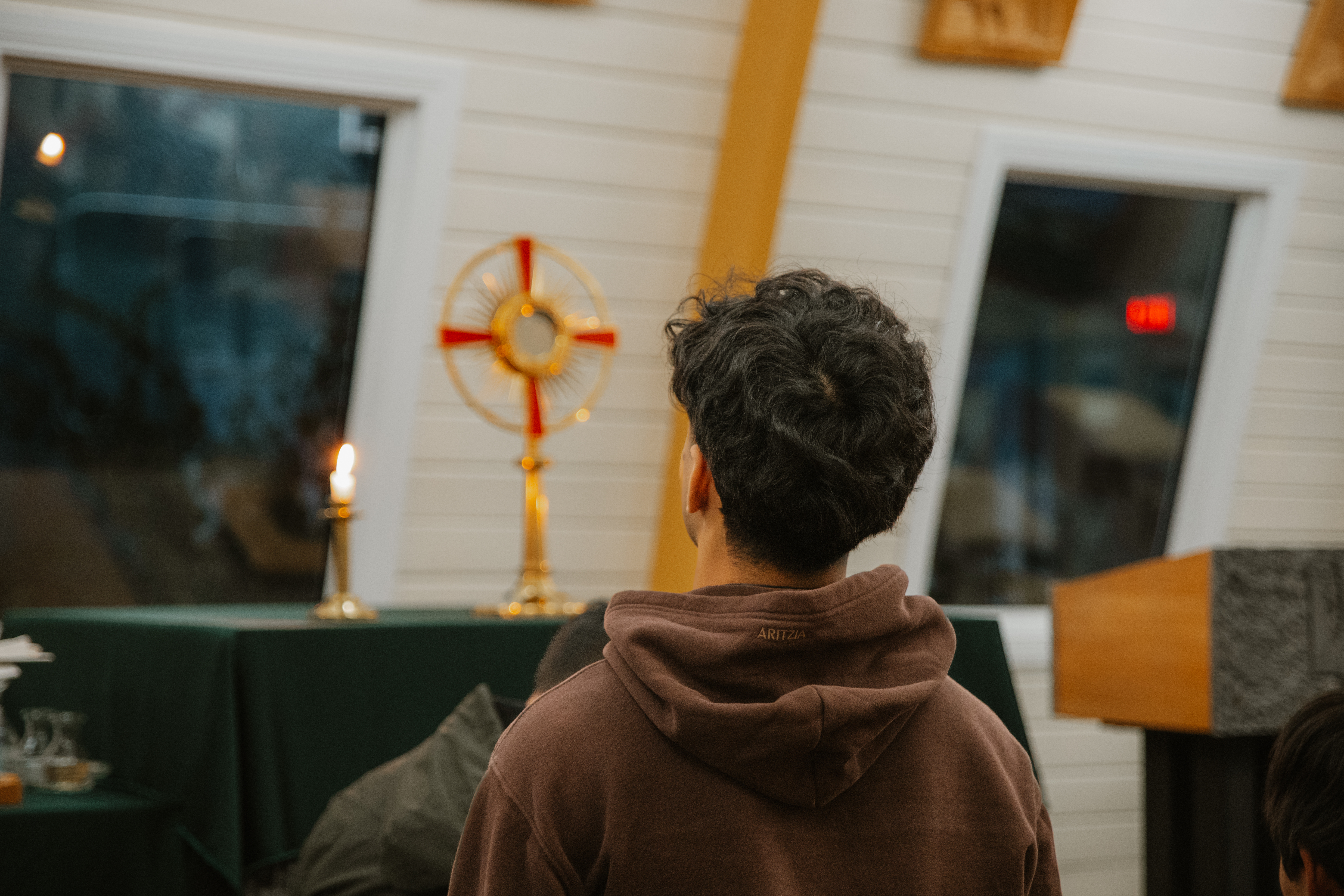
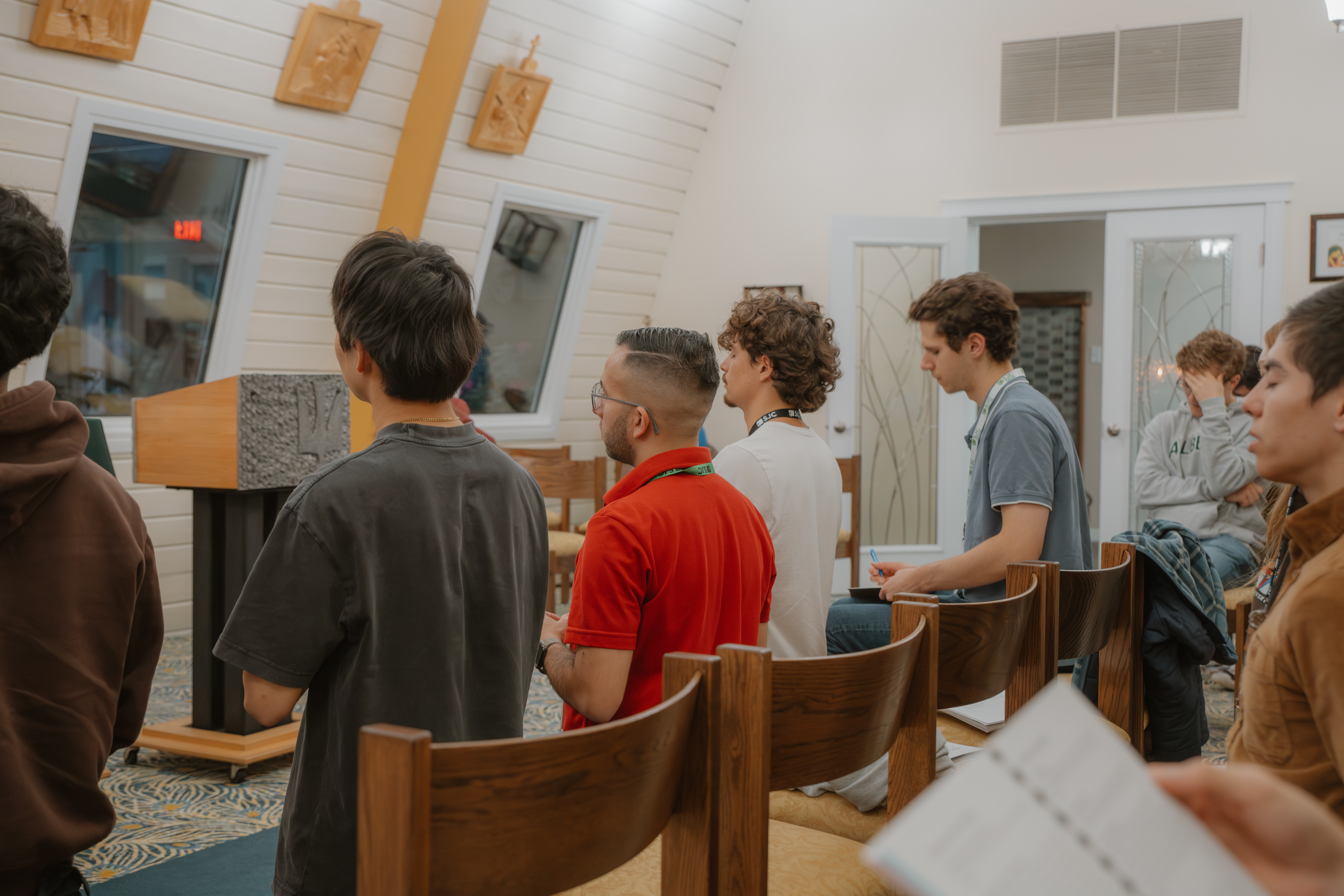
For Theresa Robinson, Director of Campus Ministry at SJC, moments like this are what make these retreats such an important part of her work on campus.
“Retreats have become a cornerstone of our ministry at St. Joseph’s College, giving us a wonderful way to accompany students, provide formation and community rooted in the Gospel and Catholic tradition,” said Theresa. “I have seen many times how retreats give people a sacred chance to step away from the busyness of everyday life and encounter God and themselves.”
The retreat is also a formative experience for the students who help organize and lead talks. Hunter Lobb, a fourth-year civil engineering student at the U of A, entered the Catholic Church through the RCIA program at St. Joseph’s College last year, and this was his first year volunteering to give a talk at an SJC retreat.
In his message to student attendees, Hunter tried to make the universal call to holiness something applicable and practical, especially by drawing upon the example set by the Holy Family of Jesus, Mary and Joseph. He also sought to “dispel” some of the common misconceptions about holiness, such as the notion that holiness means becoming a person who is perfect and flawless.
“The structure and goal of my talk was to say: ‘Here’s a common lie about holiness, here’s how the Holy Family proves that it’s wrong, and here’s how we can look at their example to live out the truth about holiness’,” Hunter explained.
“People especially resonated with dispelling the lie that to be holy is to fit into a rigid sense of perfection. There is a line in Scripture, where Jesus calls on us to ‘Be perfect, as your heavenly Father is perfect.’ I showed that the original Greek term that was used for perfect doesn’t actually mean flawless, but more like ‘mature’ or ‘complete’. So I reframed it in that way, that the perfection you’re called to is not to be flawless, but to be radically authentic in who you are," says Hunter. "That call to authenticity is something that people really resonated with."
Hunter believes this resonated with his fellow students because they are at a stage in life where authenticity can be a great challenge. Whether it’s the pressures caused by social media, the demands and workload of their courses, or the great emphasis on identity in today’s world, Hunter says that the desire to know who you are and to be true to oneself can be a major challenge to people of his generation.
“At our stage in life as young adults, a lot of those original foundations of our identity – such as our family life and where we grow up – start to be whisked away when we enter university,” he said. “It can be difficult to know how to reaffirm who you are. So to have a retreat that reminds us of who God says we are, and that we are called to be authentic to that, that is a very strong foundation that helps it feel like we’re not just walking on sand.”
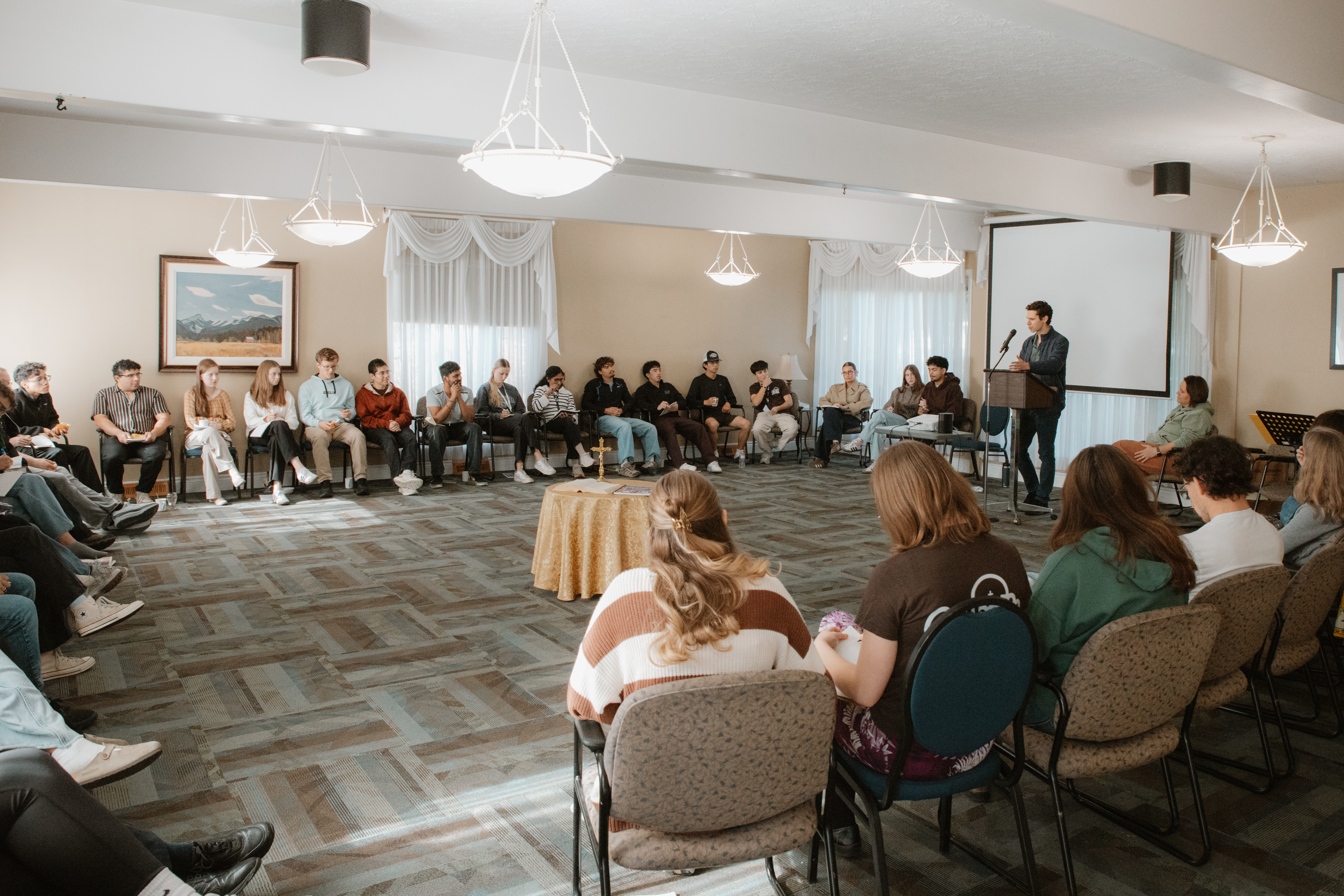
For Hunter and other students, the retreat itself created that environment for authenticity, as the willingness of the retreat speakers to be vulnerable about their own struggles and challenges helped participants feel comfortable in doing the same. In a university environment that is often hyper-competitive, Hunter says the retreat provided a space where people could let their guard down, be open about their difficulties, and that this was healing for a lot of participants.
It was a reminder for Theresa, Director of Campus Ministry, of just how important the student-led talks are to these retreats, helping students come to deepen their faith through the support and witness of their peers.
“I am continually moved by the talks students give. Even without formal theological training, they speak with heart, draw deeply on the Church’s teaching, and connect the Gospel to the lived experience of their lives. Their witness has a profound impact,” Theresa said.
The talks and small group discussions were also cherished by Anareen. Having recently moved from her family home in Calgary to the SJC Women’s Residence, the opportunity to meet other Catholics studying at the U of A has made her adjustment to life in a new city and a new school much easier.
“Seeing how every student is on a different journey in life, but we’re all trying to bring one another to heaven – it’s just such a beautiful thing to experience. It really helped me to open up,” she said.
“I was honestly scared at first to go to a new place, but just to know that because of SJC, I only need to take the stairs or the elevator and I can go to daily Mass, that when I need a space for prayer – it is there," says Anareen. "And especially because university life is so busy, it’s great to have this community and those daily opportunities to pray. I’ve only been here in residence a month and it has already been so enriching, so I know the Lord has so much more in store.”
SJC’s Campus Ministry student winter retreat will take place from January 29-31, 2027. Learn more about our Campus Ministry at Campus Ministry
Introducing our Recruitment and Admissions Officer and her focus on SJC’s new Diploma in Liberal Arts
October 7, 2026 - Edmonton
In April of this year, we shared the very exciting news that St. Joseph’s College would open applications in Fall 2026, for our very own 2-year Diploma in Liberal Arts. We recently brought on a new team member to help us embark on this journey: Elyse Borlé, SJC’s first Recruitment and Admissions Officer. We sat down with Elyse to learn more about what this means for the College.
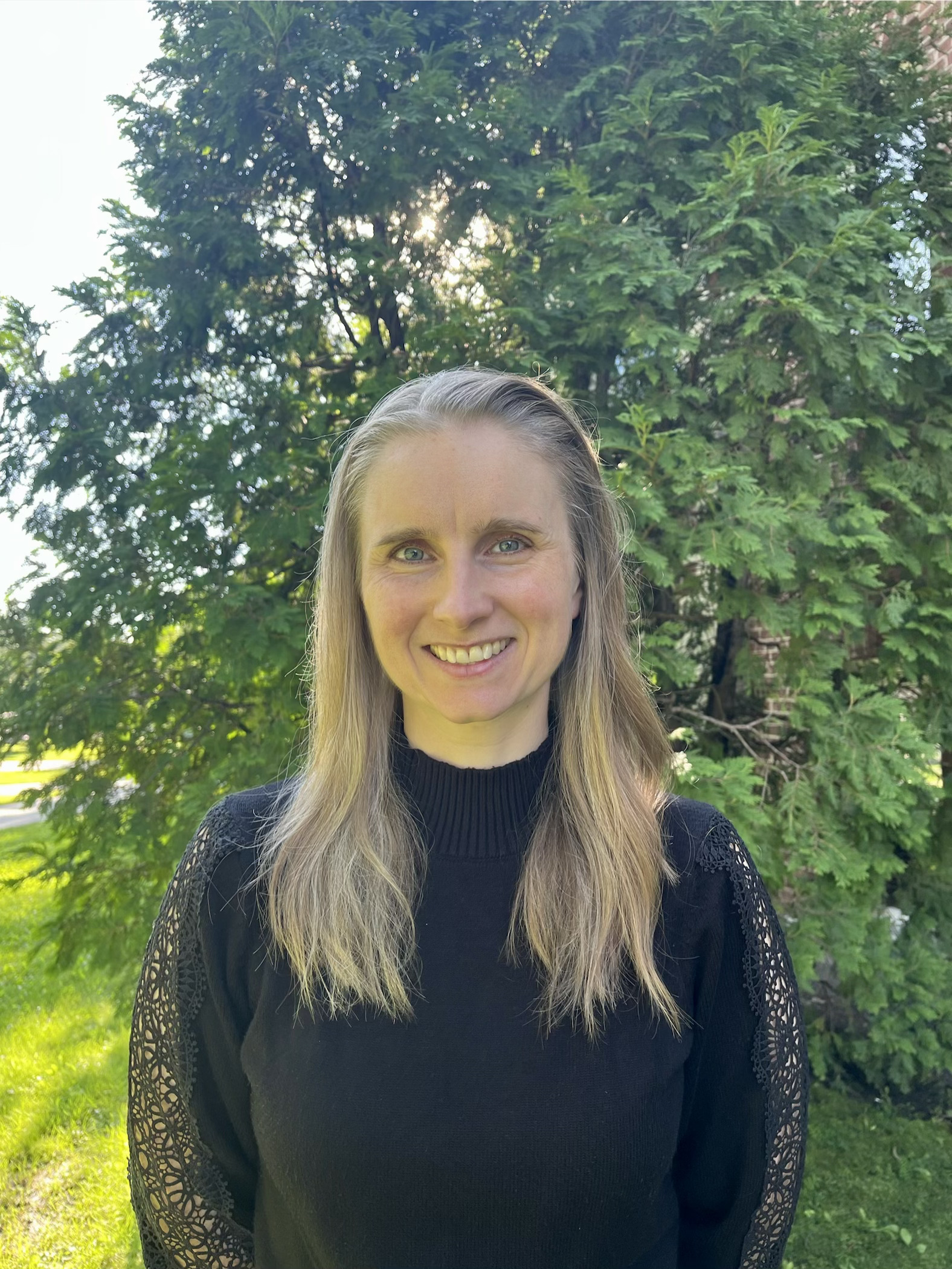
Elyse Borlé
Recruitment and Admissions Officer
Q: Elyse, welcome back! Why is this a welcome 'back' and what is your work at SJC?
Elyse: It’s great to be back. I’ve got a few connections to St. Joseph’s College. I took a dozen courses here toward my U of A undergraduate degree. I also worked two years (2014-16) as the admin assistant before pursuing a master's degree. After nearly a decade away in qualitative research and community engagement, it has been wonderful to return, reconnect with familiar faces, and meet new colleagues.
In terms of work, I am fully involved in bringing the new 2-year Diploma in Liberal Arts to life. Applications open this October! My primary goal over the next 12 months is to build the foundation—finding, attracting, and enrolling our very first cohort of students.
Q: That sounds like a massive undertaking. What does your day-to-day look like?
Elyse: Since this is a new role, I’m wearing many hats and working with colleagues across the College. Essentially, I’m bridging the gap between interested prospective students and our classrooms. My focus includes:
- Developing our Admissions Process: As this is the first time students will apply to SJC directly, I’m working closely with the Office of the Vice President (Academic) and Dean (VPAD) to create the application, forms, and processes that will take a prospective student from ‘interested’ to walking through our doors as a Diploma student in September 2027.
- Recruitment: Working with the Office of Advancement, we’re developing networks, materials, and presentations for school fairs and meetings across the province. Not as romantic as medieval troubadours, but I’m hoping we’re as good at getting the word out.
- Student Support: I’m here to help prospective students figure out if the Diploma is a fit for them and, if yes (we hope yes!), navigate the application process.
Elyse: SJC has an incredible ability to welcome diverse people. I’ve been approaching this question in terms of who would benefit the most from this program. I’d say this is great for recent or soon-to-be high school graduates who are:
- Seeking an Arts education in a small college environment that can transition to a world-class university.
- Looking for a post-secondary environment that can support and integrate a vibrant spiritual life.
- Interested in a program that takes questions of meaning, value, and how to live a good life seriously.
- Wanting to use their studies to intentionally explore broad interests and discern career paths.
- Exploring alternative pathways into the University of Alberta, Faculty of Arts.
Q: What is the most important information to know about the program?
Elyse: Well different aspects speak to different people. Personally, I'm most drawn to the focus on discernment. Post-secondary studies are a natural time of exploration. SJC is offering something deeply meaningful by approaching that with intent, helping students get the most out of their explorations in these two years. Then, having found so many friends here in my undergraduate studies, I’d say I'm a big fan of the cohort experience we're looking to build. Students will see each other across multiple classes. I'm curious to see how this might enhance learning by leading to deeper conversations. Finally, on a practical level, I think it's so important that a student completing the Diploma with a 2.0 GPA is guaranteed admission into their third year of a Bachelor of Arts at the University of Alberta, or have the option of applying to MacEwan University. I don't expect every Diploma student to decide to continue post-secondary, but there are clear pathways into great institutions for those who do.
I’ll just add one other key distinction to remember: interested Diploma students apply to SJC directly (unlike our existing arts-options at the U of A, which continue unchanged). Lots of very helpful information is available on our webpage.
Thank you to everyone in the SJC community for your continued interest and support in all things SJC. We are so grateful for the warm welcome Elyse has received.
If you have any questions about the Diploma program, please don’t hesitate to reach out to her at borl@ualberta.ca or call her office line at 780.492.7682.
We’d also be grateful if you share information about our new program with any potential students in your networks—your help in spreading the word is deeply appreciated!
Learn More Diploma in Liberal Arts
Profile:
The Peter and Doris Kule Chair in Catholic Religious Education
October 6, 2026 - Edmonton
The Peter and Doris Kule Chair in Catholic Religious Education is an integral part of St. Joseph’s College and our mission in Catholic education. This mission is realized through our Certificate in Catholic Education, our option courses for students and teachers looking for a deeper understanding of religious education and how to teach in a Catholic school environment, and a number of scholarships offered to Faculty of Education undergraduates at the University of Alberta.
The SJC Kule Chair also provides resources and funding to help make possible a variety of research projects, publications, public lectures, and other efforts in support of Catholic religious education.
“Catholic education has been an important focus of SJC for decades. The Kule Chair allows us to sharpen that focus, to determine how we can better support teachers and students, and to ensure fidelity to the mission of Catholic education and to the faith professed,” said current chair Dr. Matt Hoven.
The Kule Chair at SJC was installed through a generous gift from Drs. Peter and Doris Kule in 2006. The Kules were involved in various philanthropic and charitable efforts in the Edmonton area, having established endowments through the Ukrainian Catholic Eparchy of Edmonton, the University of Alberta, and at other post-secondary institutions. The Kules were dedicated to their Ukrainian heritage, their Catholic faith, and to education, as Doris Kule taught at schools in the Edmonton area for over 30 years. SJC’s Kule Chair, filled by a scholar in Catholic education, reflects Peter and Doris’s hope to see Catholic education continue and thrive in Alberta and beyond.
Dr. Richard Rymarz, an internationally renowned scholar of Catholic education from Australia, was selected as the first holder of the Kule Chair in Catholic Religious Education in 2006. Rymarz entered the role with a rich background in Catholic education, having overseen several research studies and the drafting of several curricula for Catholic schools.
As chair, Rymarz engaged in a number of research projects in the areas of Catholic education, catechesis, and more. For instance, he published a 2010 study about the vital role of lay religious educators within the Ukrainian Catholic Eparchy of Edmonton.
After Rymarz’s departure from SJC, Dr. Matt Hoven was appointed to the endowed chair and his current term continues into the spring of 2028. As chair, Hoven has been involved with efforts to review and refine the education curriculum at the College, including the Certificate in Catholic Education. He has collaborated with the University of Alberta’s Faculty of Education and other institutions to promote research in religious education, including a study of Catholic School Chief Superintendents in Western Canada. Hoven also engages in continual advocacy for Catholic education with other educators, academics, and the public.
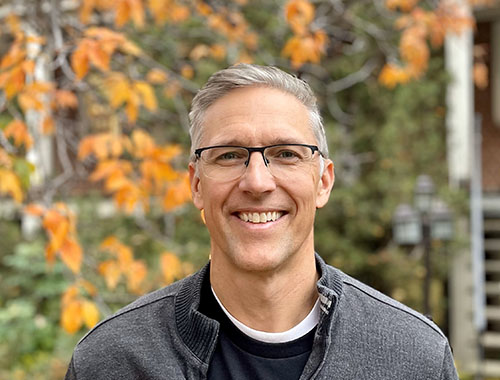
Dr. Matthew Hoven |
 |
In recent years, the Kule Chair has sponsored an annual public lecture by an invited academic with experience and scholarship in religious education. The lectures are open to attendance by faculty, professors, teachers, students and the wider community.
In 2024, the Kule Chair invited guest lecturer Dr. Roisin Coll of the University of Glasgow, who spoke on the faith formation of Catholic teachers to in-person and online participants. The next year the Kule Chair hosted Dr. Patricia Kieran, Associate Professor at Mary Immaculate College, University of Limerick, Ireland, who delivered a lecture to online participants about global concerns and local responses for Catholic schools. Both lectures were co-sponsored by the Alberta Catholic Schools Trustees’ Association (ACSTA). In 2026, the Kule Chair invited renowned UK sports psychologist Dr. Mark Nesti to speak on the role of sports as an education of the human person. The lecture on October 8, co-sponsored by SJC's Kule Chair and Newman Theological College, emphasized how religion extends outside of the classroom and should be considered in extra-curricular learning that touches the whole human person.
Hoven plans to grow the influence of the Kule Chair in Catholic Religious Education through annual lectures, additional research in Catholic education, and continued collaboration amongst Catholic schools and post-secondary institutions, both locally and globally.
SJC Faculty Retreat Focuses on the Challenges and Opportunities of AI
August 31, 2026 - Edmonton
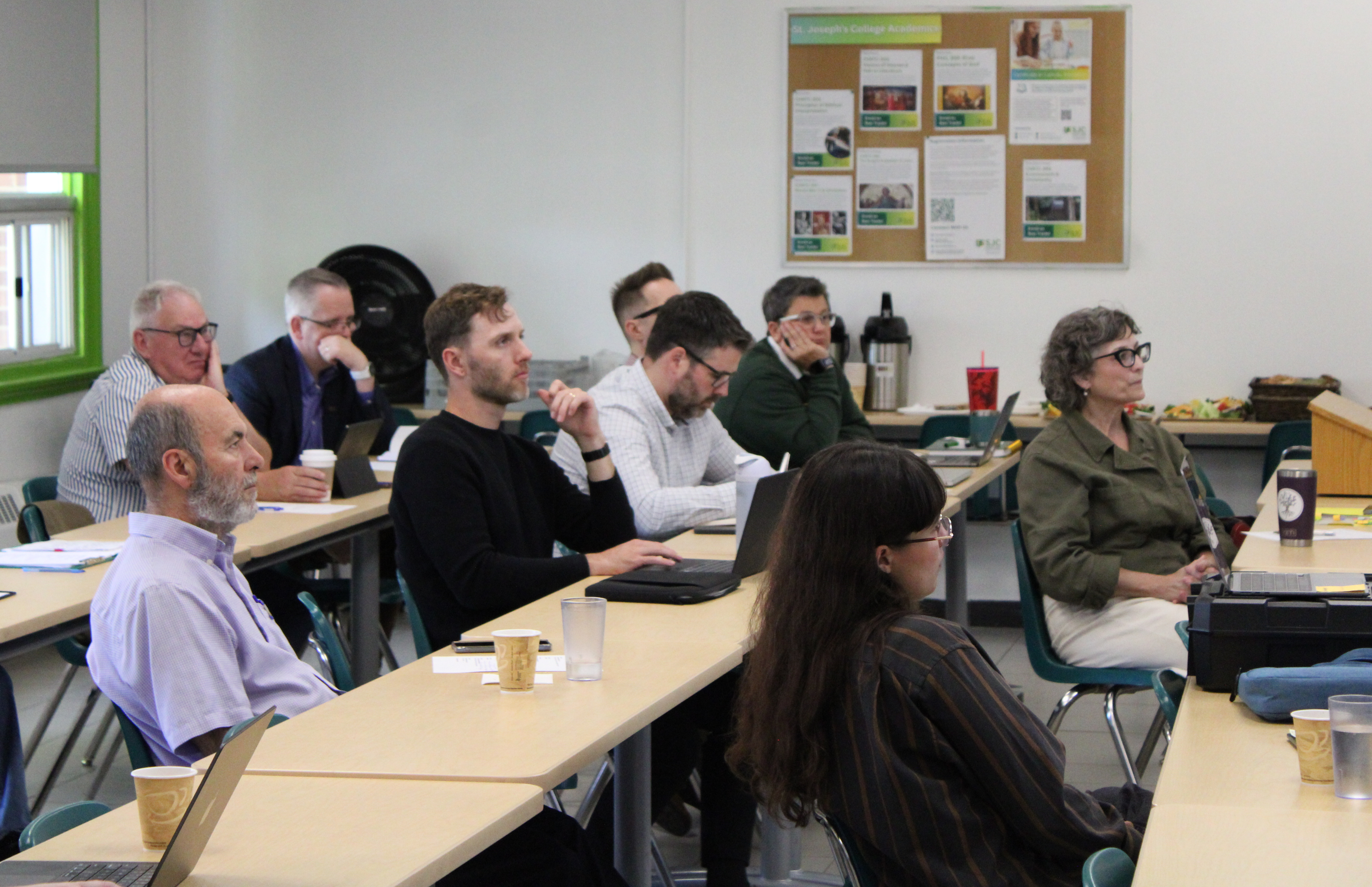
Shortly before the school year got underway, faculty and sessional lecturers at St. Joseph's College gathered together for the College's annual faculty retreat on August 31st. The retreat gave the 16 attendees (14 in person and 2 via Zoom) a space for community, reflection and a chance to discuss the challenges and opportunities they face as educators in a rapidly changing world.
At the center of this year’s retreat, organized by the Academic Dean’s office, was a discussion on Artificial Intelligence (AI) and the role it plays in the teaching and learning of students.
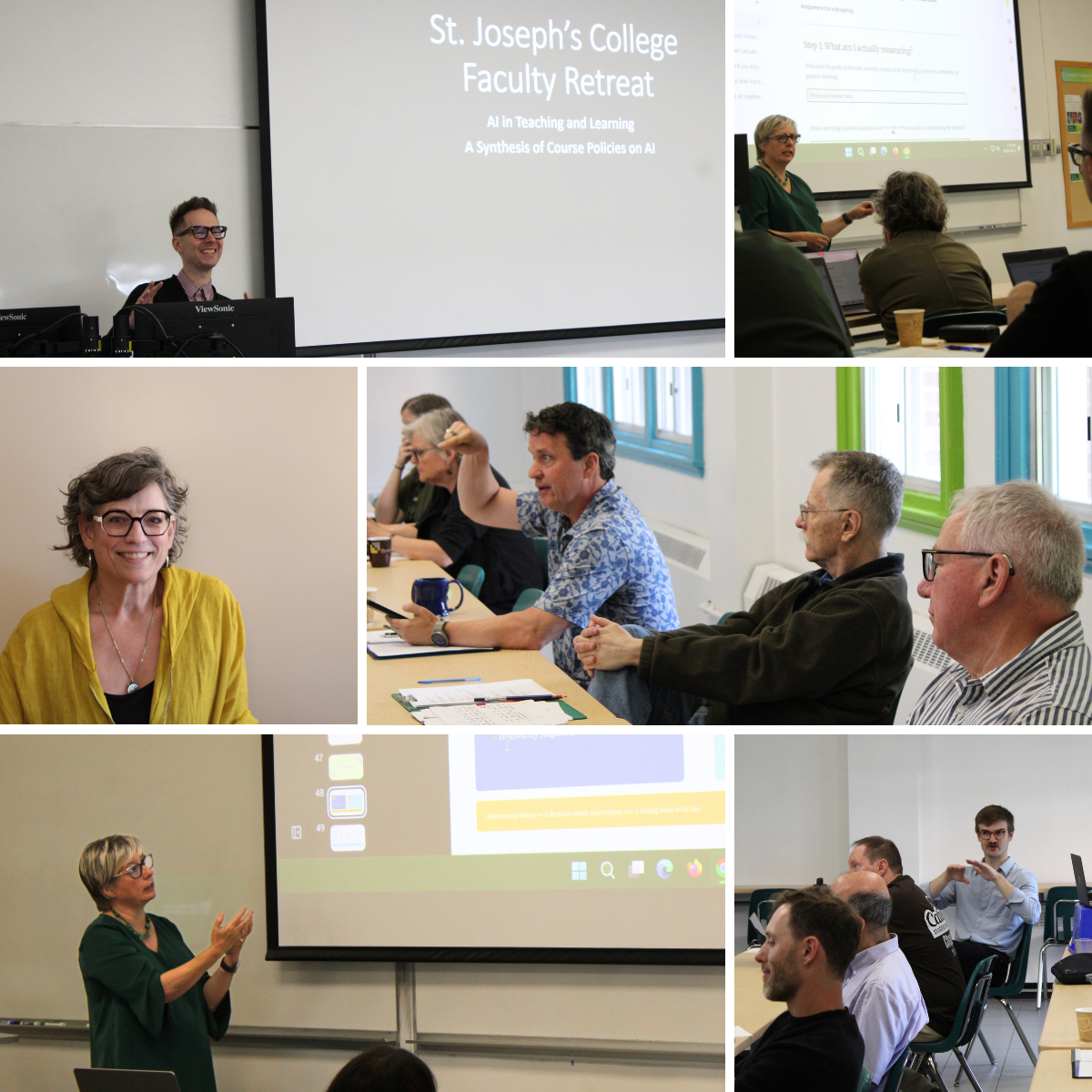
The retreat’s main speaker was Dr. Nancy Bray, Associate Lecturer with the University of Alberta Faculty of Arts - English & Film Studies Department, who has previously published and presented on the topics of AI and teaching. Over the course of her presentations to the group, Dr. Bray emphasized that, in today’s world, the classroom can be the key place where students learn to make prudent judgements about the appropriate and ethical uses of AI.
This aim reflected the central concern of the retreat’s participants, who were especially interested in how the intellectual development and formation of their students can be safeguarded and protected in the age of AI. Throughout the day, the group discussed the nature of education, what it means for a student to truly learn in the classroom and beyond, and to what extent AI can be a help or a hindrance to that end.
“Our mission at SJC is to help students discern truth and build the common good. Critical thinking is necessary for discernment, and building requires diligence, creativity, and innovation. At the retreat, we discussed ways to encourage students to cultivate these God-given abilities, without inhibiting their growth with an overreliance on AI,” said Dr. Lorne Zelyck, Associate Academic Dean and Professor.
The topic of AI is especially pertinent given that it has also become a focus at the highest office of the Catholic Church, with Pope Leo XIV’s recent encyclical Magnifica Humanitas, which focuses on preserving the dignity of the human person in a world increasingly dominated by digital and AI-based technologies. As part of the retreat, Dr. Doris Kieser, SJC’s Acting Vice President (Academic) and Dean and Associate Professor, provided a reflection on Pope Leo XIV’s encyclical.
Dr. Kieser noted that the pope’s concern that AI’s usage always be framed within the preservation of the common good lines up precisely with the mission of St. Joseph’s College. She hopes the discussions and reflections garnered from the retreat will help educators tackle the reality of AI in a way that preserves the academic integrity of their students.
“Some of the themes that are really important in the encyclical are discernment and the common good, which are also articulated over and over again in the mission of the College - in our mission statement and in how we describe our courses. That question of discernment of the common good is very much a part of what we see ourselves doing as a College,” said Dr. Kieser.
“It’s complex. There’s no one size fits all approach to AI, because different assignments require different things and each professor is at a different level of comfort with AI and what it can and can’t do,” Dr. Kieser continued. “So that’s something we’ve taken away from this day: thinking about how we as a College can, in general, provide some guidance around the use of AI.”
Ultimately, the retreat left SJC’s faculty and sessional lecturers with a sense of hope, seeing that there are tangible ways in which AI’s usage can be properly managed and dealt with in the classroom. The retreat also demonstrated how concern for the intellectual development and formation of students is front and centre in the work of St. Joseph’s College, ensuring that all will find here a place to discern and pursue truth, and to build the common good in a truly human way.
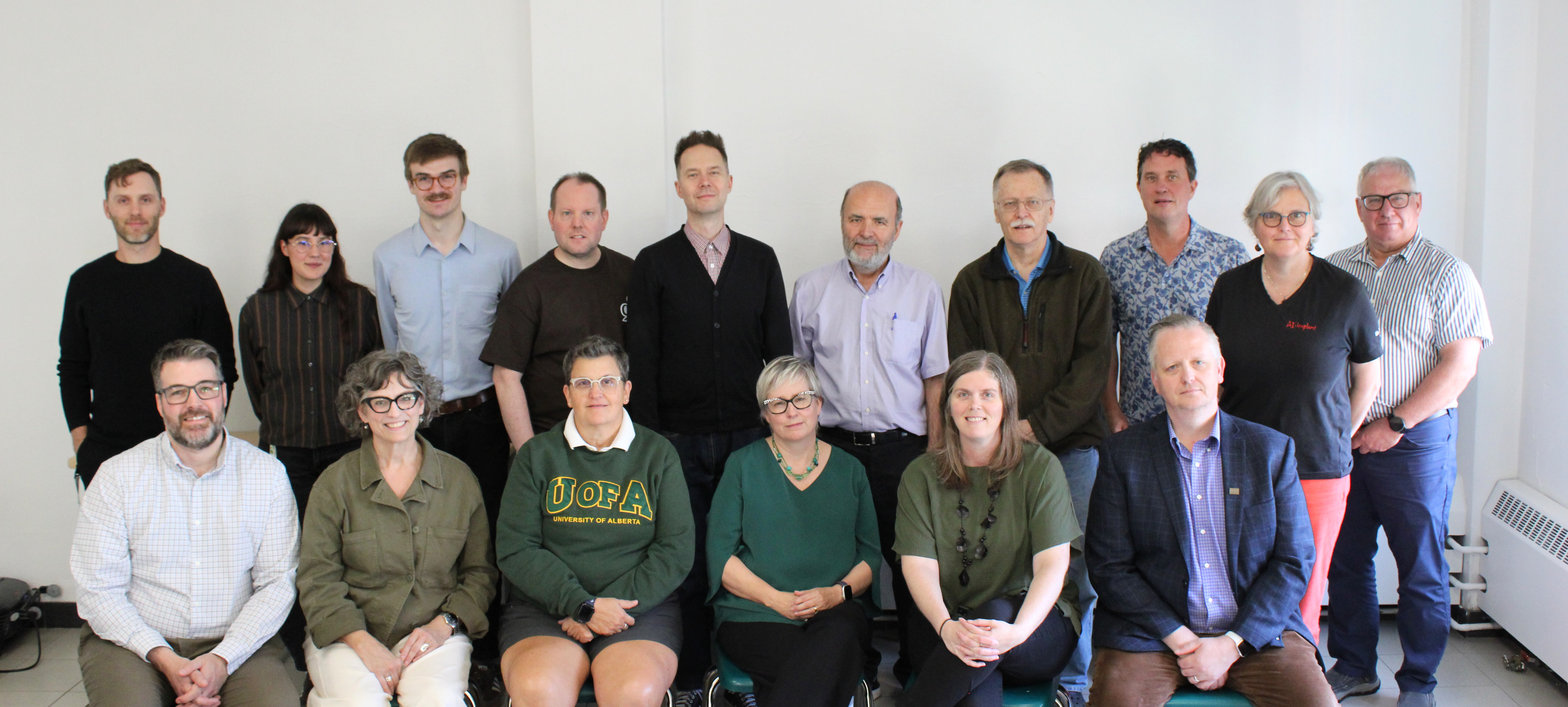
Participants included: (Back row, left to right): Thomas Oberle, Natalie van Nieuwkuyk, Brayden Tate, Fr. Warren Schmidt, Lorne Zelyck, Paul Flaman, Denis Lamoureux, Bryan Clarke, Indre Cuplinskas, Dean Sarnecki. (Front row, left to right): Jordan Robinson, Doris Kieser, Patricia Liogier, Nancy Bray, Tracy Russell, Matthew Kostelecky.
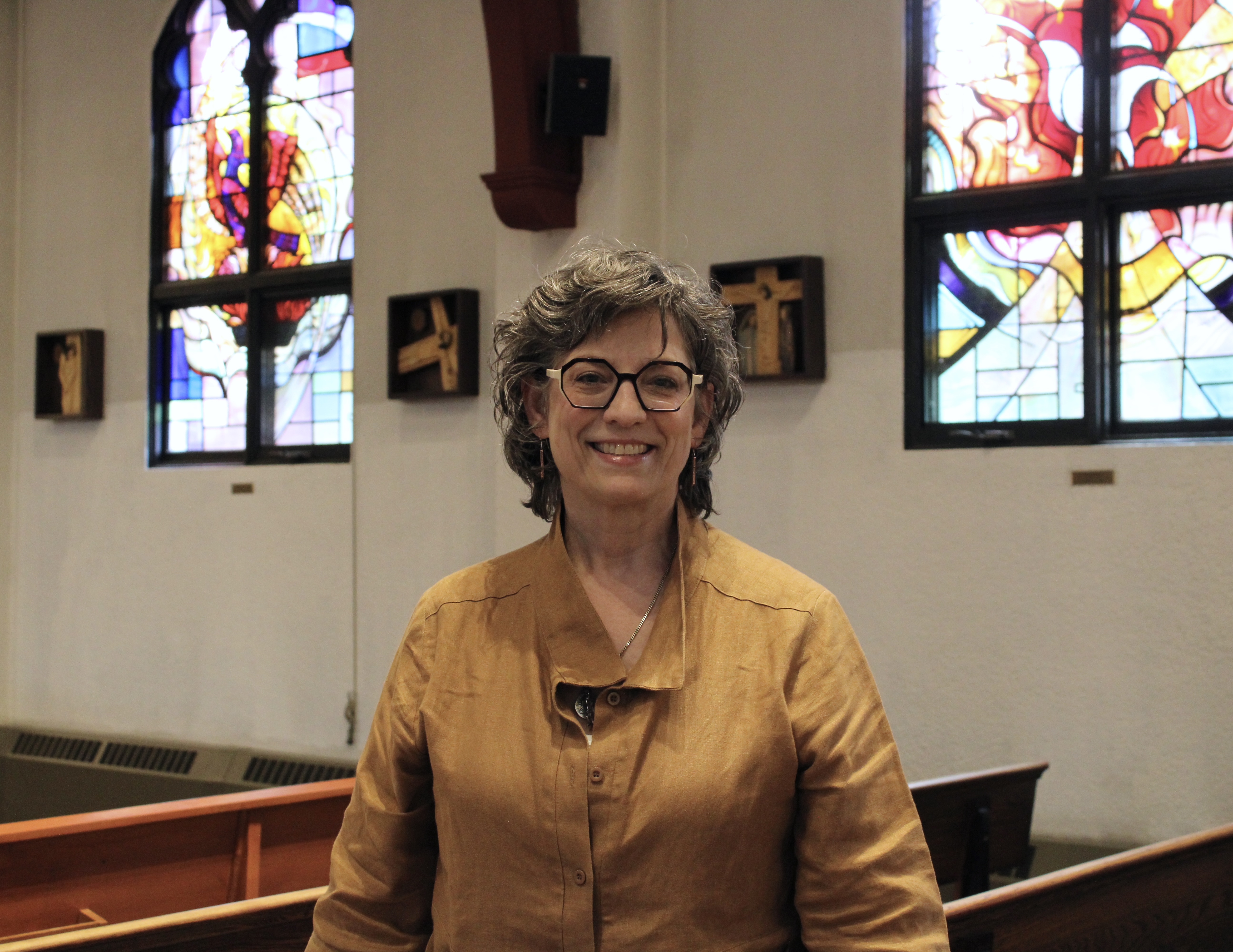
Dr. Doris Kieser to Serve as Acting VPAD of St. Joseph's College
April 23, 2026
St. Joseph's College (SJC) is pleased to announce that current Associate Academic Dean Dr. Doris Kieser will step into the role of Acting Vice President (Academic) and Dean (VPAD) for two years, July 1, 2026, to June 30, 2028.
Full Story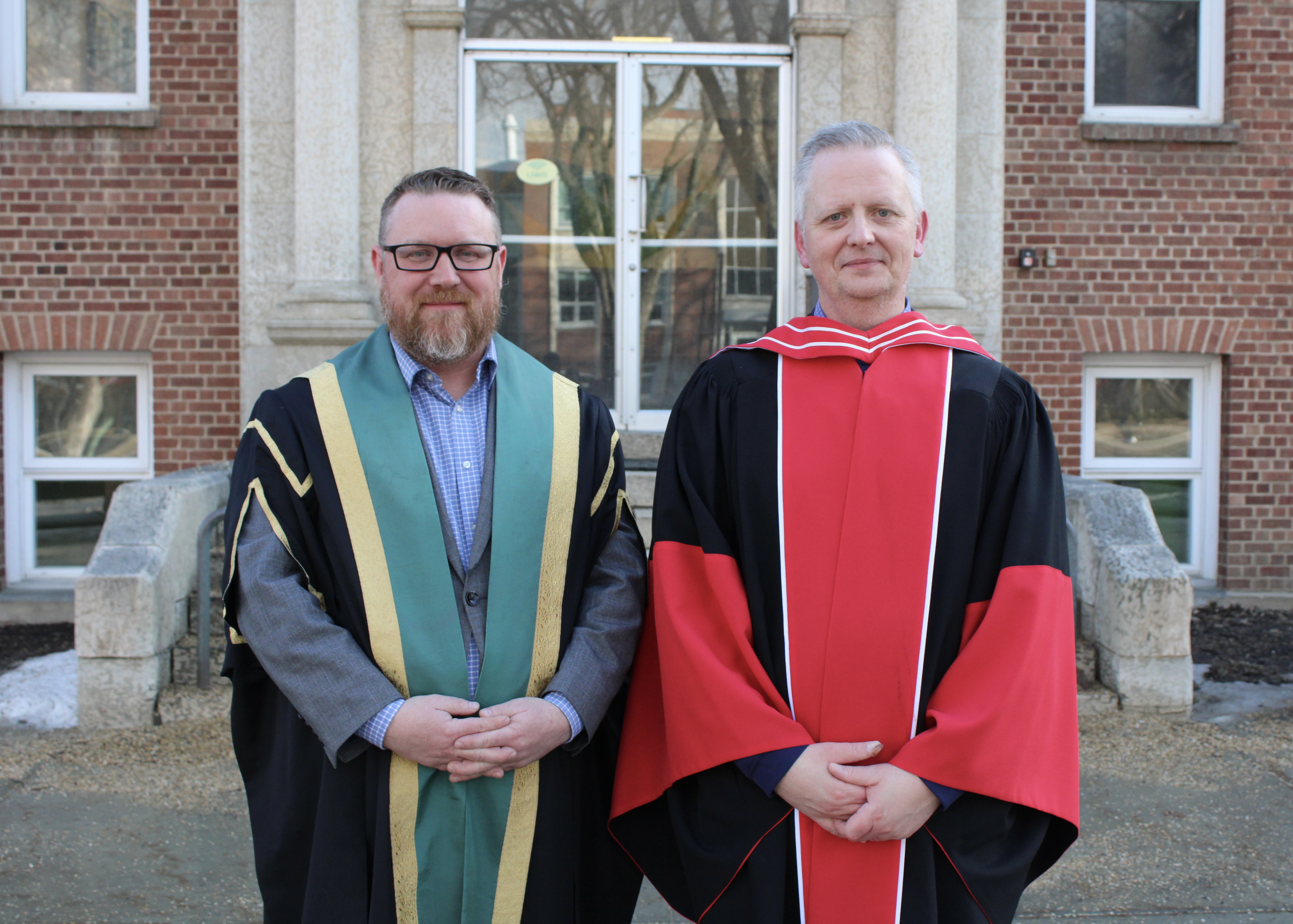
Dr. Matthew Kostelecky to Serve as Acting President of St. Joseph's College
April 9, 2026
St. Joseph's College (SJC) is pleased to announce that current SJC Vice-President (Academic) and Dean (VPAD), Dr. Matthew Kostelecky, will serve as Acting President during President Flynn's sabbatical. Dr. Kostelecky has been at SJC since 2009, serving as Associate Dean, and then as VPAD since 2020.
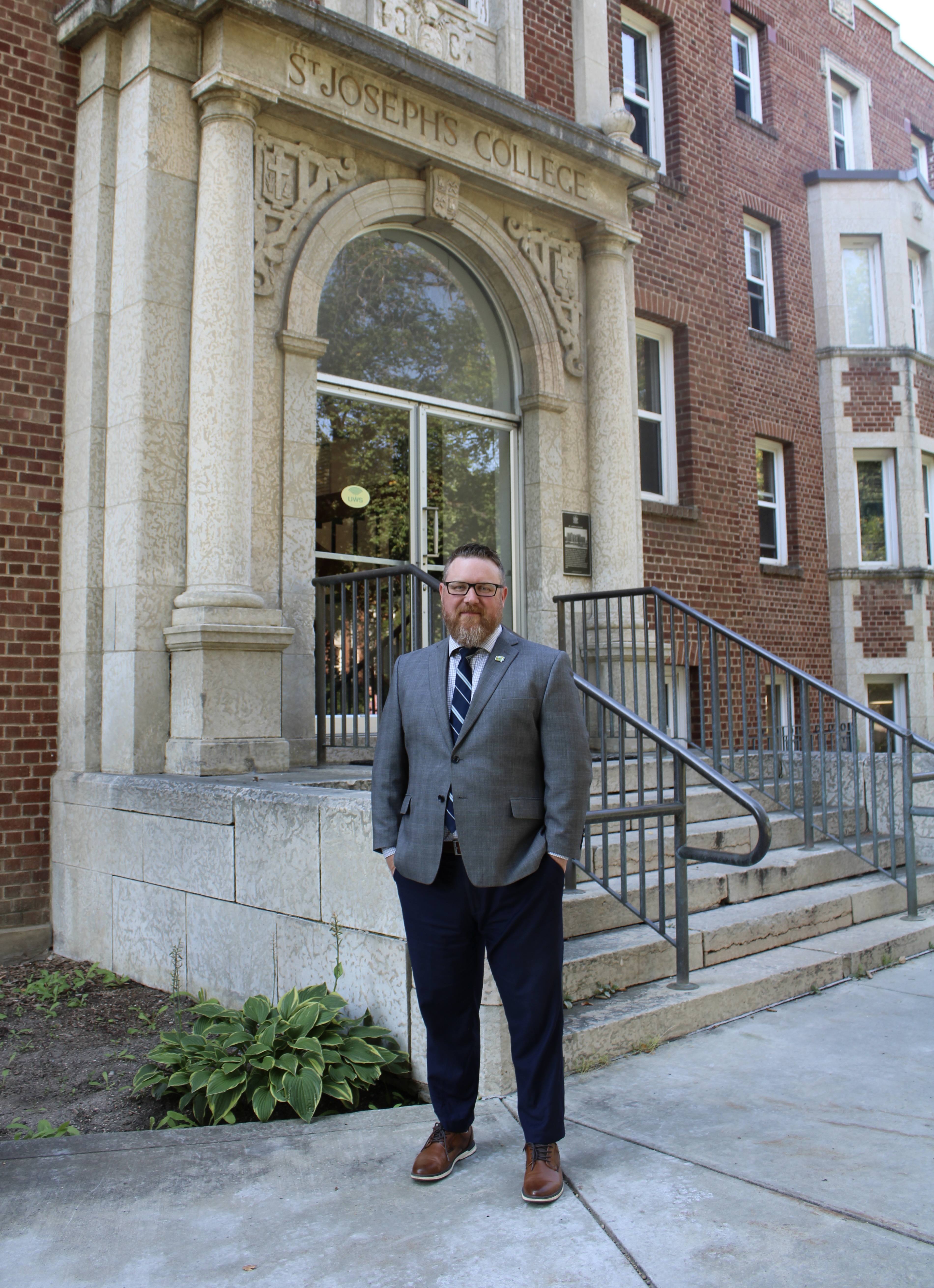
Dr. Shawn Flynn reappointed as President of St. Joseph’s College, University of Alberta for a second five-year term
September 2, 2025
St. Joseph's College Board of Governors is pleased to announce President Shawn Flynn has been renewed for a second five-year term, 2027-2032. Flynn will complete his first five-year term on June 30, 2026, and then take a well-earned 12-month sabbatical from July 1, 2026 to June 30, 2027, before starting his second term as SJC President.