Alberta’s Chief Economist on uncertainty, judgement and resilience
Roveena Mecwan, BAA Committee Volunteer - 15 May 2026
Over the course of her career, Catherine Rothrock, ‘01 BCom, has worked through recessions, market crises, COVID and shifting global economic pressures — experiences that now shape her work as Alberta’s Chief Economist. Drawing on a background that spans the energy sector, international development and government, the Alberta School of Business graduate approaches economics as both a technical discipline and a way of understanding people, risk and decision-making.
Can you walk us through your career path since graduating from the BCom program?
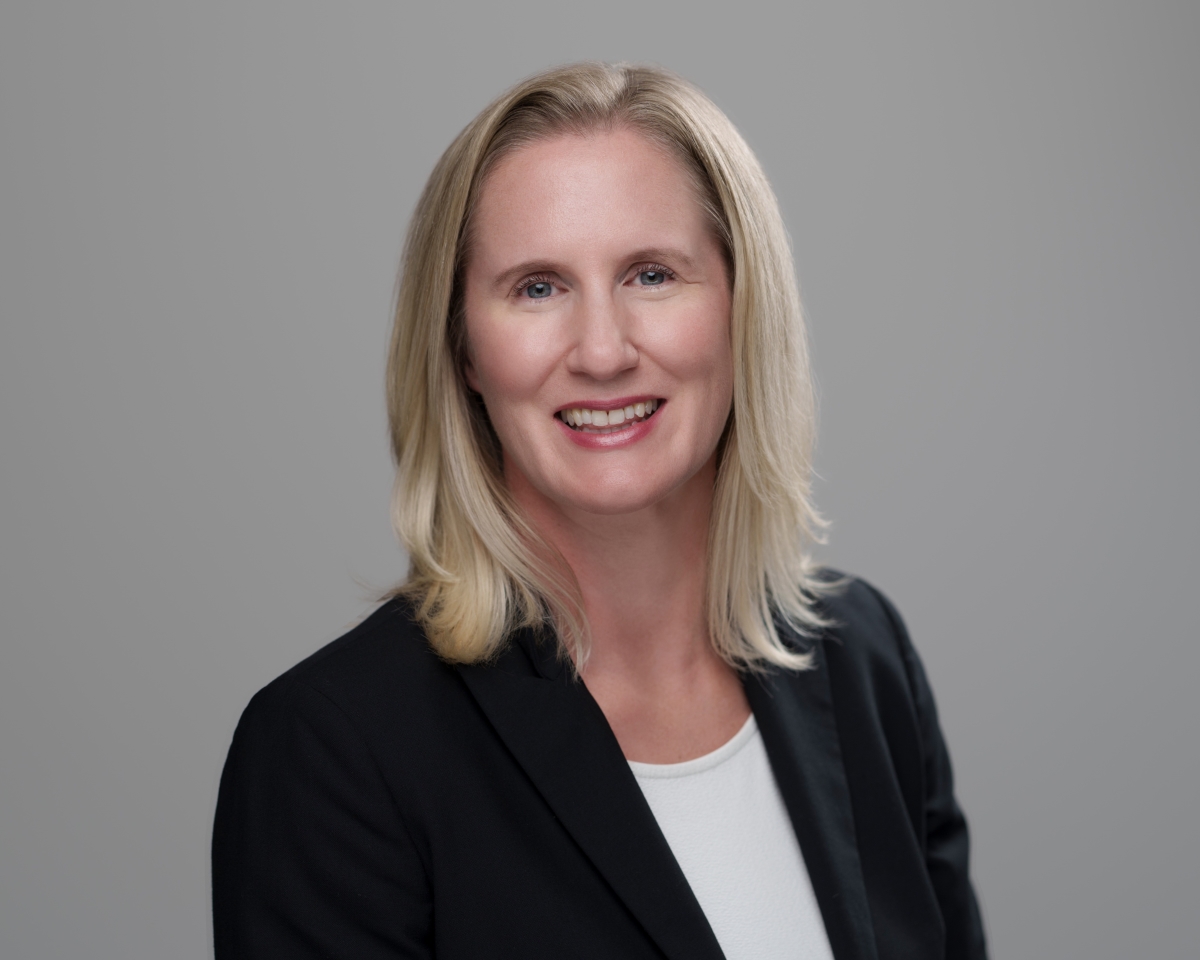 My career path has been a bit of a winding road. After graduating from the BCom program, I moved to Calgary and started working in the energy sector. My first role was as an analyst at Enron about three months before the company collapsed, so I was laid off pretty quickly. Thankfully it was short-lived — I did some temp work and was rehired after the company was bought out. I also spent time at an oil and gas consulting firm, where I was exposed to different areas of the industry and realized I really enjoyed energy market analysis.
When I was younger, I had always been interested in international development work. During my degree, I took international business courses and became especially interested in microfinance. After a few years in Calgary, I decided to pursue that path more seriously and went back to school to complete a master’s degree in economics, starting at the U of A before finishing at Guelph.
Through a federal internship program, I was placed with a Canadian organization working in Mozambique on microfinance and value chain development initiatives. I spent three years there working with grassroots organizations in different regions of the country.
Eventually, I decided it was time for another change and returned to Alberta, leaning on my earlier energy experience to transition into a role at Alberta Energy. I joined the markets team just before the 2009 financial crisis and worked on oil forecasting and policy issues related to climate, market access and pipelines.
After three years as an analyst, I moved to Alberta Treasury Board and Finance, where I took on progressively senior roles, eventually becoming Chief Economist in 2015. Today, I lead a team responsible for economic and revenue forecasts that support the province’s fiscal planning and policy development.
What first drew you to economics, and what continues to fascinate you about the field? What is your favorite part of your work as Alberta’s Chief Economist?
I sort of fell into economics. I first enrolled in science at the U of A and realized pretty quickly it wasn’t for me. I enjoyed math and English, so I started exploring Arts courses and took an introductory macroeconomics class that really clicked for me.
What continues to fascinate me about economics is how it brings together human behaviour, statistics and math to understand the decisions people make and the trade-offs we face in everyday life.
My favourite part of being Alberta’s Chief Economist is the variety of challenges we work through. There’s never a dull moment. Service is important to me, so I value being able to contribute to the province while doing work I genuinely enjoy.
As Chief Economist, what are some of the most challenging trade-offs you face when analyzing data and advising on policy?
In forecasting and policy analysis, you never have perfect information. One of the biggest challenges is balancing thorough analysis with the timelines we’re working under. We often don’t have months to study an issue before decisions need to be made.
A big part of my role is understanding risks, making judgement calls about assumptions and approach and helping guide the work forward. There isn’t always a blueprint for the issues we face, so you need to be more comfortable making decisions with uncertainty and being able to explain and defend those decisions clearly.
What lessons about leadership and resilience have you learned while working through Alberta’s economic cycles?
Since becoming Chief Economist, the province has gone through a recession, a market access crisis, COVID and now tariffs, so I’ve learned a lot about the resilience of the Alberta economy!
I’m naturally pretty agile, which helps in a role tied so closely to Alberta’s economy. I joke that I need a T-shirt that says, “Let’s just see how it goes,” because uncertainty is part of the job.
As a leader, I’ve learned the importance of balancing adaptability with structure and accountability.Earlier in my career, my instinct was to take on too much myself, so delegation was something I had to learn. One of my former bosses once put a sticky note on my monitor that said, “Should I be doing this?” I look at that sticky note every so often to remind myself of this.
I also believe people need to feel safe sharing ideas and challenging assumptions. I encourage open dialogue, curiosity and initiative within the team. That kind of environment helps build confidence, resilience and better analysis overall.
How have your experiences in the energy industry and in public policy shaped your approach at Alberta Treasury Board and Finance?
I would say that the TBF is in a unique position within the Alberta government. As a central ministry responsible for fiscal planning, we have a broad view across many different issues and ministries, and part of our role is providing a challenge function on complex files.
My experience in Calgary was incredibly valuable in shaping how I approach that work. The energy industry plays such an important role in Alberta’s economy and government revenue, so the technical knowledge and market experience I gained early in my career still informs how I assess risks and apply judgement during the fiscal planning pocess.
The issues we tackle are complex and have a lot of interdependencies. What I’ve learned over time is that getting a good outcome requires asking the right question: “What problem are we actually trying to solve?” That requires strong technical analysis, but also an understanding of unintended consequences, trade-offs and the broader context around policy decisions. I rely heavily on both my own knowledge and the expertise of the team to make sure we’re framing issues the right way.
You spent three years working with NGOs in Mozambique. How did that experience influence your life and career?
I’ve been interested in human rights and international development since I was young, thanks to my parents. They were CUSO volunteers, and we lived in Papua New Guinea before I started school. My parents were also involved in Catholic Social Services t, helping to settle refugees in my town, and my mom taught ESL.
My experience in Mozambique was probably more impactful personally than professionally. I had to learn a new language and navigate unfamiliar cultural expectations, which wasn’t always easy. There were definitely moments where I realized I had said or done the wrong thing despite good intentions, but those experiences created opportunities for self-reflection and learning.
What is one of your fondest memories from your time as a student at the Alberta School of Business?
I really loved my time in business school and found it complemented the more theoretical side of economics well. I was exposed to a broad range of topics and developed practical skills that have served me throughout my career. What stood out to me was how forward-thinking the school was, particularly around technology and collaborative learning. We used message boards, had real-time TA support and other tools that felt innovative at the time. Many of my instructors were practitioners, which brought a strong real-world perspective into the classroom, and several of the classes emphasized discussion, brainstorming and idea-sharing, rather than just lectures.
Subscribe to UAlberta Business
Become part of our community. Get the latest news and event information from the Alberta School of Business in your inbox every month.