How technologies and algorithms shape real-world decisions: Meet new assistant professor Chenghuai Li
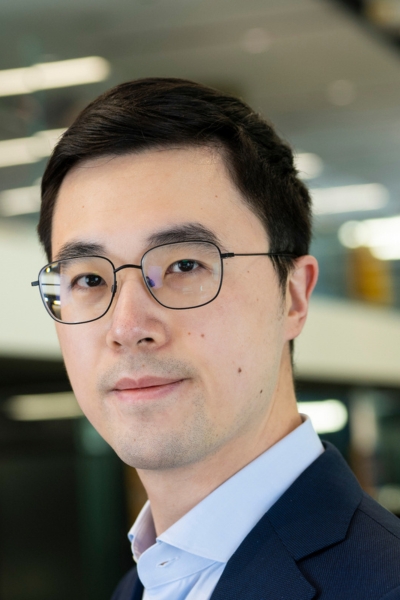
The Alberta School of Business is pleased to welcome Chenghuai Li, an assistant professor in the Department of Accounting and Business Analytics, whose research lies at the intersection of technological innovation, data-driven decision-making and social responsibility.
Li joins the school from Duke University’s Fuqua School of Business, where he recently completed his PhD. He also studied at Columbia University and Fudan University in Shanghai. His work examines how emerging technologies — from blockchain to AI — can help address challenges in supply chains, retailing, food systems and clean energy transition. His research also focuses on developing innovative data-driven solutions to operational problems, such as pricing and promotion.
In this Q&A, Li shares what drew him to the University of Alberta, the real-world questions that inspire his research, what he’s looking forward to in his teaching, and how he spends his time outside the classroom.
What drew you to the Department of Accounting and Business Analytics, and what excites you about joining this community?
I have known about the University of Alberta for a long time because of its strong academic reputation. After a pleasant, memorable conversation with some future colleagues at INFORMS in Seattle, I was invited to visit the campus. The department's inclusive and supportive atmosphere was one of the main reasons I decided to join. Faculty members showed genuine interest in my research, and our discussions were both inspiring and constructive.
I am excited to join this community because it provides the space to pursue my research interests. At the same time, I hope to continue developing data-driven methods to solve practical problems, which aligns with the department’s vision of building an AI Centre for Decision Analytics.
How would you describe your main research interests and what real-world challenges or industries does your research aim to impact?
My research interests are shaped by three main themes: technological innovation, social responsibility, and data-driven analytical methods. Broadly, I study the impact of emerging technologies — such as blockchain and AI — in various operational settings, including supply chain management, retailing and the sharing economy.
For example, one of my projects examines how adopting blockchain in fresh produce supply chains affects stakeholders’ profits and food waste. I also study incentive mechanisms that support innovation, such as those that encourage ride-hailing drivers to transition to electric vehicles. These questions can be complex, as private-sector decision-making often involves multiple objectives.
In addition to practical impact, I aim to develop new methodological tools and algorithmic frameworks. Looking ahead, I plan to explore the opportunities and challenges that rapidly evolving technologies, such as AI, bring to society — with possible applications in food waste reduction, clean energy transitions and digital platforms. I am also interested in understanding the role of algorithms in human decision-making.
How have your experiences at Duke, Columbia and Fudan shaped your approach to research and teaching?
I began with a mathematics background as an undergraduate and then completed a master’s degree in financial engineering before formally starting my research in operations. Mathematics gave me an appreciation for theoretical elegance, while financial engineering emphasized practical implementation.
During my PhD at Duke, I integrated these perspectives, aiming to address operational challenges grounded in real-world practice while developing solutions that are analytically rigorous and intellectually satisfying.
My teaching philosophy reflects this balance. I aim to introduce the practical context of operational problems, along with analytical tools, offering students both practical motivation and a rigorous framework for decision-making challenges.
What are you most looking forward to in your teaching and research at the Alberta School of Business?
I am looking forward to joining a school with a great deal of energy. Faculty at the Alberta School of Business produce research that is valued both academically and societally. I can see strong connections between the school’s research and the needs of the local community and Canadian society. For example, my colleague has done excellent work using data-driven approaches to support wildfire response in Alberta.
I am eager to learn more about practical challenges faced by local organizations and communities and to generate research that can inform business strategy and public policy. I also look forward to ongoing conversations with colleagues who have diverse interests and expertise, as these exchanges are always inspiring.
The Alberta School of Business has a strong and dedicated student body. As I teach undergraduate operations management this semester, I can already see students’ curiosity and commitment. I look forward to supporting their academic and professional growth.
Outside of work, what do you enjoy doing in your spare time?
Outside of work, I enjoy walking around the city, especially on sunny days. It helps me relax and clear my mind. I also enjoy playing pickleball and basketball. When time permits, I like watching esports games.
Subscribe to UAlberta Business
Become part of our community. Get the latest news and event information from the Alberta School of Business in your inbox every month.