
U of A research. Real-World impact.
From net-zero innovations to next-gen storage, learn how the U of A is striving to achieve the UN's goal of afforable and clean energy for all.
Discover The PowerAs the world accelerates its transition toward low-carbon transportation, hydrogen fuel-cell vehicles (HFVs) are emerging as a promising solution — combining zero emissions, high efficiency, and long driving range. Yet the road to large-scale adoption remains complex, constrained by uncertain consumer uptake, limited refueling infrastructure, and the geographic mismatch between renewable energy generation and urban transportation demand.
A recent study coauthored by Ruijiu Mao at the University of Alberta’s School of Business, tackles these intertwined challenges head-on. The paper, From Curtailed Renewable Energy to Green Hydrogen: Infrastructure Planning for Hydrogen Fuel-Cell Vehicles, published in Manufacturing & Service Operations Management, develops an integrated framework that connects renewable power, hydrogen production, and transportation networks to enable sustainable growth of the hydrogen economy.
The research focuses on Sichuan Province in China, where abundant hydropower resources coexist with significant electricity curtailment— meaning renewable generation has to be reduced or stopped when the grid cannot absorb all the available power —due to grid congestion. Rather than letting excess renewable energy go unused, Mao and her collaborators propose using it to produce green hydrogen through water electrolysis — transforming surplus electricity into a clean transportation fuel.
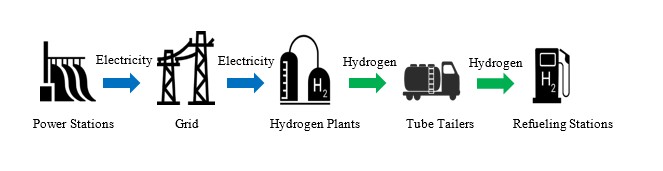
"HFVs are the more cost-effective option under current estimates, largely due to the flexibility of hydrogen transport, which allows for strategic placement of refueling stations separate from hydrogen production sites within the supply chain," states Mao.
Their model jointly determines where to build hydrogen refueling stations, where to locate hydrogen production plants, and how to upgrade the power grid to balance cost, accessibility, and environmental benefit. Using real-world data, the study captures both the consumer behavior (drivers’ adoption decisions and travel patterns) and the technical infrastructure (energy transmission and hydrogen logistics) within one unified optimization framework.
Data-driven insights for policy and practice
The findings reveal that infrastructure layout should evolve with adoption targets.
- When HFV penetration goals are modest, stations should first appear near hydropower-rich but sparsely populated regions to absorb curtailed electricity efficiently.
- As adoption targets rise, investment must shift toward metropolitan areas like Chengdu, where concentrated traffic demand supports extensive refueling infrastructure.

Mao adds that "the promotion of Hydrogen Fuel-Cell Vehicles can contribute to an overall reduction in hydropower curtailment, although the effectiveness varies depending on the VMT (vehicle-miles-traveled) adoption target and factors, such as grid upgrade costs and electricity purchase prices."
The study further shows that expanding HFV use can significantly reduce hydropower waste — though the benefit depends on grid upgrade costs and electricity prices. Compared with electric vehicles, HFVs offer greater advantages in long-haul freight transport, where fast refueling and long range deliver both cost savings and emissions reductions.
By bridging operations management, transportation, and energy systems, this research extends the frontier of sustainable infrastructure planning. It offers quantitative guidance for policymakers and industry leaders seeking to align renewable power utilization with green mobility strategies.
Read Mao’s full research article at DOI:10.1287/msom.2022.0381
This paper was recently recognized with the 2025 INFORMS ENRE Best Publication Award in Natural Resources, underscoring its contribution to advancing data-driven solutions for the global energy transition.

From net-zero innovations to next-gen storage, learn how the U of A is striving to achieve the UN's goal of afforable and clean energy for all.
Discover The PowerBecome part of our community. Get the latest news and event information from the Alberta School of Business in your inbox every month.