Transparency, regulation and unintended consequences: Meet assistant professor Lulin Song
Lulin Song joined the Alberta School of Business on July 1, 2026, as an assistant professor in the Department of Accounting and Business Analytics. His research examines how firms respond to regulatory disclosure requirements, and how those responses can create both intended and unintended consequences.
With a focus on areas including health care, environmental reporting and fair lending, Song studies what makes regulation effective and how factors such as enforcement, competition and internal controls shape outcomes.
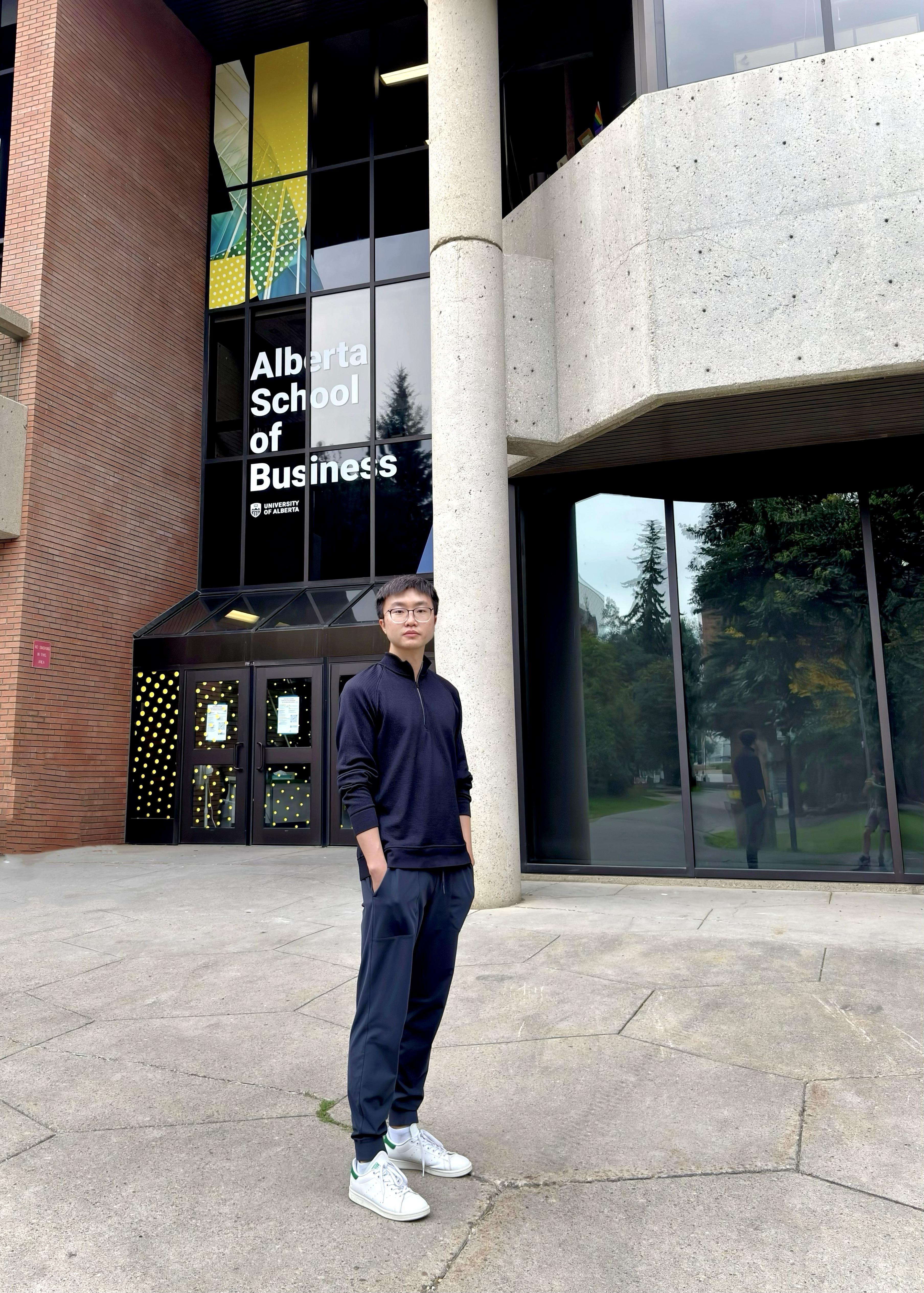
Welcome to the Alberta School of Business! What brought you here?
My PhD at the Rotman School gave me many opportunities to meet faculty from across Canadian universities, and the University of Alberta scholars I met kept standing out, both for how welcoming they were and for the questions they were working on. They were people I wanted to work with. That impression only got stronger during the hiring process, where the conversations were less about what was already on a CV and more about the questions someone wants to spend the next decade on. That's a forward-looking way to think about research, and it says a lot about the environment the School is building.
The Department of Accounting and Business Analytics has also been hiring at a real clip over the past couple of years, and several of the people who have joined recently work on questions close to mine, so arriving now felt like arriving at a good moment.
How would you describe your main research interests?
I study what happens after a regulator requires something to be disclosed, and how firms actually respond.
My dissertation looked at U.S. state laws requiring hospitals to report the prices they negotiate with insurers. These laws lowered earnings per patient, but hospitals treated more patients, discharged them sooner, and raised list prices. Readmission rates also rose, suggesting care quality suffered.
A related project finds that firms required to report greenhouse gas emissions cut emissions, but facilities in disadvantaged communities increased toxic chemical releases, alongside higher rates of low birth weight and infant mortality.
A third project finds that extending fair lending protections to sexual orientation narrowed the interest rate gap facing same-sex co-borrowers. Our evidence points to enforcement, market competition, and lenders’ internal controls as factors shaping whether regulation works.
What have you learned or discovered about the school, the students, or the wider Edmonton community, so far?
What struck me first is how much the University feels like a community rather than an institution. People here pay attention to how their colleagues are doing, and the School puts real effort into helping its people grow. The New to the U faculty teaching orientation was a good example, with genuine attention to teaching as a craft you develop. I felt like I belonged here quite quickly.
The climate is nothing like Toronto’s, but I went to the Heritage Festival this summer and loved seeing so many cultures gathered in one place. The lion dance at the China pavilion stayed with me. It is a sound and rhythm I grew up with, and hearing it in Edmonton was a small, unexpected way of feeling at home. Edmonton is also remarkably easy to live in, especially after years in Toronto.
What are you most looking forward to in your teaching and research here in the years ahead?
On the teaching side, my first course assignment here is management accounting. My undergraduate program had a management accounting emphasis, so coming back to it as the instructor rather than the student feels like closing a loop. Most recently I taught data analytics for financial information in Toronto, and I’m looking forward to the shift toward the judgment calls that produce the numbers in the first place.
On the research side, I want to go further into health care. So far I’ve studied hospitals from the outside, looking at how they respond to disclosure rules. What I don’t yet know is how decisions get made inside them. How do budgets, cost allocations, and performance measures shape what physicians and administrators do day to day? Those are the questions I’d most like to answer next, and they’re close enough to what I’ll be teaching that I expect the two to feed each other.
Outside of work, what do you enjoy doing in your spare time?
Mostly two things: making coffee and being outside. I brew fairly seriously, with an espresso machine, a grinder, a pour over kit, and tons of cups. I've been working my way through Edmonton's cafes since I arrived. The best one I've found so far is Kissa10 in the southwest, a tiny Japanese-style place that feels like it was transplanted from another city entirely. One other small pleasure of moving here is that several roasters whose beans I used to order to Toronto turn out to be Alberta roasters, so what used to come in the mail I can now go and buy in person.
The rest of my spare time goes to things that grow. I keep plants at home, mostly ferns and orchids. I didn't want to risk shipping them, so they flew here in my carry-on, and then my only checked bag was lost in Montreal. So for my first two days in Edmonton I had my plants, my husky, and nothing else. The bag did turn up, and I have come to think the plants and the dog were the right things to keep hold of anyway. She is almost nine and shows no sign of slowing down, and although she has not been through an Edmonton winter yet, I suspect she is going to enjoy it considerably more than I will. The ferns, on the other hand, may have opinions about how dry it is here in winter.
Subscribe to UAlberta Business
Become part of our community. Get the latest news and event information from the Alberta School of Business in your inbox every month.