From PhD to placement: Shuhan Yang appointed assistant professor at Peking University, Beijing
When Shuhan Yang returns to Peking University this fall, it will mark a significant milestone in a journey that began years earlier as a student exploring her academic interests across disciplines.
During her undergraduate years at Peking University, Yang was drawn to questions about human behaviour — questions sparked by the freedom to study across fields and think broadly about how people make decisions.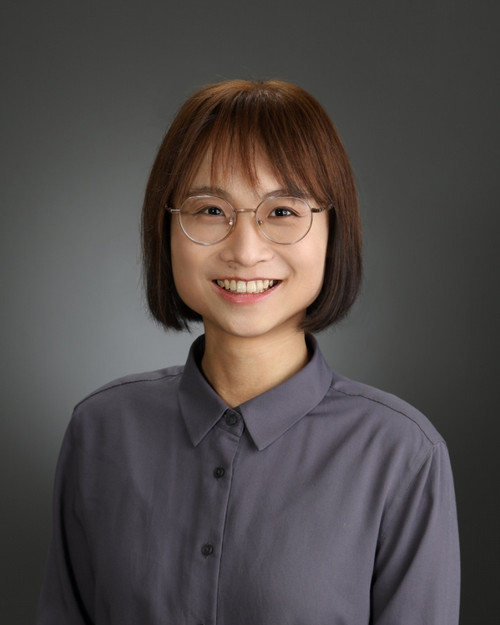 “During my undergraduate years, Peking University offered me the space and freedom to explore,” she says. “I took courses across various disciplines, ranging from business to psychology and I became fascinated by how academic research reveals and explains interesting behavioral patterns: why people tend to gravitate toward middle options, or why having more choice is not always better. That initial curiosity gradually grew into a passion for pursuing a PhD and becoming a researcher in consumer behavior.”
That curiosity eventually led Yang to the Alberta School of Business —where she will complete her PhD in 2026 — and developed a research agenda focused on how people respond to adversity, including stress, unfairness and discrimination. She will now return to Peking University’s Guanghua School of Management in Beijing as an assistant professor of marketing.
“Returning now, with the training and experience I have gained along the way at the Alberta School of Business, I am excited to continue exploring human behavior through research,” Yang says. “At the same time, I am also aware of the responsibility to inspire and support students like I once was, as they explore their own paths and possibilities.”
Learn more about what this placement means for Shuhan in our Q&A below.
Congratulations on your new position at Peking University, Shuhan! Looking back on your PhD at the Alberta School of Business, what experiences or training were most influential in preparing you for an academic career?
Looking back, I truly believe that every step of the PhD journey at the Alberta School of Business mattered — each seminar discussion, milestone exam, research meeting and conference presentation contributed gradually to my development.
Among these experiences, the comprehensive exam and the candidacy exam were especially influential, not just as milestones to complete, but as moments that fundamentally shaped how I think as a researcher. The comprehensive exam required us to develop an individual research paper from start to finish, including idea generation, experimental design, writing and presentation. This experience was especially rewarding because it trained me to think and work independently. The candidacy exam then challenged me to articulate my ideas clearly, defend them thoughtfully and think strategically about my longer-term research agenda.
Equally important, throughout this process, my advisors were consistently supportive, encouraging me to pursue questions I was genuinely curious about. More broadly, faculty members were always generous with their feedback. These experiences — while sometimes demanding — were invaluable in helping me transition from learning existing knowledge to creating new knowledge.
For current PhD students thinking about academic careers, what does the transition from PhD candidate to faculty member look like for you? Any pivotal moments?
To be honest, I’m still figuring it out and learning from those who have already gone through the transition. So far, moving from PhD candidate to faculty member has been about holding onto the curiosity and passion that drew me to research in the first place, while gradually developing a more professional way of managing the many other parts of the job.
One pivotal moment that clarified this transition for me came during the job market, when I carefully read faculty job descriptions. They made it clear that the role is not only about conducting research, but also about education, mentoring and contributing to the research community as a good citizen. Realizing this helped me prepare myself for the broader responsibilities of the faculty role.
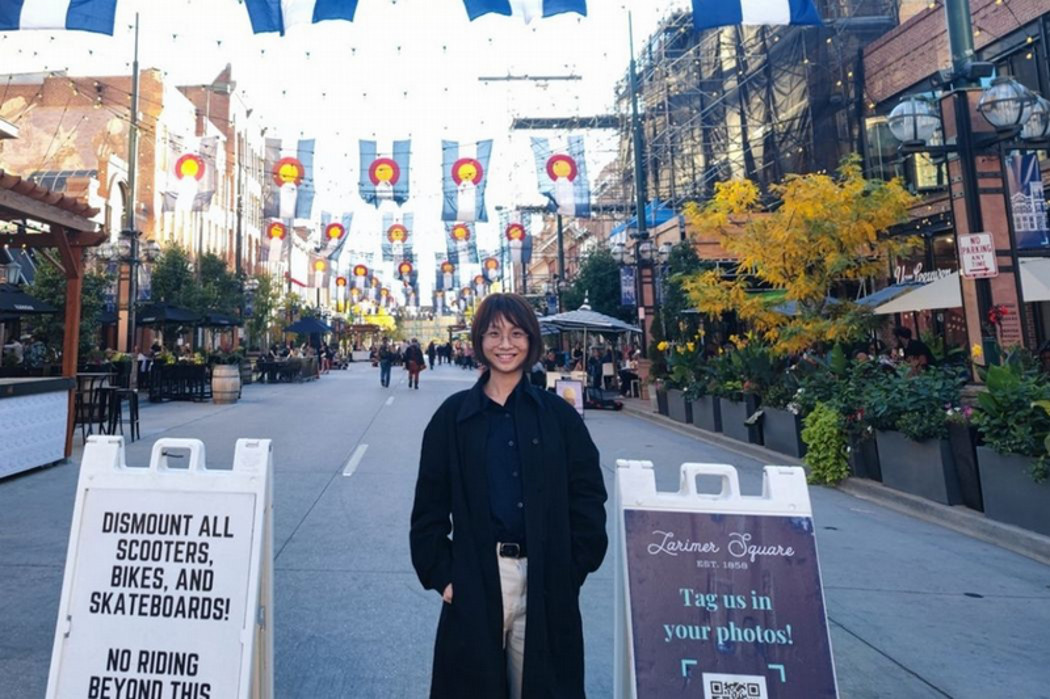
Shuhan Yang attends her first academic conference in Denver, Colorado
Tell us about your research interests.
My research focuses on an unpleasant but inevitable part of human life: aversive experiences. At different points in our lives, we all face adversity. Sometimes it is situational, such as stress from work or exams; other times it is long-lasting, such as health challenges or experiences of unfairness and discrimination. My work examines how these experiences shape the way people think, feel and behave.
One example comes from a paper I published in the Journal of Experimental Social Psychology, coauthored with Tito Grillo and Adrian Ward. In this project, we studied how people from marginalized groups, including groups of women and immigrants in the U.S., the U.K. and China, interpret their own past experiences of discrimination when social conditions improve. We found that when individuals learn that progress has been made to protect future generations of their group, they tend to see the discrimination they personally experienced in the past as less unfair — a phenomenon we call “fairness revisionism.” This finding is important for both organizations and society because fairness revisionism can be a double-edged sword. On the one hand, it can bring peace of mind to those who were treated unfairly in the past.
On the other hand, it can unintentionally downplay the severity of past discrimination, making efforts to continue to combat discrimination seem less urgent. Our findings suggest that while it is important to celebrate progress, it is equally important for organizations and societies to preserve the memory of past injustices, so that similar problems are less likely to be repeated in the future.
Along the lines of my broader research interest in adversity, I am currently exploring how life stress and bullying experiences shape people’s consumption preferences. This line of work highlights how current and past aversive experiences can have psychological and behavioral consequences.
Taken together, my research aims to draw attention to people who are currently struggling with — or have previously experienced — different forms of adversity and to offer insights that can help improve their well-being through more thoughtful policies and marketing practices.
As you begin your role at Peking University, what research questions are you most excited to pursue next?
For the next chapter, I’m most excited to continue developing my research on how adversity arising from different sources shapes people’s experiences and choices in important contexts such as technology, finance and healthcare. These are domains where people often face high levels of vulnerability and uncertainty and understanding how individuals respond in these settings can have meaningful implications for policymakers and marketers seeking to improve consumer well-being.
I’m also particularly interested in introducing a cross-cultural perspective into this work. People everywhere face adversity, but the ways they interpret and respond to it may differ across cultures — or, in some cases, remain surprisingly similar. By bringing a cross-cultural lens to these questions, I hope to offer insights from more diverse perspectives and contribute to a more inclusive understanding of human responses to adversity.
Finally, what advice would you offer to PhD students who are hoping to land academic positions and build research careers of their own?
Wow, this is a tough question, especially since I’m still at the beginning of my research career. That said, I can share a few things that have worked for me so far, with the understanding that they may not work for everyone — or that I might even see them differently a few years from now.
Research progress can be uncertain, but keeping a sense of curiosity and focusing on questions I genuinely care about has made the process much more enjoyable for me. Curiosity motivates me to keep moving forward when progress feels slow or nonlinear. Because challenges are inevitable along the way, maintaining some degree of work–life balance (e.g., developing hobbies outside of research) has helped me stay resilient.
Subscribe to UAlberta Business
Become part of our community. Get the latest news and event information from the Alberta School of Business in your inbox every month.