Jackie Zimmerman, JD/MBA ’20, on thinking like a lawyer and advising like a business partner

MBA Diaries | Combined Degrees
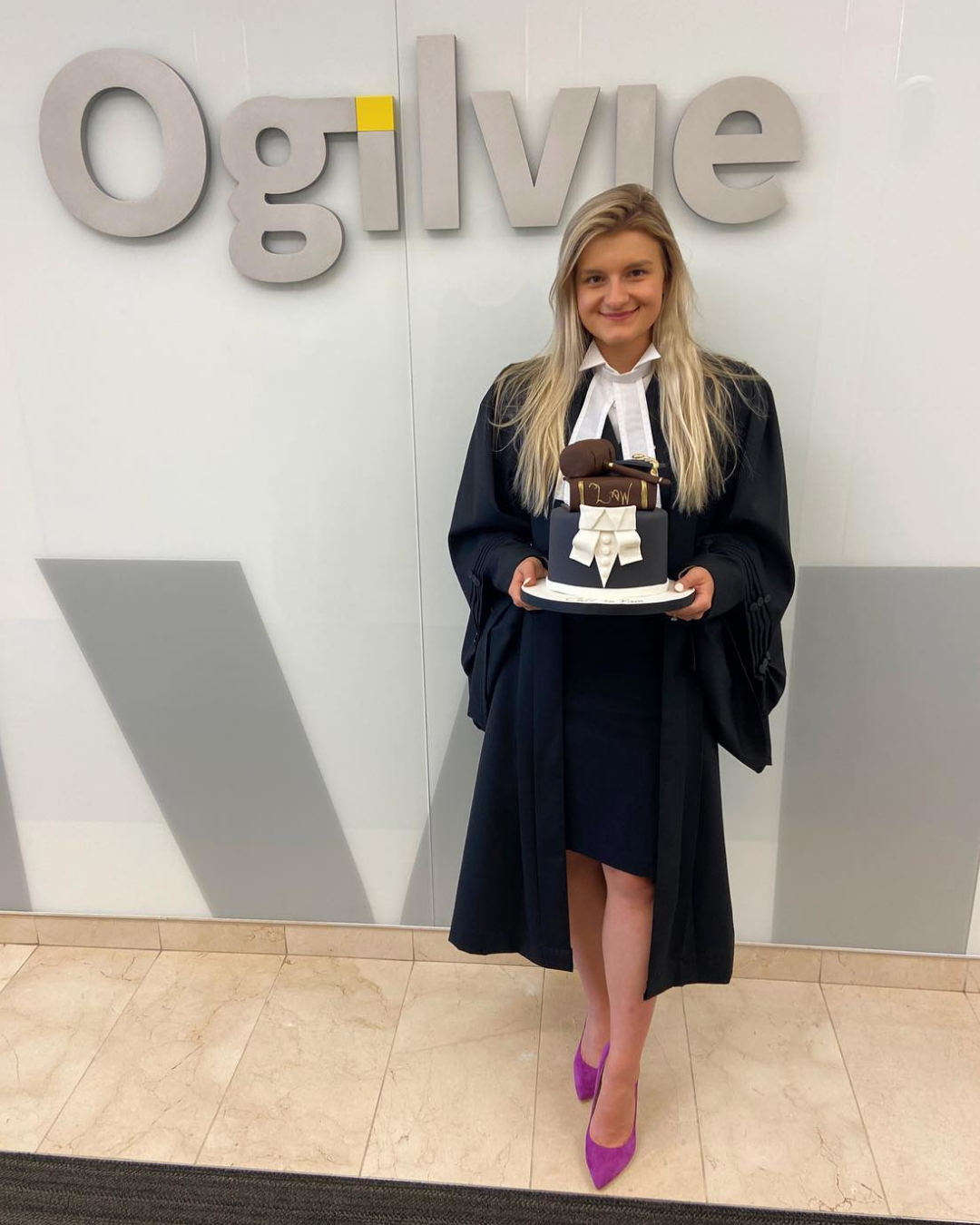
Corporate and commercial lawyer at Ogilvie LLP in Edmonton
We’re highlighting MBA graduates who pursued combined degrees at the Alberta School of Business and carried that integrated experience into their careers across Canada and beyond. Jackie Zimmerman’s journey reflects what makes the combined degree path so impactful: bridging disciplines, shifting between perspectives and translating both legal and business insight into practical, real-world decision-making.
Where has your combined JD/MBA taken you, and what does your work look like today?
I’m currently a corporate and commercial lawyer at Ogilvie LLP in Edmonton. My practice focuses primarily on business transactions, including financing and secured lending, corporate reorganizations, mergers and acquisitions and real estate.
In practical terms, that means I spend a lot of time helping businesses and lenders navigate complex transactions, manage risk, and actually get deals across the finish line. My official title is lawyer, but on any given day I’m also a problem-solver, translator of legal jargon, and occasional therapist for clients in the middle of high-stress transactions.
Thinking back to your student days — how did you typically start your day, and what did balance look like while managing two programs
Back then, my mornings were a lot calmer than they are now, something I appreciate in hindsight. I usually woke up at a reasonable time and tried to get to the gym before class, which is one habit I’ve actually managed to carry into my working life.
I was completing the dual Juris Doctor (JD) and Master of Business Administration (MBA) programs at the same time, so “balance” looked a bit different than it might for students in a single program. Each faculty had its own schedules, expectations, and priorities, and I was constantly switching gears between the two.
In one semester, I had back-to-back classes in the law school and the business school, which meant I became a very efficient sprinter between buildings. It definitely wasn’t always seamless, but it did teach me how to juggle competing priorities and deadlines, shift mental frameworks quickly, think on my feet, and move quickly (both mentally and physically).

My interest in pursuing a combined degree actually started earlier than law school. When I was 16, I worked as a Christmas associate at Victoria’s Secret and eventually worked my way into a supervisor role. Whenever our district manager or head office visited, I got a glimpse into the bigger-picture business discussions happening behind the scenes and I was immediately drawn to that strategic side of decision-making.
That experience led me to pursue a Bachelor of Commerce, where I majored in International Business, influenced in part by my family’s background in Poland. I always knew I wanted to go to law school, but I also wanted to understand how businesses actually operate.
The dual JD/MBA felt like the best of both worlds. It gave me the flexibility to pursue business-focused roles if I wanted to, while also making me a stronger lawyer. In practice, the two programs complement each other constantly, whether it’s understanding how businesses function in lending transactions, reviewing financial statements in mergers and acquisitions, or drawing on the soft skills developed through group projects and collaborative work. The business perspective has made me far more effective at understanding my clients’ goals, how their businesses actually run and advising them in a way that’s practical, not just technically correct.
How did blending business with your other discipline shape the way you think or approach challenges?
Blending business with law has really shaped how I approach problems in practice. Many of my clients are companies or business owners, and having a solid understanding of how businesses operate helps build immediate trust, they know I’m not just looking at an issue from a legal perspective, but from a commercial one as well.
It’s also trained me to put on a practical hat. In an ideal legal world, there’s often a “perfect” solution, but in reality businesses are working within financial, timing, and operational constraints. The combined background allows me to step back and ask what solution actually makes sense for the business in front of me, not just what works best on paper.
That perspective helps me balance risk management with efficiency and practicality, and ultimately provide advice that aligns with how clients need to operate in the real world, not a theoretical one.
 What courses or areas of focus within each program stood out to you most — and how have they influenced your career since graduating?
Within the MBA program, courses in finance, strategy, and organizational behaviour stood out the most. In accounting and finance classes, we weren’t just learning theory, we reviewed the actual financial statements of companies like Apple and Save-On-Foods. Being able to apply classroom concepts to real-world businesses made the material click and helped me build a comfort level with financials that I rely on regularly in my legal practice, particularly in transactional and lending work.
I especially enjoyed organizational behaviour courses because they were highly practical and discussion-based. Each class focused on case studies involving real businesses and real challenges, which led to thoughtful (and often lively) discussions about leadership, decision-making, and managing people. I enjoyed the subject so much that I later became a teaching assistant for organizational behaviour courses, which strengthened my communication skills and ability to break down complex ideas in an accessible way.
On the law side, what stood out most was not learning how to “be a lawyer” in a practical sense, but learning how to think. Law school trains you to analyze problems critically, see multiple sides of an issue, and communicate clearly and persuasively in writing. Those skills, combined with the business foundation from the MBA, have been invaluable in helping me assess risk, structure arguments, and explain complex issues in a way that clients can actually understand.
What’s one skill, lesson or insight you gained from the combined degree that continues to influence your work or leadership today?
One of the biggest insights I gained from completing the combined JD/MBA is the importance of judgment over perfection. The programs trained me to analyze issues from multiple angles, understand risk, and think strategically but also to appreciate real-world constraints like timing, cost, and business priorities.
In practice, that shows up in how I advise clients and work with teams. Rather than defaulting to the “perfect” answer on paper, I focus on helping clients make informed, practical decisions that align with their goals and realities. That ability to balance analysis with action has been one of the most valuable takeaways from the combined degree and continues to influence how I approach both my work and leadership today. It taught me how to think critically, but also how to decide, which is often the hardest part.