Doug and Jane Wilson Fund to Support Experiential Learning in Public Health
Experiential learning is built on a simple but powerful premise: we learn best by doing.
It goes beyond the classroom and beyond required coursework — into conferences, case competitions, short internships and professional development students pursue on their own initiative. It is where curiosity becomes capability, and capability becomes leadership.
The Doug and Jane Wilson Fund to Support Experiential Learning in Public Health will give public health students opportunities to learn by doing.
Dr. Wilson’s vision for experiential learning
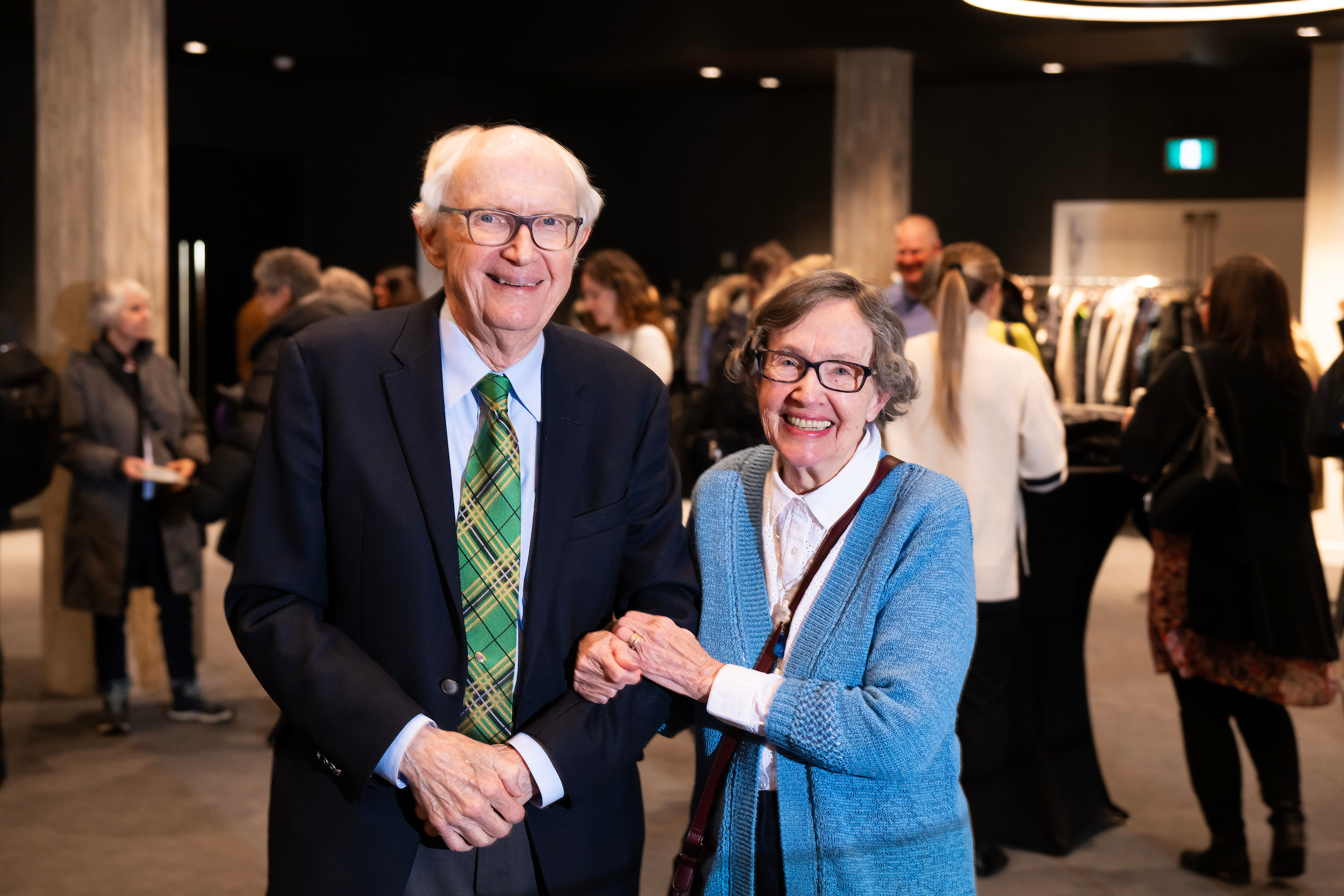
Dr. Doug Wilson has always understood the importance of experiential learning opportunities. Throughout his career, he created conditions for people to practice their way into leadership. Wilson’s career reflects a consistent throughline: learning by doing and building environments where others can do the same. His belief in learning by doing has shaped careers and communities. That legacy lives on in the School of Public Health, where experiential learning and community-engaged scholarship remain central to its mission.
Doug and his wife, Jane, are not new to philanthropy — they have endowed three other awards at the School of Public Health for healthy equity, community engagement, leadership and mental health. They continue to practice the ideals behind philanthropy — a love of humanity expressed through action. This new fund is their latest philanthropic gift for the students learning and practicing to become tomorrow’s public health leaders. Their generosity, mentorship, compassion and unwavering belief in the power of public health has changed lives, strengthened communities and shaped the future of public health — and will continue to do so for generations to come.
Experiential learning opportunities
Imagine the potential when every student has the opportunity to tackle real-world public health challenges through hands-on learning. This flexible fund will enable students to access hands-on, practice-based learning opportunities. It will support experiences that shape both how they learn and how they lead. This endowment is designed to support experiential learning and community-engaged opportunities for students in the School of Public Health. By supporting opportunities to engage in crucial learning experiences outside the classroom and allowing students to explore leadership skills and professional goals, this endowment will foster the next generation of public health leaders, who will be crucial in driving change in improving population and community health.
Specific uses of the funding will include, but are not limited to, the following:
- Travel and fees for students to present at conferences, symposiums or seminars with structured learning objectives
- Extra or co-curricular participatory career and field learning experiences like case competitions or short internships
- High-impact professional development opportunities
- Skill-building workshops or institutes
- Professional association events relevant to your career goals
- Any other expenditure to provide support for extra or co-curricular experiential learning in the School of Public Health deemed appropriate
Eligibility
- Any student who:
- Is in a degree program at the School of Public Health
- Has completed two terms
- Is in good academic standing at the time of both application and activity
- Is not already receiving funding from other sources. Students must demonstrate that they have unsuccessfully applied to the following sources:
- Award Limit: A one-time award for the duration of their degree program.
- Recipients will be required to provide a Reflection Statement, which may be included in the SPH annual Impact Report.
Application Process
If an activity spans multiple deadlines, the application must be submitted for the deadline in which the activity starts.
-
- Applications must include:
- Student Name, ID number and Degree Program
- Short description of the funding request, including any promotional materials or overview information about the potential experience.
- A letter of support from the student’s supervisor, academic advisor or other referee that speaks to the value of this event for the student.
- Responses to the following:
- How will this specific activity help you to explore public health skills and your professional goals? (max. 200 words)
- What skills and attitudes will you develop through this activity, and how will you apply them after the activity? (max. 200 words)
- Please list any additional information you would like the adjudication committee to know. (max. 150 words)
- Completion of the budgeting template included in the application form.
- Funds may be applied to:
- Registration fees
- Travel fees to and from the activity, including ground transportation
- Production of materials for the activity (posters, presentations, equipment rental)
- Please note: AI tools may be used to support the writing process such as refining spelling, grammar or sentence structure, provided the content remains the student’s original work. An application with responses generated by AI technology will be rejected.
- Retroactive applications are not permitted.
- Late applications will not be considered.
- A funding decision will be made four or more weeks following the end of the application period.
- Students may not resubmit an application if the original application has been denied, unless the reason for the denial is due to the application being submitted too early (i.e., before the noted time period for the activity).
- Funding decisions are final.
- Within one month of the activity completion, recipients are required to submit their reflection statement on how the award enhanced their public health learning through the experiential opportunity.
- Applications must include:
-
Deadlines: Applications will be called and open three times per year.
- October 17 for activities occurring between January and April of the calendar year.
- February 17 for activities occurring between May and August of the calendar year
- July 17 for activities occurring September and December of the calendar year