Convocation Hall Renewal
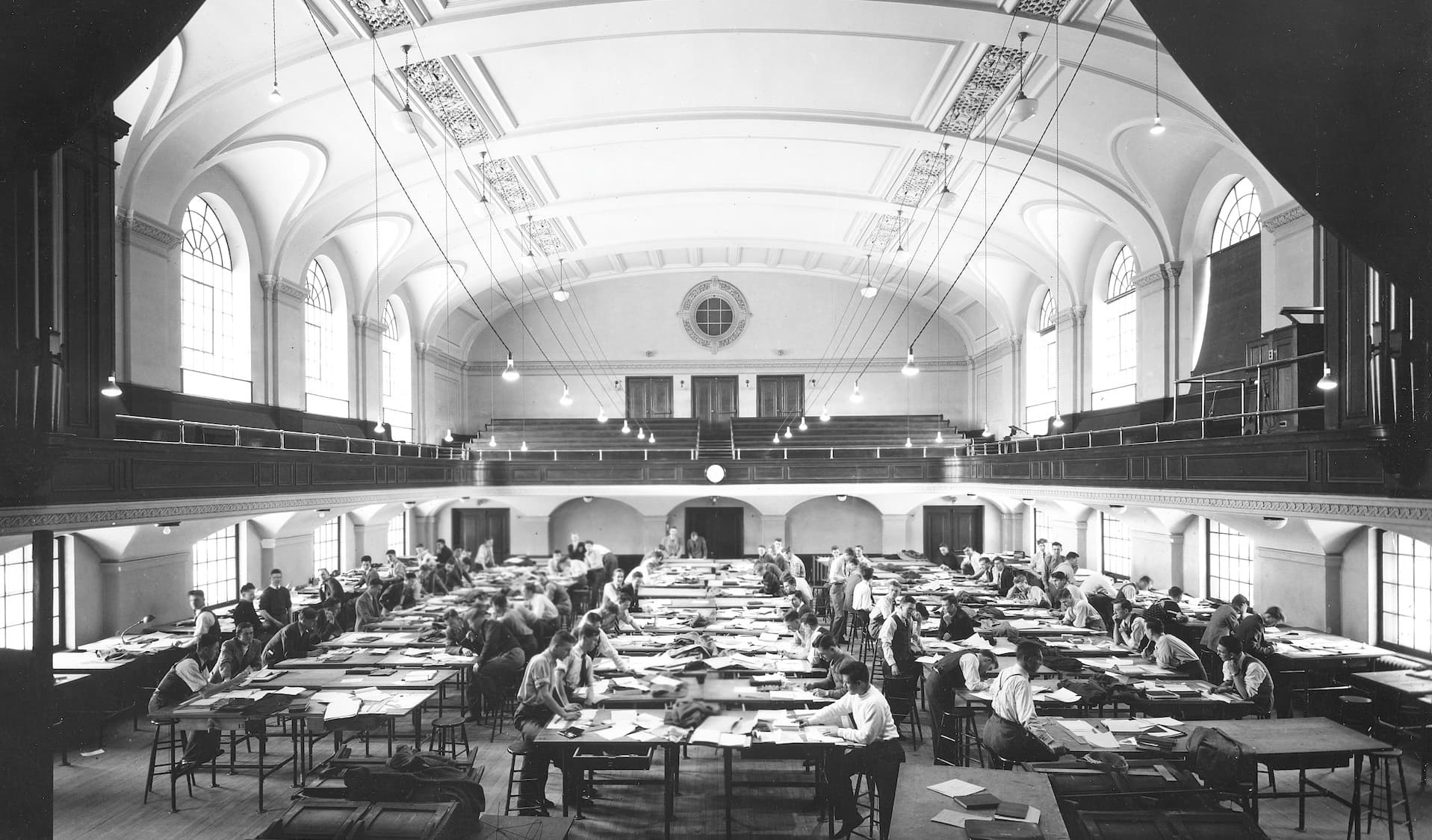
Convocation Hall has been an important part of the life of our university since 1915. This renovation honours that history and renews the hall for the century ahead — a home for music, and a space that belongs to everyone.
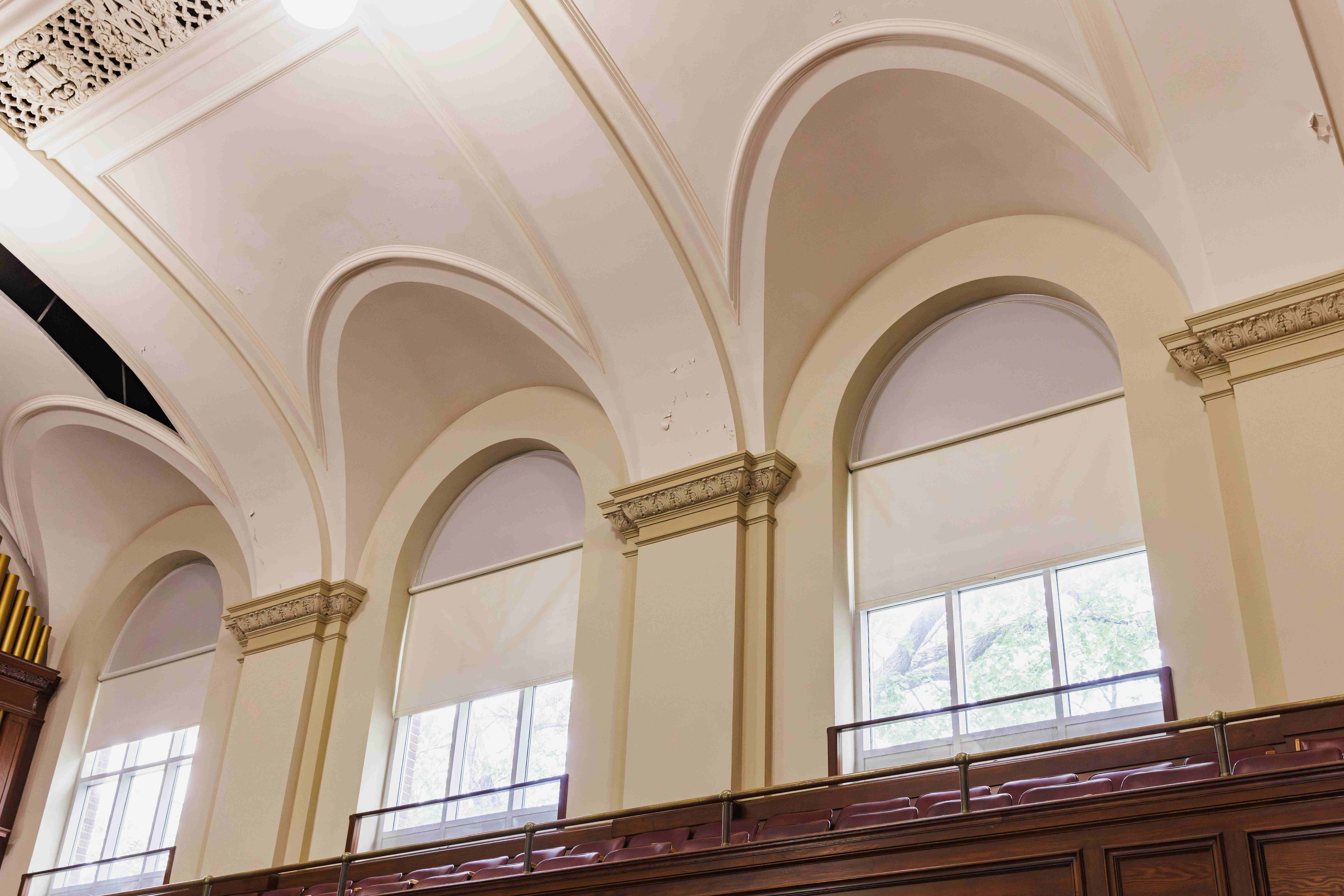
The goal is to restore the hall as faithfully as possible to its original design — its Beaux-Arts proportions, decorative masonry, roped ceiling panels, and crown mouldings — brought back with care and renewed with purpose. The renovation will also bring the hall fully up to modern standards, ensuring it is accessible to every member of our community.
The restored hall will be one of Edmonton's finest venues for chamber music, recitals, and small-scale performances: intimate, acoustically exceptional, and purpose-built for music. Large enough to fill a room with sound and shared experience; small enough that every seat feels close to the stage.

Location
North Campus
Stage
Design
Target completion
TBD
Estimated cost
$7.4M
Designers
Zeidler Architecture
Project type
Renovation
Renderings of the Renewed Hall

Conceptual render of the stage from the floor. Note that enhancements to historic elements and details are not fully represented.

Conceptual render of the stage from the balcony. Note that enhancements to historic elements and details are not fully represented.

Conceptual render of the stage from the balcony. Note that enhancements to historic elements and details are not fully represented.

Conceptual render of the hall from the stage. Note that enhancements to historic elements and details are not fully represented.

Conceptual render of the hall from the stage. Note that enhancements to historic elements and details are not fully represented.

Conceptual render of the hall from the balcony. Note that all enhancements to historic elements and details are not fully represented.
Heritage and Renewal
The project’s vision is to enhance the performance experience, honouring the hall’s original design while bringing it fully into the present.
The proscenium arch will be shifted forward, bringing the stage closer to the audience and recreating the original relationship between performers and listeners. Balcony seating will be restored along the original east interior façade, returning the space to its intended form while offering the hall's best sightlines and acoustics.
The 1970s windows will be replaced with replicas that reflect the original 1912 design intent, improving energy performance and acoustics without compromising the hall's character. Lighting and building systems will be integrated to complement the historic character of the space, including its distinctive ceiling geometry.
Adjacent to the hall, the Arts Student Lounge will be significantly upgraded into a more welcoming space for students and patrons to gather, with restored crown moulding and improved hospitality amenities.
Throughout, the design and architectural elements that make Convocation Hall so special will be carefully maintained.



Improved Acoustics
Convocation Hall has a rare acoustic character. The room is large enough to achieve natural reverberation, well-suited to classical and chamber repertoire, and adjustable for other genres, yet intimate enough that every seat feels close to the stage and performers can be heard without relying on amplification.
The renovation is designed to protect and sharpen these qualities. Acoustic enhancements will broaden the range of performances the hall can support, and the new windows will eliminate sound leakage in both directions.
The renovation will increase capacity to roughly 500 seats - within the range many acousticians and performers identify as ideal for live music.
The Department of Music is closely involved, through representation on the project steering committee — including department leaders, musicians, performers, and technical, audio and theatre design experts — and through direct consultation with the Music Department Council.
Performance-related decisions, from stage design to dressing rooms, will reflect the needs of the people who use the space.
More Seats, Greater Intimacy
Relocating the 1978 Casavant organ and restoring the balcony to its original configuration will increase seating capacity by 40 per cent, bringing the hall to roughly 500 seats and ensuring it can serve a full range of uses, from a single student recital or department performance to a public concert.
The new seating will enhance comfort and accessibility, with transfer and bariatric options to support a wider range of users. Balcony seating will more than double and will be repositioned to face the stage directly, while sightlines will be improved so that virtually every view is unobstructed and no seat feels remote.
The result will be a hall that can welcome more people, serve them better, and enhance the intimacy that makes this hall special.
A Space For Everyone
A space used for music, teaching, ceremony, and community gatherings must be fully accessible for all, not just some. The renewal will ensure this happens.
The balcony is currently inaccessible to individuals with mobility challenges. A new lobby on the upper level will establish a barrier-free connection between the elevator in the Arts Building and the balcony, opening the second level to everyone. The most acoustically favourable areas of the balcony will feature flexible seating to accommodate a range of wheelchair configurations.
On the main level, accessible seating will be integrated within an improved circulation layout, supported by a hearing loop to assist those with hearing aids. An accessibility lift will provide barrier-free access to the stage, and an on-stage dressing room will be retrofitted as a fully accessible space for performers with disabilities.
The hall does not currently meet several mandatory building code requirements, including wheelchair-accessible seating, washroom access, fire safety, and emergency exits. The renovation will address this.

Honouring the War Memorial
Convocation Hall and its organ hold a deep and enduring connection to those who served Canada. The university's first memorial organ was installed in 1925 and dedicated on Armistice Day in honour of members of our community who fell in the First World War. That memorial was carried forward when the current Casavant organ (Opus 3358) was installed in 1978.
An independent report commissioned by the university and written by Robert Summerby-Murray — a former university president, accomplished pipe organist, and co-chair of a national consortium connecting universities with Veterans Affairs Canada, the Royal Canadian Legion, and the Canadian Armed Forces — confirms the organ’s status as a war memorial. The university accepts that finding fully.
Honouring that status does not require the instrument to remain in Convocation Hall. As the organ moves to a new home, the university is committed to a formal rededication of the instrument as a war memorial, in partnership with Veterans Affairs Canada and the Royal Canadian Legion.
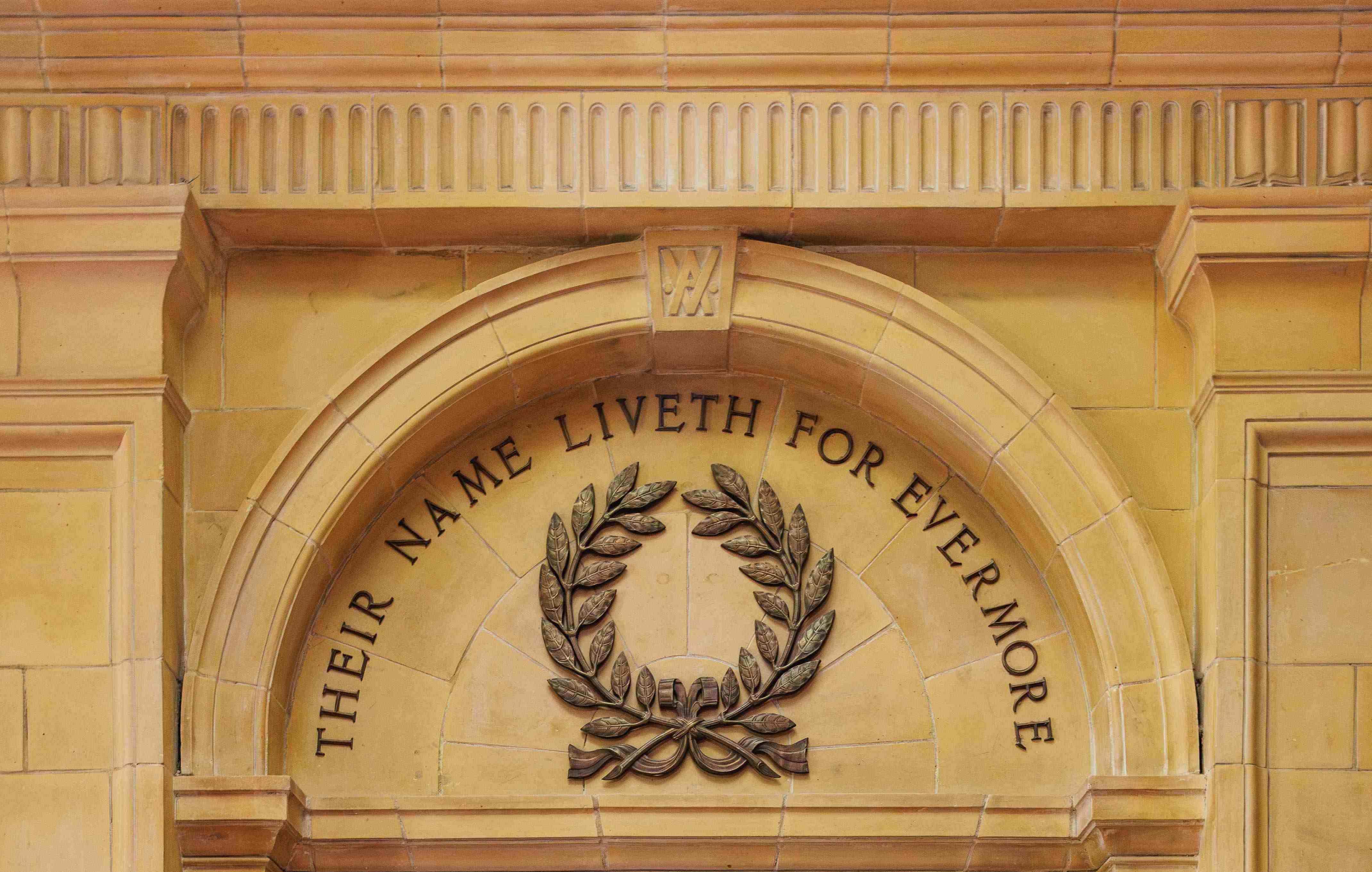
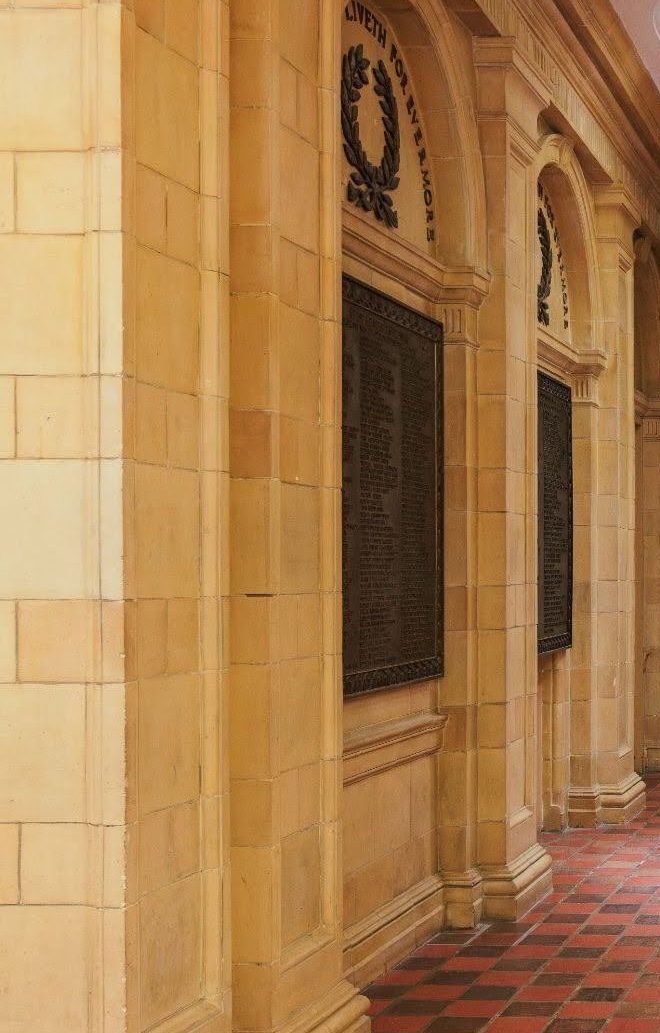
At the same time, we will enhance the memorial at the entrance to the hall, including the honour rolls bearing the names of members of our university community who served, and who fell, in the First and Second World Wars. Looking ahead, we see an opportunity to expand the memorial — recognizing members of our university community who served in subsequent conflicts, including Korea, Afghanistan, and Canada’s peacekeeping missions, ensuring the memorial reflects the full scope of service across generations.
Convocation Hall will remain a dignified and enduring place of remembrance.
The 1978 Casavant Organ (Opus 3358)
After a careful, principle-guided search, the University of Alberta has reached an agreement with the Netherlands Reformed Congregation of Picture Butte, Alberta, to provide a permanent home for the 1978 Casavant pipe organ (Opus 3358) as Convocation Hall undergoes its long-planned renewal. Due to its size and structural integration into the balcony level, the organ prevents the hall from achieving full accessibility for individuals with physical disabilities and mobility needs — a constraint examined in the Summerby-Murray report and in the project's accessibility and acoustic assessments.
The agreement follows a rigorous process grounded in clear principles, and ensures the organ will be played, heard, and honoured, with an active musical life for generations to come.
The congregation assumed ownership of the organ at nominal cost, consistent with a stewardship transfer between non-profit and charitable organizations rather than a sale. Before disassembly, the university commissioned a full recording of the instrument in its current space, preserving its sound for musicians, researchers, and the historical record. The organ has been professionally dismantled and will be stored for approximately 18 months until it is ready to be reinstalled in the congregation's new facility, which is currently in the design stage and will feature Casavant Opus 3358.
As the organ's memorial status travels with it, the congregation will formally rededicate Casavant Opus 3358 once it is installed in Picture Butte. The congregation has also expressed openness to supporting access to the organ by academic staff in the Department of Music for scholarly research purposes, preserving an ongoing connection between the instrument and the academic community it has long served.
This agreement ensures the organ is honoured, rehoused, and rededicated with the care it deserves, and with a community who will play it reverently for many years to come.
A Hall Renewed for the Next Century
Convocation Hall has served this university for more than a century. This renewal ensures it can serve the next — as a place where students perform their first recitals, where audiences feel close to the music, where history is honoured, and where everyone is welcome.
A hall restored with care.
A hall renewed with purpose.
A hall ready for the future.
Related links
- Casavant Organ Relocation | Frequently Asked Questions
- The future of the 1978 Casavant Frères Organ, Convocation Hall: A consultation report to the University of Alberta | Robert Summerby-Murray
- Honouring the Memorial: Our Response to the Summerby-Murray Report
- External expert to assist with future of the Convocation Hall organ
- Convocation Hall, community and the future of a shared space | The Quad
- Announcing the renewal of Convocation Hall | The Quad
- 2019 Statement — Convocation Hall renovation and Memorial Organ
- Convocation Hall | Give to the U of A