The Human Element
In a field often dominated by economic theories that valorize instrumental action, Dr. Michael Lounsbury stands out by putting humanity back at the centre of management research. A Fellow of the Royal Society of Canada and leading academic at the University of Alberta, he has built an internationally recognized career by peering through a sociological lens, focusing on the lived experiences of individuals, the power of shared stories and the grassroots social movements shaping our world.
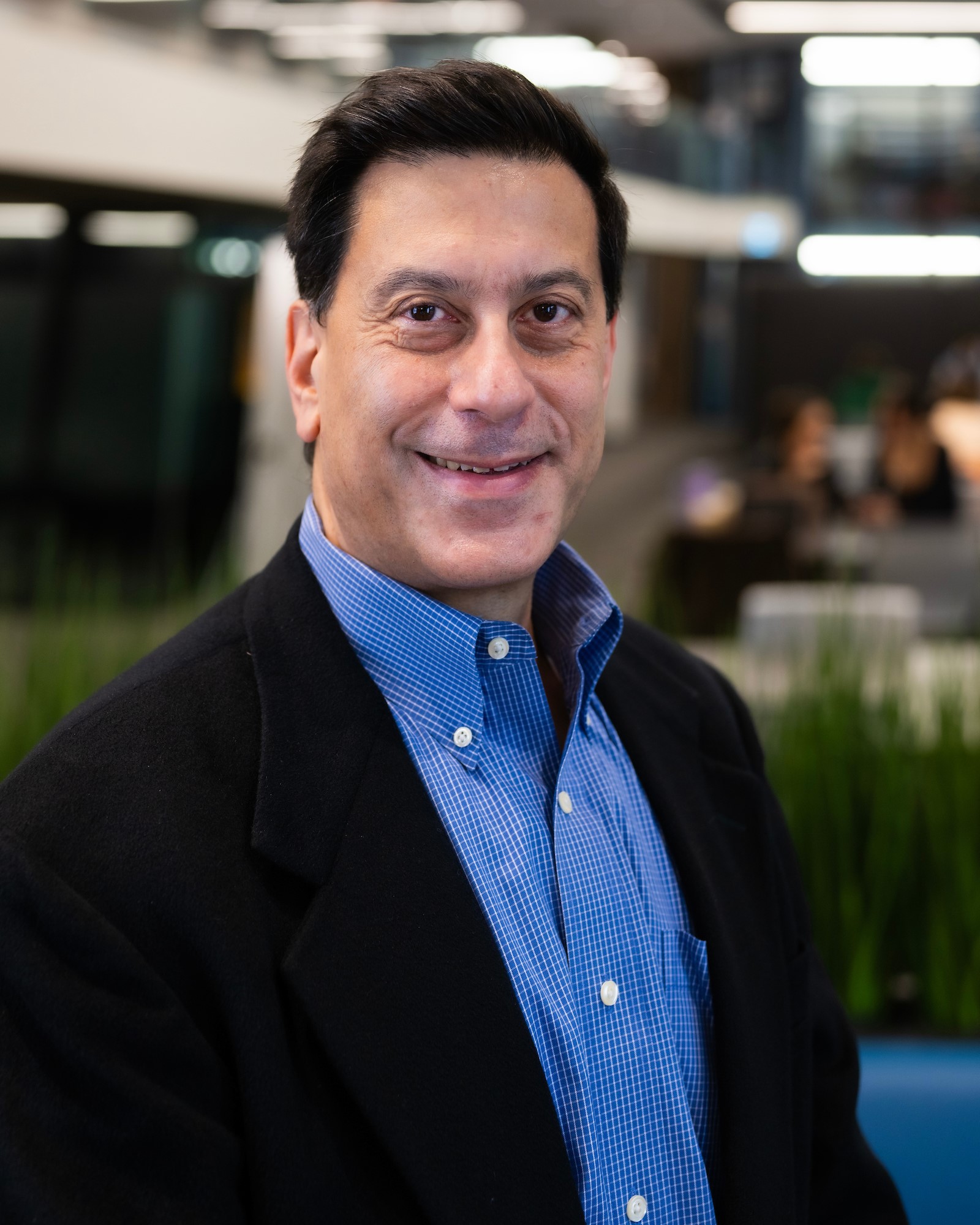 The A.F. (Chip) Collins Chair and department chair of Strategy, Entrepreneurship, and Management (SEM) at the Alberta School of Business, Lounsbury has led pioneering work across several fields — most notably cultural entrepreneurship — which looks at how entrepreneurial processes are fundamentally shaped by cultural practices and beliefs within society. That sociological framework directly informs how he approaches research on equity and institutions.
“Cultural entrepreneurship gets taken in lots of directions, but foundationally it is thinking about entrepreneurial processes as cultural change, where stories and narratives are central,” says Lounsbury.
“My approach is to think of business as embedded in society. The questions I ask often have to do with social mobilization, marginalized people and how practices get established and legitimated. Business has a role, but all of my research emphasizes the importance of culture and politics, because for me, these processes are paramount to everything.”
It is a perspective that has profoundly influenced scholars around the globe.
“Mike’s work has demonstrated that entrepreneurship is not simply an economic process: it is also a cultural accomplishment,” writes longtime collaborator Markus A. Höllerer in his laudation celebrating Lounsbury’s induction as an EGOS Honorary Member earlier this year.
Founded in 1973, the European Group for Organizational Studies, or EGOS, is a highly esteemed international academic association dedicated to advancing research on organizations, strategy, management and organizing.
"This is EGOS’s highest honour and a particularly meaningful recognition," says Dr. Emily Block , associate professor and George M. Cormie Chair in Management in SEM. "Royston [Greenwood] had originally planned to deliver the laudatio, but following his death, Markus delivered it instead. These honours are richly deserved. Mike is an extraordinary colleague, mentor and department chair and I feel incredibly lucky to have the opportunity to work with him and learn from him. He pushes all of us to be better.”
Measures of success
Adding to his international acclaim, Lounsbury also received the 2026 Organization and Management Theory (OMT) Distinguished Scholar Award from the Academy of Management — a prestigious honour recognizing a career of exceptional impact and cementing his status among the most influential management theorists of his generation.
For Lounsbury, a successful career isn’t defined by titles or publication metrics — even as accolades, such as his continual inclusion on the global Highly Cited Researchers list, continue to roll in.
"I get the most gratification from the students, especially the PhD students," says Lounsbury. "They're like family. I have former PhD students going back a long time now and in the end, it's all about the people. Nothing else much matters. I'm happy that I've done okay in my career, that when I publish, people cite me. The awards are fine, but it's not as meaningful as helping someone get on their path and succeed.”
On the shoulders of giants
Born in the United States, Lounsbury received his BA in Economics with Honors from Middlebury College, and his MBA and PhD from Northwestern University in 1995 and 1999, respectively.
“I got the MBA, but transitioned into the PhD program in a department that was called Organizational Behaviour in the Business School,” says Lounsbury. “The school was filled with different disciplinary orientations, mostly economics, but then you have some psychologists, sociologists and I just happened to connect with sociologists. I spent half my time in the sociology department and the other half with the sociologists in the business school.”
Lounsbury’s arrival and career trajectory at the U of A is deeply intertwined with two foundational figures: Bob Hinings and the late Royston Greenwood (1944–2026). Hinings helped transform the Alberta School of Business into a research-intensive powerhouse — a legacy he and Greenwood expanded over the following decades.
“I vividly recall the first time I met Hinings and Greenwood in 1995 at the Academy of Management in Vancouver,” he explains. “They were all quite friendly and welcoming, but seemed to be having more fun than many of the other business school faculty. I was not sure what to make of these exotic Canadians at the time. They were big figures in the field, doing pioneering work, yet quite down to earth, and very warm and encouraging to me as an insecure early career scholar. Years later, Royston, with a glimmer in his eye, walked with me down Whyte Avenue telling me about the famous Edmonton Fringe Festival. He has always been a compelling salesman. From here, the pull to Alberta kept getting stronger.”
When Greenwood finally convinced Lounsbury to join the faculty in 2005, he discovered a rare academic culture.
“It was an incredibly productive place, but they had also created a culture of collegiality, mutual support and mentorship,” he says. “Royston was Bob’s student in the early 1970s and by the 1980s, they both decided to come here. It was Bob who imported these ideas from his time in the 60s in the UK, so the culture he cultivated is really a throwback. They were very influential in transforming the SEM department as well as the entire business school into a world class research institution.”
That foundational environment not only nurtured Lounsbury’s own growth, it set the standard for what he hoped to accomplish as a scholar and also as a mentor.
“SEM is as good as it gets — an oasis amidst a wider discontent, embracing an unabashedly scholarly morality that valorizes friendship and community,” says Lounsbury, who adds that over many decades, these foundational values have coalesced into a distinctive approach to scholarship he refers to as The Alberta School.
“Without a doubt, Bob Hinings and Royston Greenwood are the towering figures that constructed the Alberta School. All the accolades that I have — the Royal Society of Canada, OMT Distinguished Scholar, Egos Honorary Member — they both had before me. I am following in their footsteps, standing on the shoulders of giants.”
Many years later, Greenwood convinced Lounsbury to literally follow in his footsteps as the school’s associate dean of research, and subsequently, ‘twisted my arm’ to become chair.
“He said to me, ‘Mike, Bob did it, I did it, and now it’s your turn.’ Anyone that has known Greenwood well understands the difficulty of trying to say ‘no’ to him.”
“Mike is a real asset to the faculty and a worthy successor to earlier stalwarts like Royston Greenwood and Bob Hinings," says Dr. Vikas Mehrotra , dean, Alberta School of Business. “He is also leading our joint masters degree proposal with Mike Lipsett in the Faculty of Engineering. It is remarkable where he finds the time to run the department, publish, do keynotes and work on new programs.”
As department chair, Lounsbury carries forward the legacy of Hinings and Greenwood, prioritizing translational research that delivers built-in, tangible applications in society.
“Our aim is to ensure the Alberta School of Business continues to be a North Star for organization studies,” he says, “shaping scholarly agendas while demonstrating that collegiality and generosity remain vital to meaningful scholarship.”
Rooted in community
Lounsbury puts that community-focused vision into practice across several key initiatives. He serves as academic director of the eHUB Entrepreneurship Centre , leading the development of entrepreneurship teaching, research and community outreach. As co-principal investigator, working with Glynnis Lieb , he has been part of a team leading the creation of the Canada-wide 2SLGBTQI+ Knowledge Hub (also known as the Rainbow Entrepreneurship Knowledge Hub, or REKH). Funded by the Canadian government and the CGLCC/CQCC , REKH aims to support 2SLGBTQI+ folk across Canada while serving as a real-time research hub on emancipatory entrepreneurship.
Addressing inequality has always been central to Lounsbury’s work as a sociologist, but his scholarship has continually evolved as part of his personal journey. Recent events in Gaza have brought his own Palestinian heritage into sharper focus — a journey he describes as "retrospective sense-making", which adds a profoundly personal dimension to his study of marginalized communities.
“My road into this has been through deep reflection about my mother, Violet Barakat, a Palestinian refugee who was violently removed from her home as a child,” he explains. “I can look back and see those connections and concerns, but they're a lot more profoundly salient now in how I think about things. Also, being up here with all of the conversations related to Indigenization and decolonization, which raise profound issues related to systemic inequalities in society, has influenced how I think about things and what I'm studying. As a sociologist, inequality is a central concern for me.”
While those global and personal threads inform his academic perspective, his daily life remains deeply rooted in the community he has helped build in Alberta. More than two decades after arriving in Edmonton, Lounsbury considers Canada his home. He and his wife are dual citizens with a ‘pandemic puppy’ named Kobe, and though their children are now grown, his early years here were anchored as much in family life as in academia — including many seasons spent coaching his son’s soccer team.
“I feel proudly Canadian,” he says. “I embrace the good parts of socialism that Canada brings. It provides a model of how to do public education, how to do healthcare. It's just better for everyone.”
Lounsbury’s contributions have earned him elite recognition, but he views these honours primarily as celebrations of community. When it comes to awards, there are no solo triumphs, he explains, but reflections of the collective support, mentorship and deep-seated affection shared across a global network of colleagues.
Rather than resting on his laurels, Lounsbury says he is more energized by his work today than at any other point in his career. In recent years, his research has expanded to embrace vital conversations around Indigenization, decolonization and systemic equity, constantly reshaping how he views the world.
“We just keep growing and evolving,” he says. “We’re all on this journey, and I'm a very different scholar today than 10 years ago. I just love ideas and I love engaging with other people, and as a result of that, what I study and how I study it keeps changing. I can't imagine ever retiring because I love what I do and the people I do it with.”
Subscribe to UAlberta Business
Become part of our community. Get the latest news and event information from the Alberta School of Business in your inbox every month.