The First OT in the Room
Bringing OT to the community
Students on all three campuses are taking occupational therapy beyond hospitals and clinics
By Erika Nakatsui · October 2026
For some organizations, their first experience with occupational therapy comes through a student.
Starting without a role
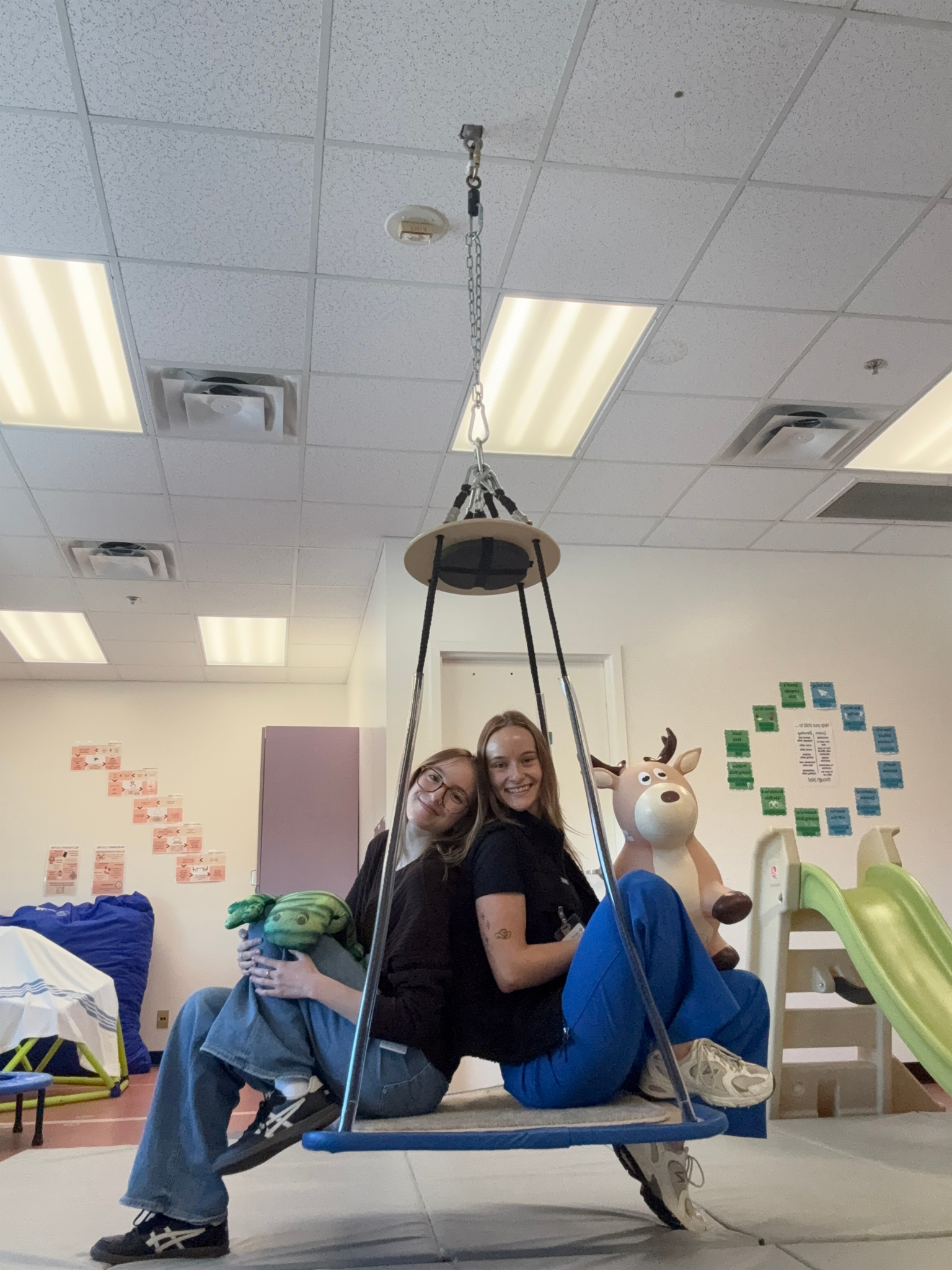
In Camrose, our students completed role-emerging placements with three organizations that serve people who need rehabilitation but have no OTs on staff: Recovery Alberta’s Camrose Addictions & Mental Health Clinic, the Maskwacîs Education Schools Commission and Camrose Family & Community Support Services. In placements like these, students start without a defined role. They spend time learning what the organization needs, then design services to meet those needs.
Rethinking housing support in Calgary
In Calgary, capstone teams have taken a similar approach with the city’s housing and outreach sector. One team spent several months with the Calgary Drop-In Centre, one of the largest shelters in North America. Staff there had long wondered why guests who are ready for independent living often lost the housing they moved into. The students held focus groups with staff and guests and identified five areas where people commonly struggled: managing money, work, handling paperwork and appointments, functional cognition and running a household. They then built an interview tool based on those areas, which the Drop-In Centre has since added to its housing intake form.
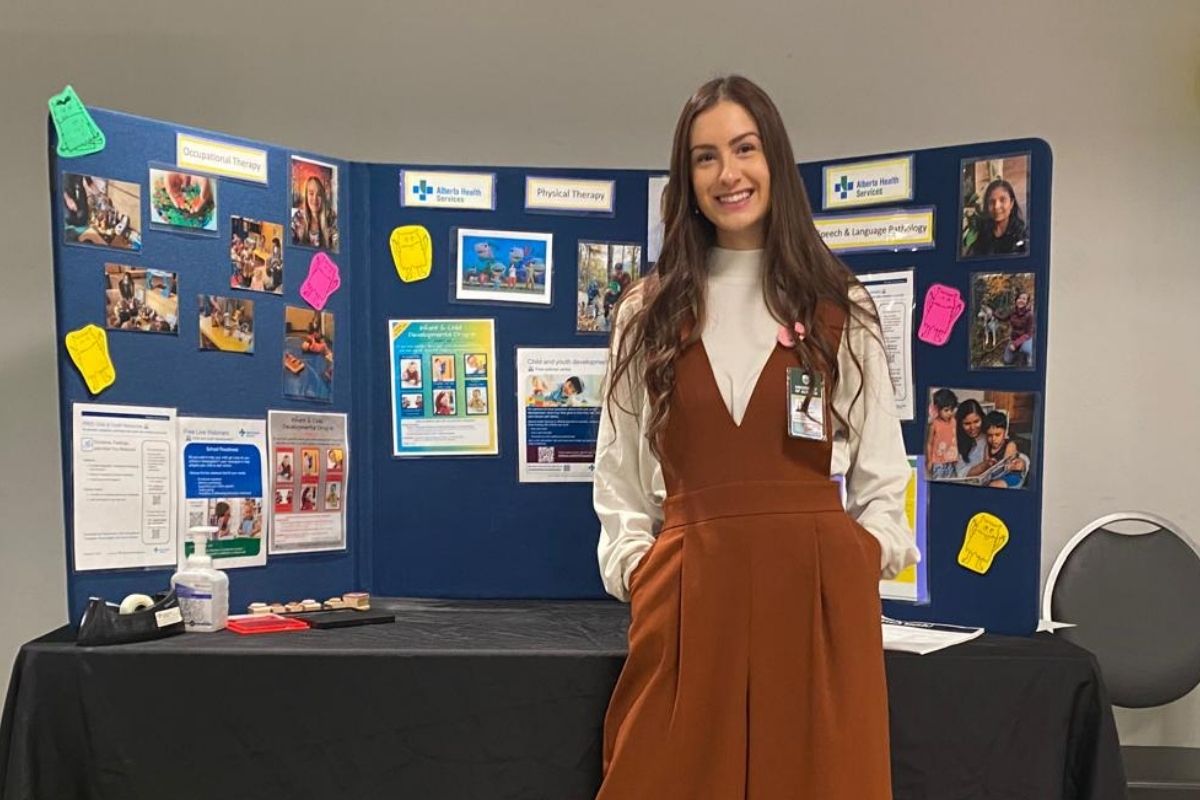
Other teams worked with Inn from the Cold to create a resilience tool for staff to use with families, available in laminated and 3D-printed versions. A team partnered with The Way In Network to develop a home safety assessment that outreach workers can use with older adults who are aging in place. Another team worked with Sustainable Calgary to study how children in the city get to school, bringing an OT perspective to a question the organization had approached from other angles.
Built on trust
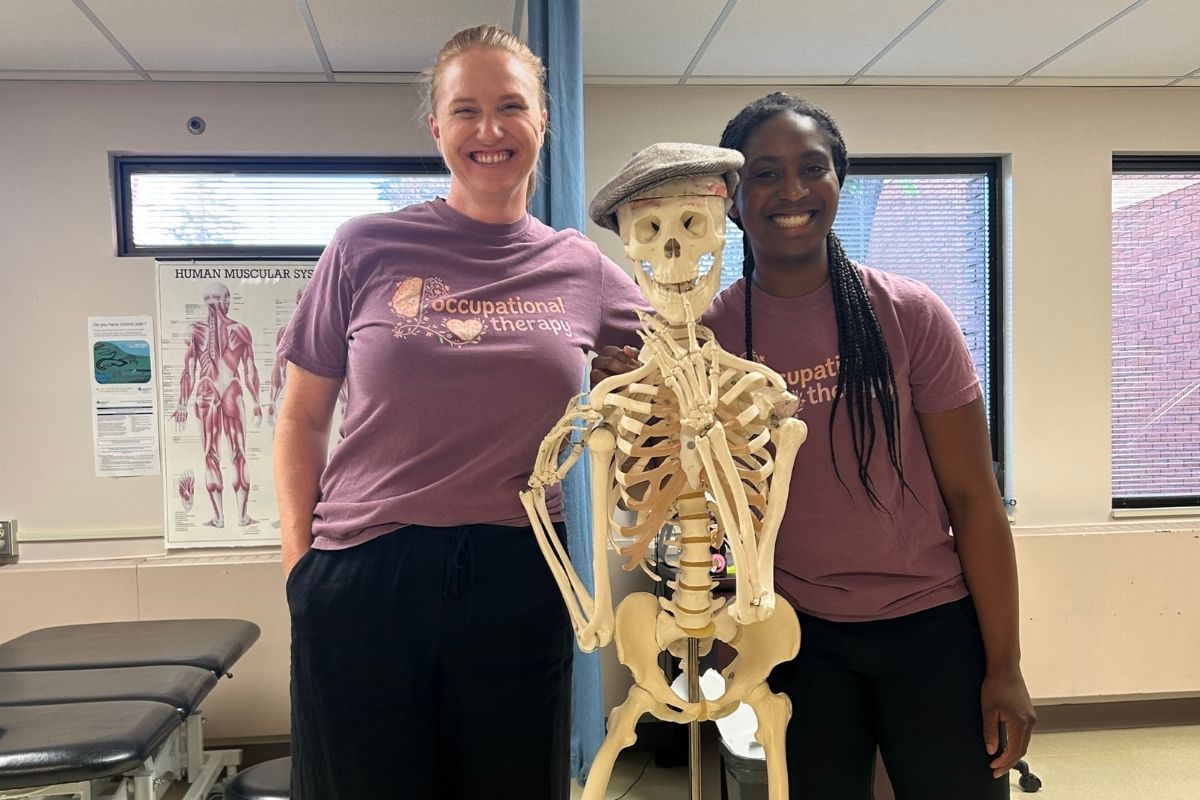
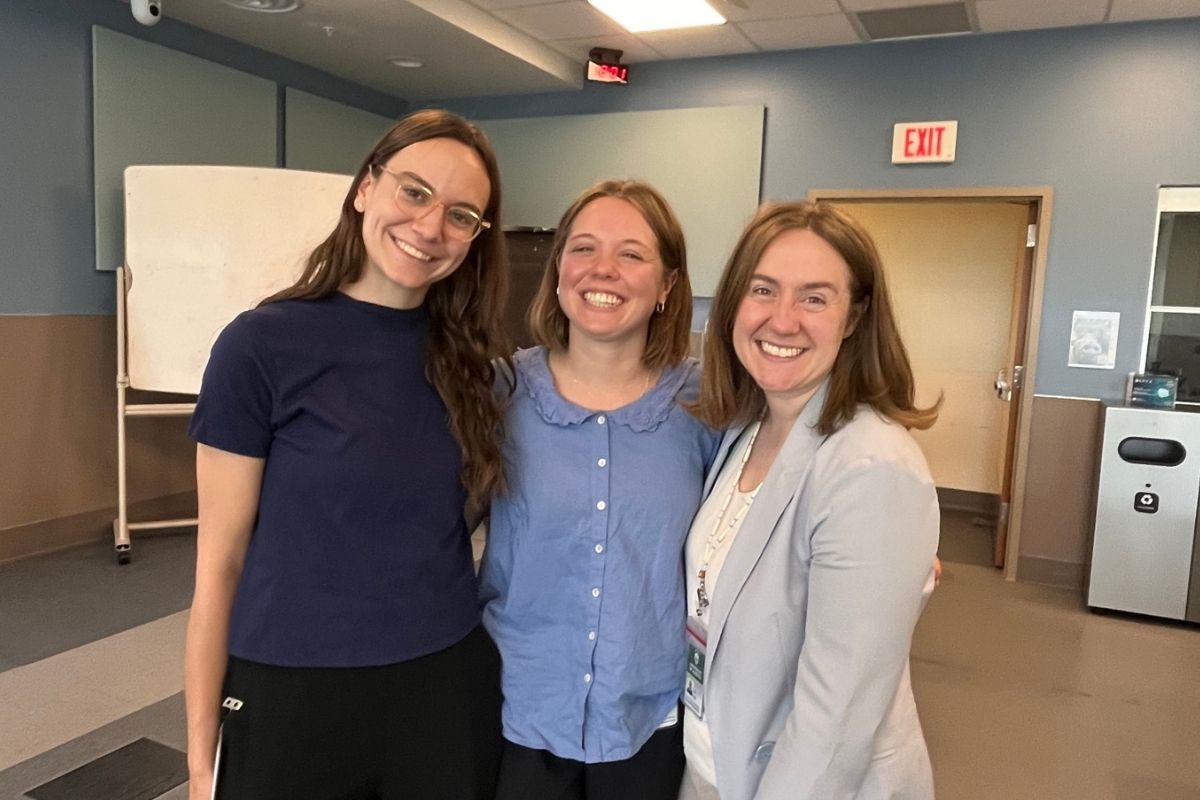
This work depends on the relationships our Camrose and Calgary campuses have built over many years with local health providers, school divisions and community organizations. Because of that trust, groups outside health care are open to trying something new. Each placement or capstone runs for a few months, but the tools and programs students create continue to be used long after they leave.
A walker that fits
Our Edmonton students are bringing OT into the community too. Twice a year, occupational therapy students team up with Boyle Street Community Services and the Hope Mission to run a walker clinic in Edmonton’s inner city.
The clinic is open to anyone, with no referral or appointment needed. People drop in, talk with a student and get assessed for a gait aid that fits them properly. For someone without a reliable place to rest, a walker at the wrong height or the wrong type of walker can make it hard to get to appointments or around the city at all.
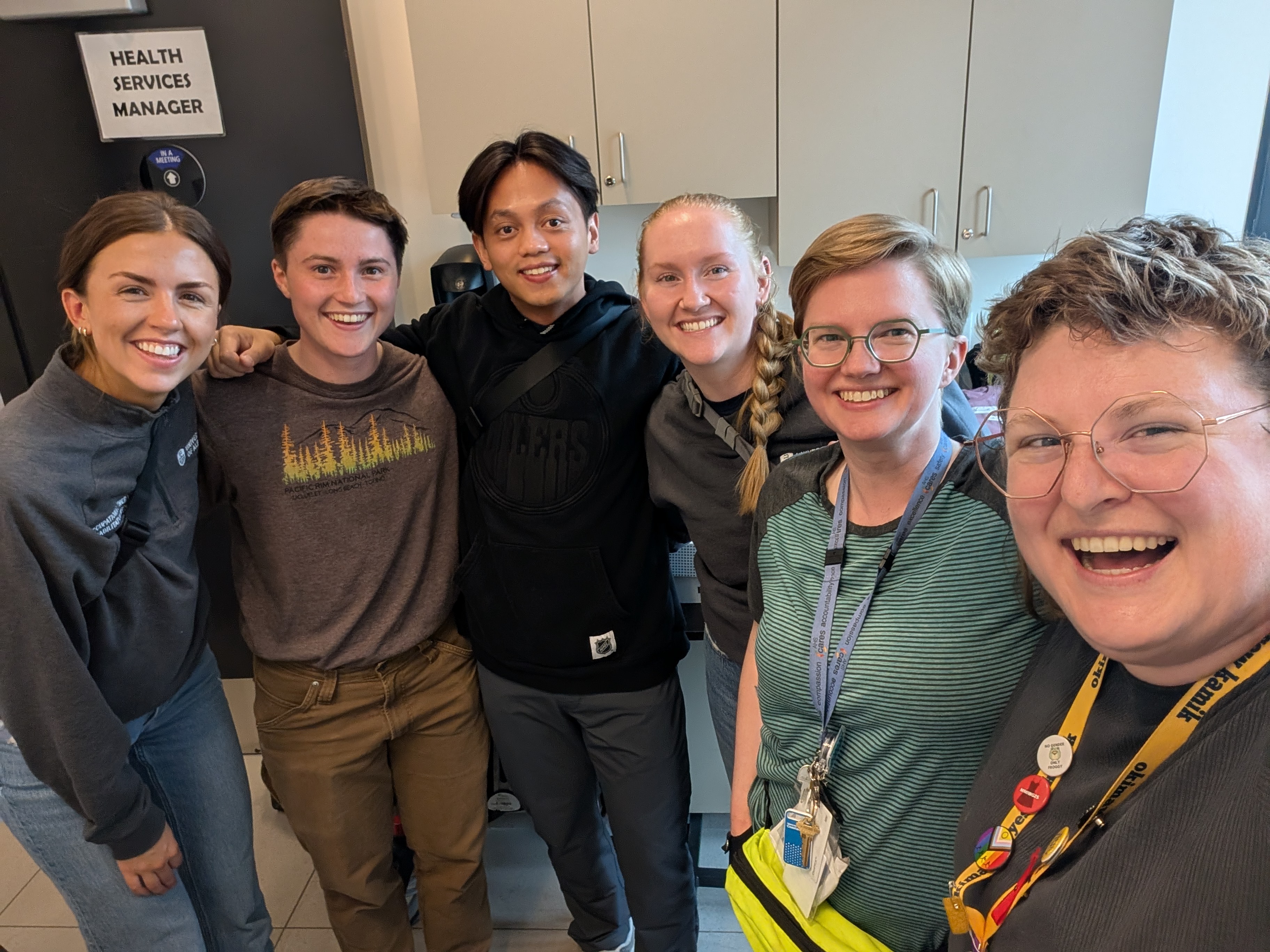
From left: students Peyton Harty, Mak Sheppard, Emmanuel Gumasing and Delaney Stelmaschuk; instructors Sarah Hamill and Rebecca Alley
Nursing students on placement at Boyle Street helped collect donated equipment, and Home Health Store Inc. supplied the rest. The most recent clinic saw 53 people, its highest attendance so far.
For students, the clinic is a chance to assess and fit equipment for people they are meeting for the first time, in a setting very different from a hospital or clinic.
At the most recent clinic:
16
new walkers provided
27
refurbished walkers distributed
3
walkers repaired and returned
3
funding authorizations completed
Plus mobility assessments, adjustments and consultations for dozens of people.
Your perspective shapes the profession
Do you have a story about occupational therapy or rehabilitation? Whether you’re a student, graduate, preceptor, community partner, faculty member or friend of FRM, we’d like to hear it.