ASCEND Lab
Advancing Swallowing Care through Evidence in Neurogenic Dysphagia

On this page
About | Our research | Participate | Principal investigator | Work with us | Contact
About the lab
The ASCEND Lab studies swallowing and swallowing disorders in Parkinson disease and other neurological conditions. Our research aims to improve how dysphagia is understood, identified and managed by integrating swallowing science, rehabilitation, clinical epidemiology and evidence-informed health care. We work with people with lived experience, clinicians and research collaborators to address questions that matter in clinical practice and improve care.
Our research
Our research program focuses on three interconnected areas.
Understanding swallowing impairment
We study how and why swallowing changes in Parkinson disease and other neurological conditions. Using approaches including videofluoroscopic swallowing assessment and analysis of swallowing physiology, we aim to better characterize clinically important swallowing impairment and identify opportunities for earlier and more meaningful assessment.
Developing and evaluating rehabilitation
We investigate interventions designed to improve swallowing function and quality of life. Our work seeks to understand not simply whether a treatment works, but how it works, who is most likely to benefit, and how rehabilitation can be implemented in real-world clinical care.
Improving evidence-informed dysphagia care
Important gaps remain between research evidence and the care received by people with swallowing difficulties. Our work examines clinical practice, access to dysphagia services and the quality of existing recommendations, and works toward trustworthy, evidence-based guidance for clinicians and patients.
Participate in Our Research
If you are interested in hearing about future research opportunities, please contact the ASCEND Lab.
Principal Investigator
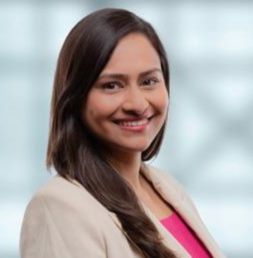
Pooja Gandhi, PhD, R.SLP, SLP(C)
Assistant Professor, Department of Communication Sciences and Disorders
Dr. Gandhi is a speech-language pathologist and swallowing researcher whose work focuses on dysphagia in Parkinson disease and other neurological conditions. Her research spans swallowing physiology, rehabilitation, clinical epidemiology and evidence-based practice, with the overarching goal of improving how swallowing difficulties are identified and treated in clinical care.
Publications
A full list of Dr. Gandhi's publications is available through:
- Gandhi P, Tangamornsuksan W, Couban R, Guyatt GH, Steele CM, et al. Adherence of clinical practice guidelines for oropharyngeal dysphagia in Parkinson disease to trustworthy standards: a systematic survey. Dysphagia. 2025;40(3):576–587.
- Gandhi P, Mancopes R, Steele CM. Videofluoroscopic swallowing studies: a proposed checklist. American Journal of Speech-Language Pathology. 2024;33(5):2157–2166.
- Gandhi P, Waito AA, Peladeau-Pigeon M, Plowman EK, Steele CM. How do quantitative videofluoroscopy measures differ between people with amyotrophic lateral sclerosis and age-matched healthy adults? Journal of Speech, Language, and Hearing Research. 2024;67(8):2512–2532.
- Gandhi P, Peladeau-Pigeon M, Simmons M, Steele CM. Exploring the efficacy of the effortful swallow maneuver for improving swallowing in people with Parkinson disease — a pilot study. Archives of Rehabilitation Research and Clinical Translation. 2023;5(3):100276.
- Gandhi P, Plowman EK, Steele CM. Differences in pharyngeal swallow event timing: healthy aging, Parkinson disease, and amyotrophic lateral sclerosis. Laryngoscope Investigative Otolaryngology. 2023;8(2):466–477.
- Werden Abrams S, Gandhi P, Namasivayam-MacDonald A. The adverse effects and events of thickened liquid use in adults: a systematic review. American Journal of Speech-Language Pathology. 2023;32(5):2331–2350.
- Gandhi P, Steele CM. Effectiveness of interventions for dysphagia in Parkinson disease: a systematic review. American Journal of Speech-Language Pathology. 2022;31(1):463–485.
- Gandhi P, Mancopes R, Sutton D, Plowman EK, Steele CM. The frequency of atypical and extreme values for pharyngeal phase swallowing measures in mild Parkinson disease compared to healthy aging. Journal of Speech, Language, and Hearing Research. 2021;64(8):3032–3050.
Work with Us
Join the lab
We welcome inquiries from students and trainees interested in swallowing, Parkinson disease, rehabilitation and evidence-based health care. Opportunities may be available for:
- MSc and PhD students
- Undergraduate and summer research students
- Research volunteers
- Postdoctoral fellows and visiting trainees
Prospective trainees can contact Dr. Gandhi with a brief description of their research interests and background.
Collaborate with us
We welcome collaborations with researchers, clinicians, patient and community partners, and organizations interested in improving swallowing care for people with neurological conditions.
Dr. Pooja Gandhi, PhD, R.SLP, SLP(C)
Assistant Professor
Department of Communication Sciences and Disorders
Faculty of Rehabilitation Medicine
University of Alberta
Corbett Hall
Edmonton, Alberta, Canada
Email: pooja.gandhi@ualberta.ca