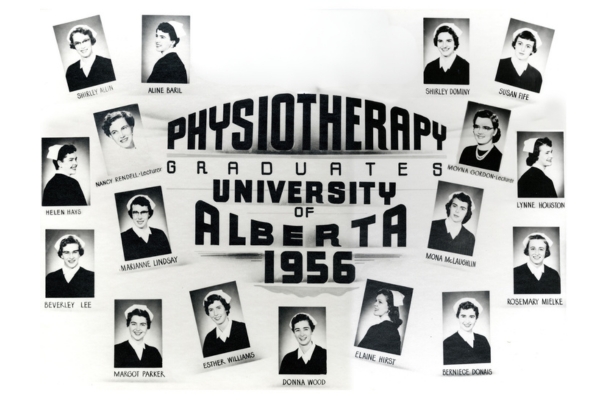
Meet Elaine Hirst, one of just 15 students who graduated from the University of Alberta’s first physiotherapy class.
Stepping into something new
When Elaine Hirst stepped into a Quonset hut behind Athabasca Hall in September 1954, she was beginning more than a career. She was stepping into work that was still being imagined.
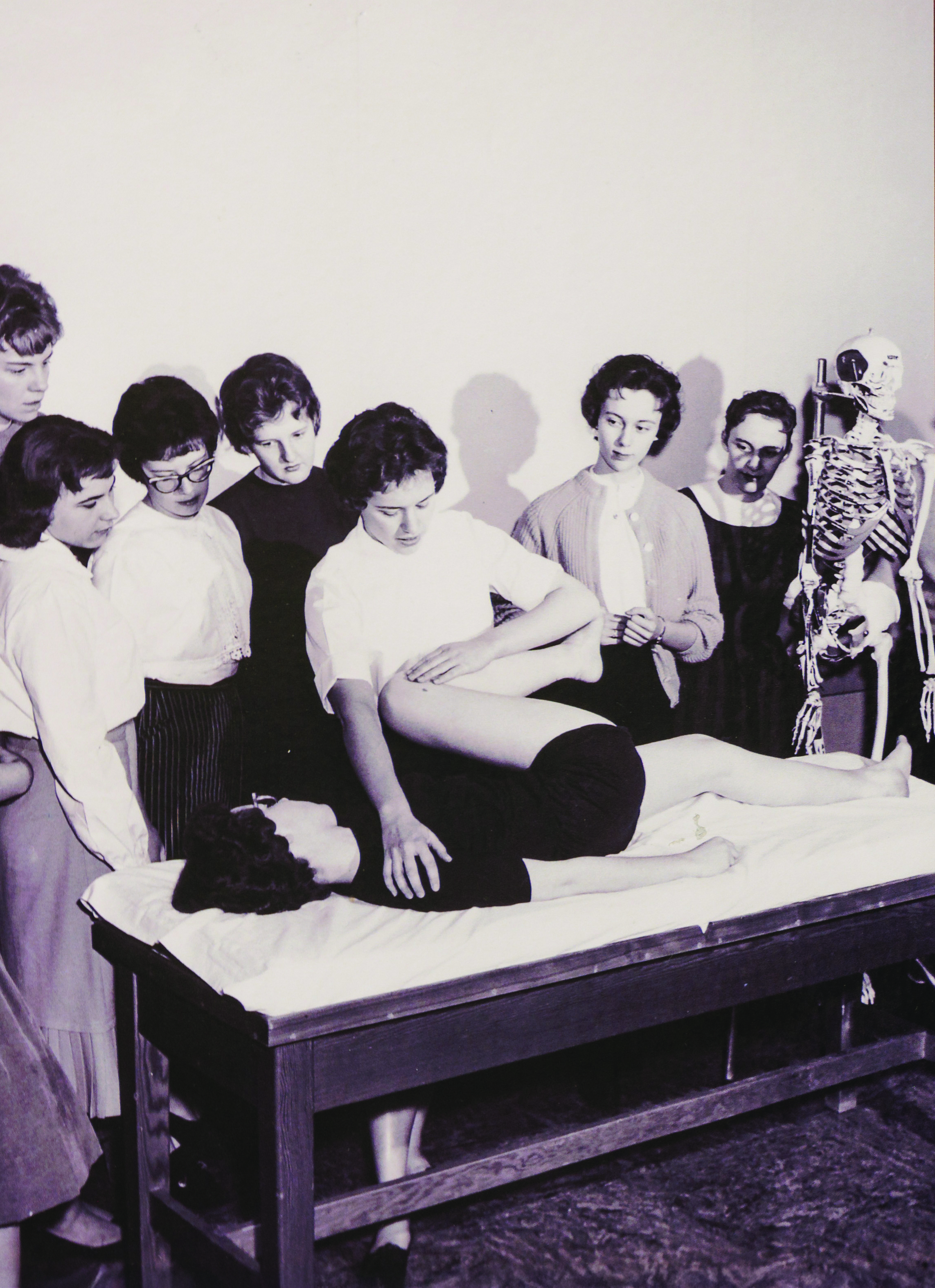
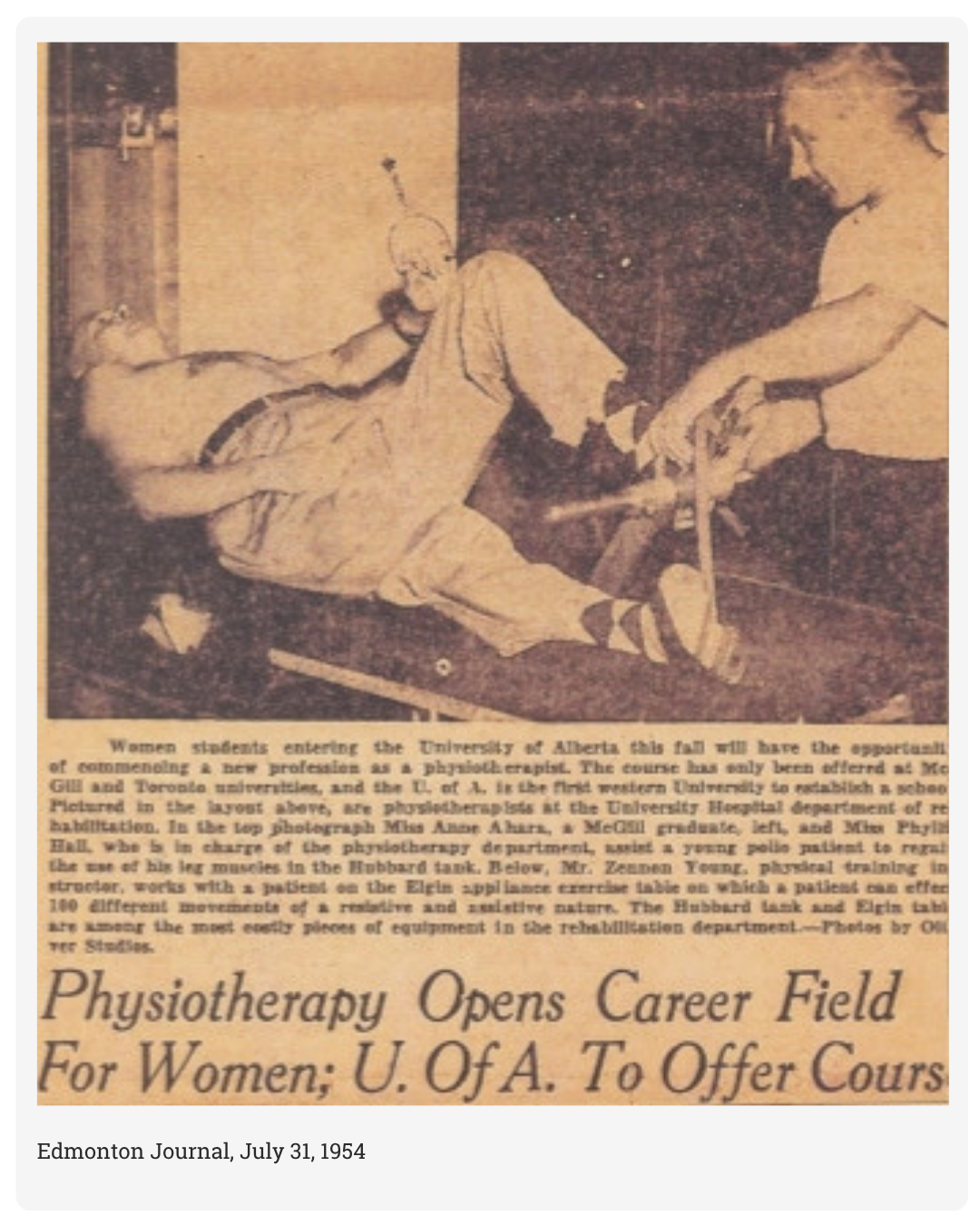
Alberta was emerging from the devastation of the polio epidemic, and the need for trained rehabilitation professionals was urgent. In response, the University of Alberta launched an accelerated two-year physiotherapy diploma: 37 hours of classes each week, followed by clinical placements in hospitals and communities.
The work was demanding. The path ahead was largely uncharted. But Elaine and her 14 classmates understood that what they were learning mattered.
“We felt like pioneers.”
Elaine became one of Alberta’s earliest registered physiotherapists — registration number 49 — at a time when the profession was still finding its footing. Her instructors developed parts of the curriculum as they taught it. Some of the physicians teaching anatomy acknowledged that they had never taught women before.
There was no well-worn path to follow. Together, the students and their teachers made one.
Bringing rehabilitation home
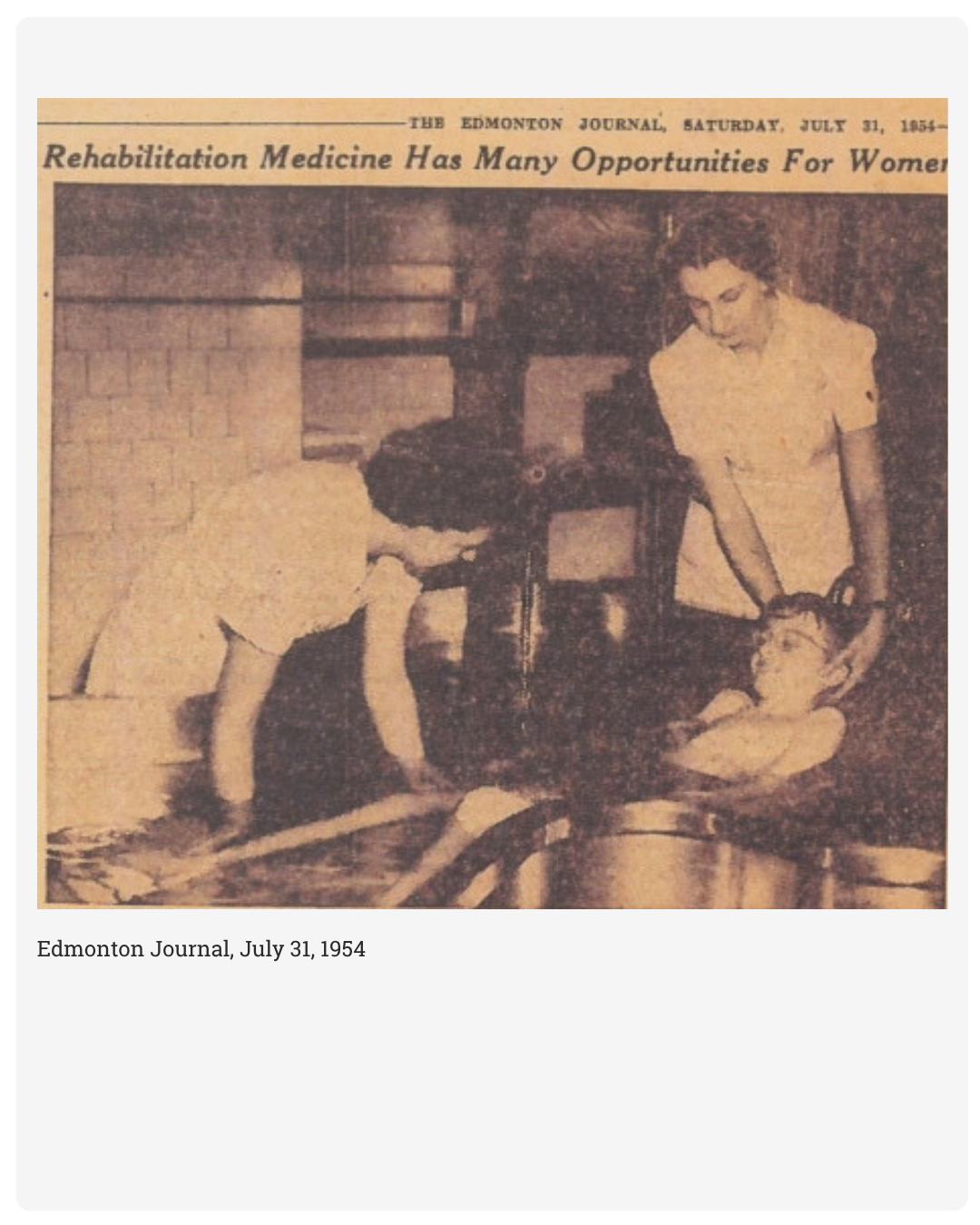
After graduating, Elaine began her career at the University Hospital. But it was in community care that she came to understand something essential: rehabilitation is not simply about treating a condition. It is about meeting people where they are — sometimes quite literally.
“In the hospital, you’re the boss. At home, they’re the boss.”
That realization shaped the rest of her career.
Elaine became a leader in Alberta’s emerging home care movement and later co-founded Independent Therapists Limited. The therapist-led practice brought physiotherapy, occupational therapy and speech-language pathology into people’s homes, schools and rural communities across the province.
Long before interdisciplinary, community-based care became widely accepted, Elaine and her colleagues understood its power. Care worked differently when people had a voice in it. Progress meant more when it helped someone return to the rhythms and relationships of everyday life.
A legacy carried forward
Nearly 70 years later, that is still what Elaine believes rehabilitation is about.
“Even if people don’t get completely better, they get to a place where they can live.”
“I have to say that as an occupation, it is very satisfying,” she reflects. “You can see the results.”
There is something quietly profound in that idea. Rehabilitation does not always restore what was lost. Sometimes, it helps a person discover what remains possible — and build a life within it.
That deeply human understanding continues to shape the Faculty of Rehabilitation Medicine today. What began with 15 students in a Quonset hut has grown into Canada’s only freestanding faculty dedicated entirely to rehabilitation medicine and a global leader in education, research and clinical innovation.
For Elaine, however, the most meaningful legacy may be the people who carried the work forward. Throughout her career, she mentored students who would go on to shape rehabilitation in their own ways.
As the Faculty celebrates 50 years, her story reminds us that lasting change often begins quietly: with a small group of people willing to step into uncertainty, care deeply about what is possible and create a path for those who will follow.