Mohammad Rafid Feisal, Class of '26
18 March 2026
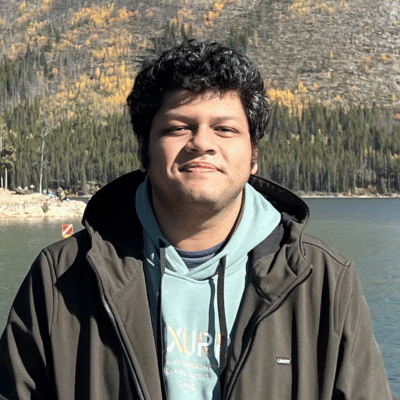
From Molecular “Switches” to Scientific Discovery: Mohammad Rafid Feisal explores how bacterial proteins activate infection pathways
Originally from Dhaka, Bangladesh, Mohammad Rafid Feisal completed a Master of Science in Medicine under the supervision of Dr. Peter Hwang in the Division of General Internal Medicine from the Department of Medicine at the University of Alberta.
For his thesis, Structure and Dynamics of Staphylococcus aureus Response Regulator ArlR DNA-binding Domain by Solution NMR, Feisal explored how a dangerous bacterium controls the mechanisms that help it survive and cause infection. His research focuses on Staphylococcus aureus, a bacterium responsible for a range of infections in humans.
At the centre of his work is a small protein component called ArlR. Feisal describes it as functioning like a molecular “light switch.” When it receives the right signal, the protein changes shape and activates genes that help the bacteria adapt, survive, and potentially make people ill. By studying how this switch works, Feisal’s research contributes to a deeper understanding of how harmful bacteria become dangerous, and how scientists might one day interrupt these processes.
Using solution nuclear magnetic resonance (NMR), Feisal examined the protein’s structure and movement. One of the most important lessons from his research was discovering how dynamic biological molecules truly are. While earlier crystal structures suggested one arrangement of the protein, his NMR analysis revealed that the protein behaves differently when studied in solution.
“Proteins don’t always behave the way we expect based on static snapshots,” Feisal explains. “Our results reinforced that biological molecules are far more dynamic than they first appear. Combining experimental techniques with computational predictions provides deeper insight into how proteins actually behave.”
Feisal shared his research with the broader scientific community at the Biophysical Society Annual Meeting in San Diego, California, where he presented a poster and was selected to deliver a flash talk. His work has also been published in the journal Biophysical Journal.
During his studies, Feisal appreciated receiving a Graduate Students’ Association Academic Travel Grant from the University of Alberta Graduate Students' Association to support conference travel.
"Good science takes time"
Feisal’s interest in the field began during his undergraduate studies, when he became fascinated by proteins and the way they function as tiny molecular machines within living cells. Initially drawn to computational modelling of protein structures, he later sought to complement that work with experimental techniques to better understand how these molecules behave in real biological environments.
Reflecting on his graduate journey, Feisal offers simple but meaningful advice for new graduate students: patience and resilience are essential.
“Good science takes time,” he says. “Graduate school, and life in general, can be challenging, and setbacks are part of the process. Be patient with your progress, stay resilient, and most importantly, be kind to yourself.”
Outside the lab, Feisal enjoys unwinding with anime, particularly the beloved series Fullmetal Alchemist: Brotherhood, his longtime comfort show. And like many graduate students, he credits another essential companion for getting through long days of research: coffee.
As Feisal embarks on his next journey, he leaves behind a body of research that advances our understanding of bacterial biology and the dynamic nature of proteins; work that may one day help inform new approaches to tackling infectious disease.