Use The Power of Story in Medicine and Science
By Dr. Lynora Saxinger
Think about the last time a lecture or article really captured you. Chances are, it had a STORY—perhaps a character, a challenge, a discovery, or a personal experience. As medical professionals and researchers, we often have incredible stories embedded in our work, but centering them may not seem like serious science. However, using stories well is science communication at work, and it can improve understanding and learning for your audience.
Do Narratives Really Work?
One mental hurdle may be that using narratives may feel too much like "pseudoscience". Wellness industry practitioners often rely on dramatic testimonials and anecdotes instead of data for the emotional impact, with multiple anecdotes acting as “anecdata”.
However stories can also be used to responsibly illustrate good science. In fact, using narrative in legitimate science communication may be the absolute BEST way to counter pseudoscience by attracting people to understandable, good information.
Just the facts please!
Another possible barrier is our default mode of “just the facts and references” to maximize efficiency. That relies on an outdated, deficit model of communication, which assumes people just need more facts to learn. However, an information dump doesn’t change attitudes or behaviour. In a world of emotion-laden, clickbait-driven information, naked data can’t compete.
We now know a richer scaffolding helps retention and understanding. People learn and apply information more effectively when it comes with context, relevance, and an emotional connection. Stories provide this by connecting our logical, facts-based processing with our emotions and imagination. When we transform abstract concepts into relatable experiences, they become “stickier”.
Result? People understand and remember our explanations—and reviewers and funders truly get the relevance of your grant application.
Illustration Credit: Hot Butter Studio
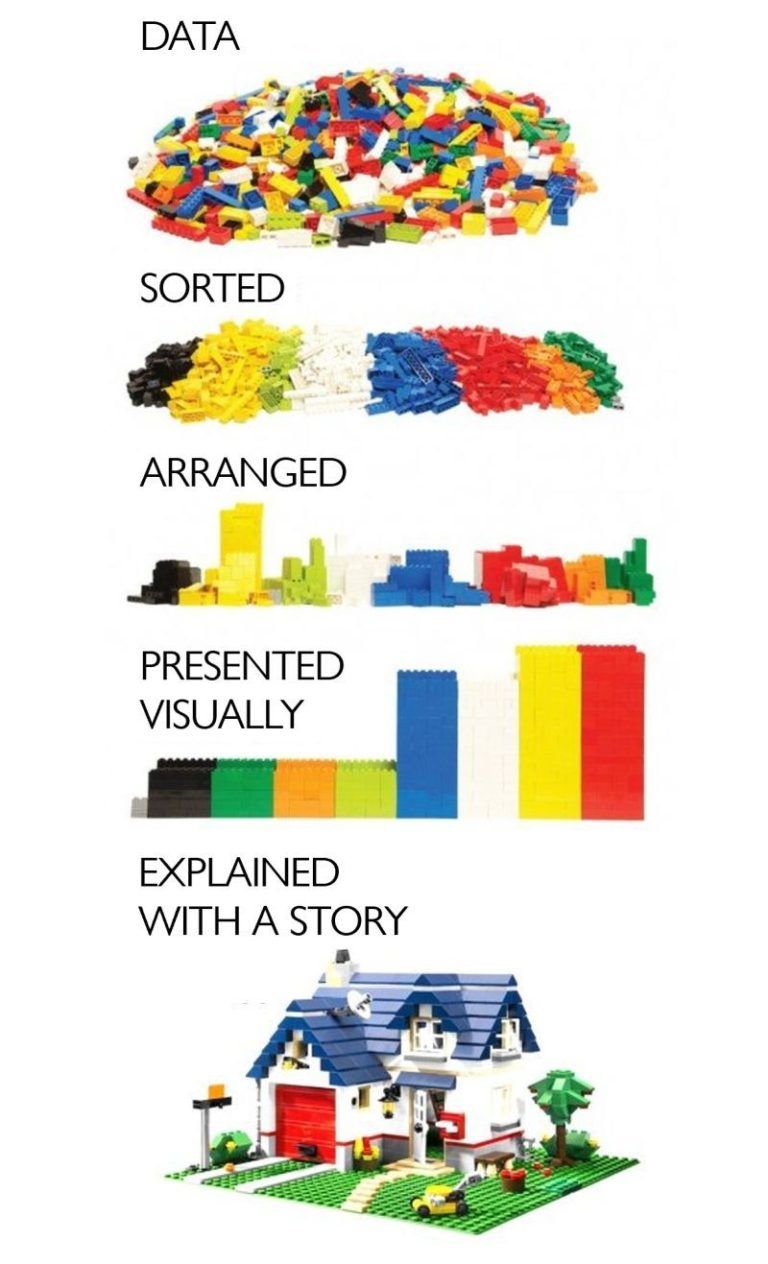
How to harness storytelling in scientific and medical communication (without sounding flaky)
1. What is the Human Element?
At the heart of most medical and scientific endeavours is a human need, a patient outcome, or a societal benefit. Tell that story fully. Who does this research help? What problem does this treatment solve for a real person? Even if your work is highly technical, connect it back to its impact on people's lives. Rather than side-mentioning your experience using a new treatment on a patient, centralize that story to communicate the key features and benefits. A new surgical technique isn't just about process efficiency and success rate; it's about helping patients recover faster and get back to their families.
2. Is the research itself the story?
Identify the core conflict or challenge. This could be a baffling disease, a hard-to-solve research question, a public health crisis, or the struggle to find a clinical solution. Presenting your work as a quest to solve this challenge immediately creates a narrative arc.
3. Try a simple narrative structure to create your story
- Once Upon a Time (The Problem/Context): What was the situation before your work? What was the unmet need?
- And Then…(The Discovery/Intervention): What did you do? What was your approach?
- But…(The Challenges/Obstacles): What difficulties did you encounter along the way? Science isn't always a straight line; sharing challenges adds authenticity.
- Therefore…(The Results/Solution): What did you find? What was the outcome of your efforts?
- So What? (The Impact/Future): What does this mean for people? What's next?
4. Introduce Characters
These aren't always people—how about a cell type, a virus, a disease or a research team? Give them a role in your story. What are their motivations? What obstacles do they face? This doesn’t need to be cartoonish; it can be subtle.
For example: A clinical trial is a really tough, three-stage obstacle course, and the new treatment, Candidate X, looked promising in the lab but hasn’t proven itself in the real world yet.
- The first hurdle is safety. Candidate X is given to healthy volunteers (after being proven safe in animals). If it causes unexpected harm, the game is over.
- The second hurdle is effectiveness. Candidate X is used to treat a larger group of patients to see if it works for the illness. MANY candidates fail here because the human body is more complicated than a petri dish.
- The final hurdle is the placebo test. This is the biggest and toughest test to pass. To remove all bias/doubt, a very large group of people is split into two similar groups; one gets Candidate X and the other gets a placebo. No one knows who got what, and the outcomes are tracked carefully. Candidate X has to prove itself definitively better than a sugar pill and wishful thinking. If it succeeds, Candidate X may be pitted against a new future and possibly better treatment, Candidate Y (again with no one knowing who got which treatment until the end of the trial).
5. Use Vivid Language and Imagery.
Word pictures engage the brain. Instead of saying "the cells proliferated," try
- "the cell-count skyrocketed"
- “the cells were cranking out clones”
- “it became a mosh pit”
- “the culture surged”
Visuals, such as photos, diagrams, or short videos, are also critical storytelling tools.
6. Keep it Reliable and Authentic
While you're crafting a narrative, keep it true to the scientific evidence. If you’re not sure whether the narrative will be understood with your intent, check with a colleague.
Importantly, we can use this in patient care in a way that strengthens relationship, trust and understanding. A narrative arc can help patients grasp the "why," "what," and "how" in a more accessible way, empowering them to understand and participate in their care.
Examples:
Explaining an Autoimmune Disease (e.g., rheumatoid arthritis)
Patient: Sarah, a 45-year-old active woman, recently diagnosed with rheumatoid arthritis.
- Beginning (The Normal State): Sarah, as you likely know, our body's immune system is like a security force designed to protect us from threats like viruses and bacteria. It's incredibly smart, identifying and attacking only what's harmful and keeping you healthy.
- Middle (The Misdirection): With rheumatoid arthritis, a part of your immune system gets confused. Instead of attacking invaders, it mistakenly targets your own healthy joint tissues. This causes inflammation, pain, and stiffness. It's not your fault; it's a mix-up within your body's defenses.
- End (Taking Control): Our goal is to calm this mistaken immune response. Medications that change your immune response help reduce the attacks and inflammation, and we want to support and protect the rest of your body with physiotherapy and personalized exercise and care. The goal is to help you regain control, reduce pain, and allow you to live an active life. We're here to guide you every step of the way.
Explaining Chemotherapy for Cancer
Patient: Mark, a 60-year-old man, is about to start chemotherapy for colon cancer.
- Beginning (The Problem): Mark, your body's cells normally grow and divide in a controlled way. With cancer, some cells start growing uncontrollably and damage normal tissues and functions. Some can spread within the body to new areas. We've removed much of your cancer with surgery, but we want to ensure any remaining cancer cells are gone.
- Middle (The Treatment's Action): Chemotherapy medications travel throughout your body and find and destroy rapidly dividing cells such as cancer cells, to reduce the risk of cancer growing back or spreading. It's a direct attack on any remaining cancer. Other treatments train your immune system to eliminate cancer cells.
- End (Managing the Journey): Chemotherapy can also affect some of your healthy, fast-growing cells, like those in your hair or stomach lining, or immune therapies can activate other parts of your immune system that make you feel unwell. These can lead to temporary side effects that we have to watch out for and manage. We have treatments and a dedicated team to help you. Our aim is to eliminate the cancer and give your body the best chance to recover and be healthy again. We're in this together.
Explaining the Relevance of a New Model of Care (Virtual Hospital) to the Public
A patient-centered story makes the benefits of a virtual hospital tangible and relatable for the public, especially those new to the concept.
Patient: Grandma Elena, with congestive cardiac failure.
- Beginning (The Challenge): Elena, a grandmother who loves her garden and cats, has been admitted to the hospital five times in the last two years. Being away from home caused her worry and disrupted her life, but she needed careful daily assessments and lab work.
- Middle (The Solution): Her doctor introduced her to the "Virtual Hospital." She received easy-to-use devices to daily check her blood pressure, oxygen and weight from home. The virtual hospital team calls her regularly to check in and answer questions, and she can receive some IV medications with home visits.
- End (The Outcome): Elena's numbers started to worsen, and she started to get early symptoms: instead of calling for an appointment with her doctor or going to emergency, it was noticed immediately. The team adjusted Elena's medication and followed as closely as if she were in hospital. Her mild symptoms resolved, and she didn't need an emergency visit or hospital admission.
Elena now feels much more secure, knowing her health is monitored daily. She is able to stay home, and live with less anxiety and more independence. She has not had any hospital visits for the 10 months she has been enrolled.
The Virtual Hospital brings expert care to patients with high-risk chronic conditions, keeping people safely at home and giving them peace of mind.
What's the Story?
That seems like a lot, but it all starts with “What’s the Story?”
If we find the stories embedded in our daily work, we can use them to transform dry facts into compelling narratives that inform, change actions and reactions, and leave a lasting impression on our audiences.
Dr. Lynora Saxinger
Director, Scientific Communication
Professor, Division of Infectious Diseases
Department of Medicine, Faculty of Medicine & Dentistry