Research by DoM's Dr. Evangelos Michelakis and team leads to a new drug that could improve heart transplants
28 July 2026
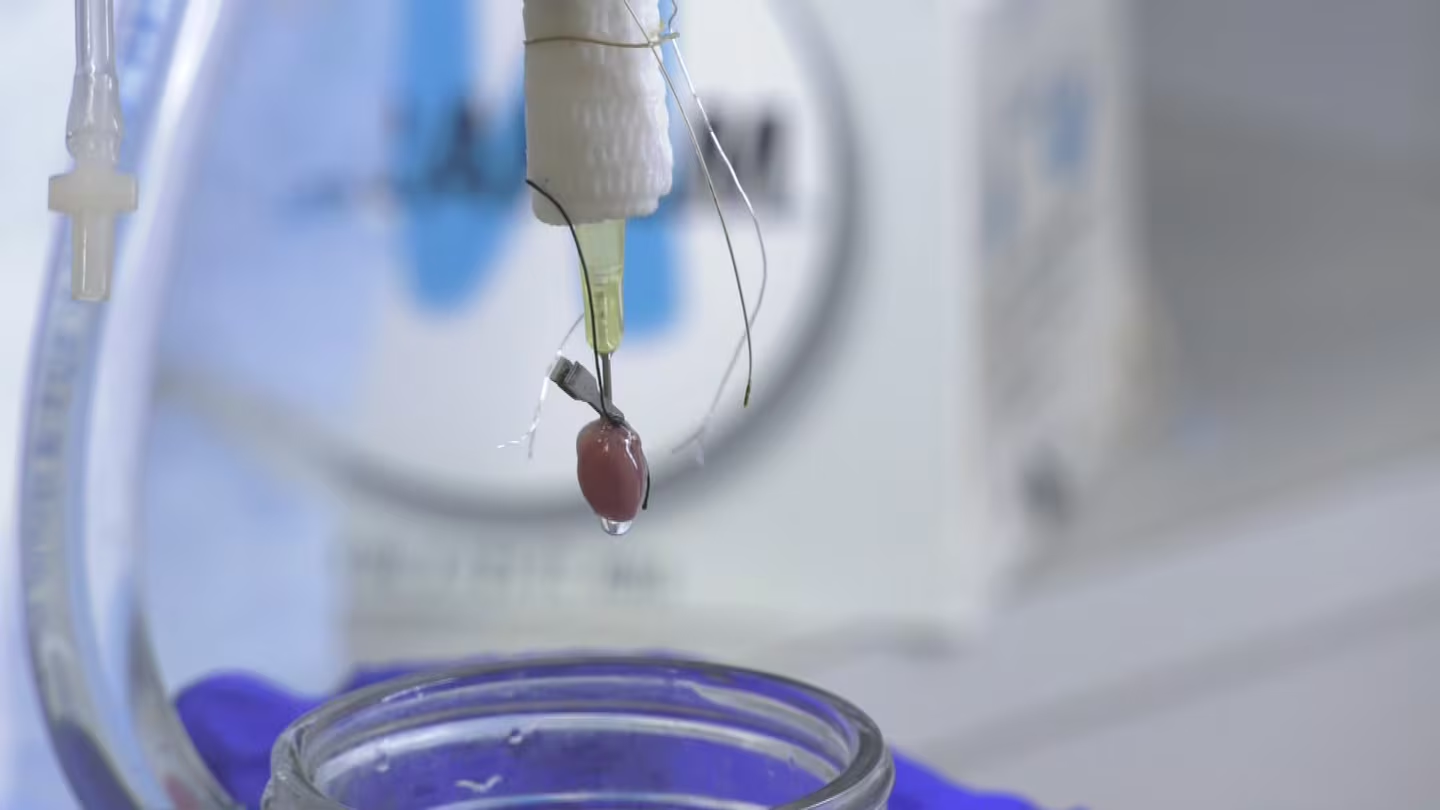
Researchers work to deliver SNAP to a mouse heart (credits: Brandon Lynch/CTV News Edmonton).
By Sarah Vernon, U of A News
Can research gleaned from a hibernating snail save a human heart?
The breakthrough led to a new drug, which could revolutionize heart attack survival, human longevity, and deep-space exploration. Researchers: the discovery ‘caught us by surprise.’
University of Alberta researchers have discovered a novel drug – named SNAP – that unlocks the secret of snail hibernation, allowing them to safely put non-hibernating animal organs into a deep metabolic sleep.
The discovery of the “first-in-class” small molecule is detailed in a new study, published in Nature Communications and led by Dr. Evangelos Michelakis, professor and director of the Cardiovascular Research Institute.
During hibernation, animals have extremely low heart and breathing rates which cause a huge drop in the delivery of oxygen and nutrients to their tissues (ischemia) but they don’t suffer any damage from this during, or upon exit from it (reperfusion). Meanwhile, non-hibernators, like humans, suffer from both. Ischemia and its complications are the number one cause of death in humans.
To bridge this gap, researchers replicated a natural hibernation molecule they discovered in hibernating snails to synthesize a drug called SNAP (Snail Activator of PHLPP1). The small molecule is a “first-in-class” specific activator of the widely conserved phosphatase PHLPP1, a universal cellular control centre. SNAP decreases the dependency of cells to oxygen and nutrients, safely shielding tissues from ischemia and reperfusion.
The breakthrough could have clinical implications ranging from the preservation of organs offered for transplantation and heart attack care, to longevity medicine, or even inducing hibernation in astronauts of ultralong space travel.