EXFRM 2711 Infant Eating, Feeding, and Swallowing: Theory + Clinical Application
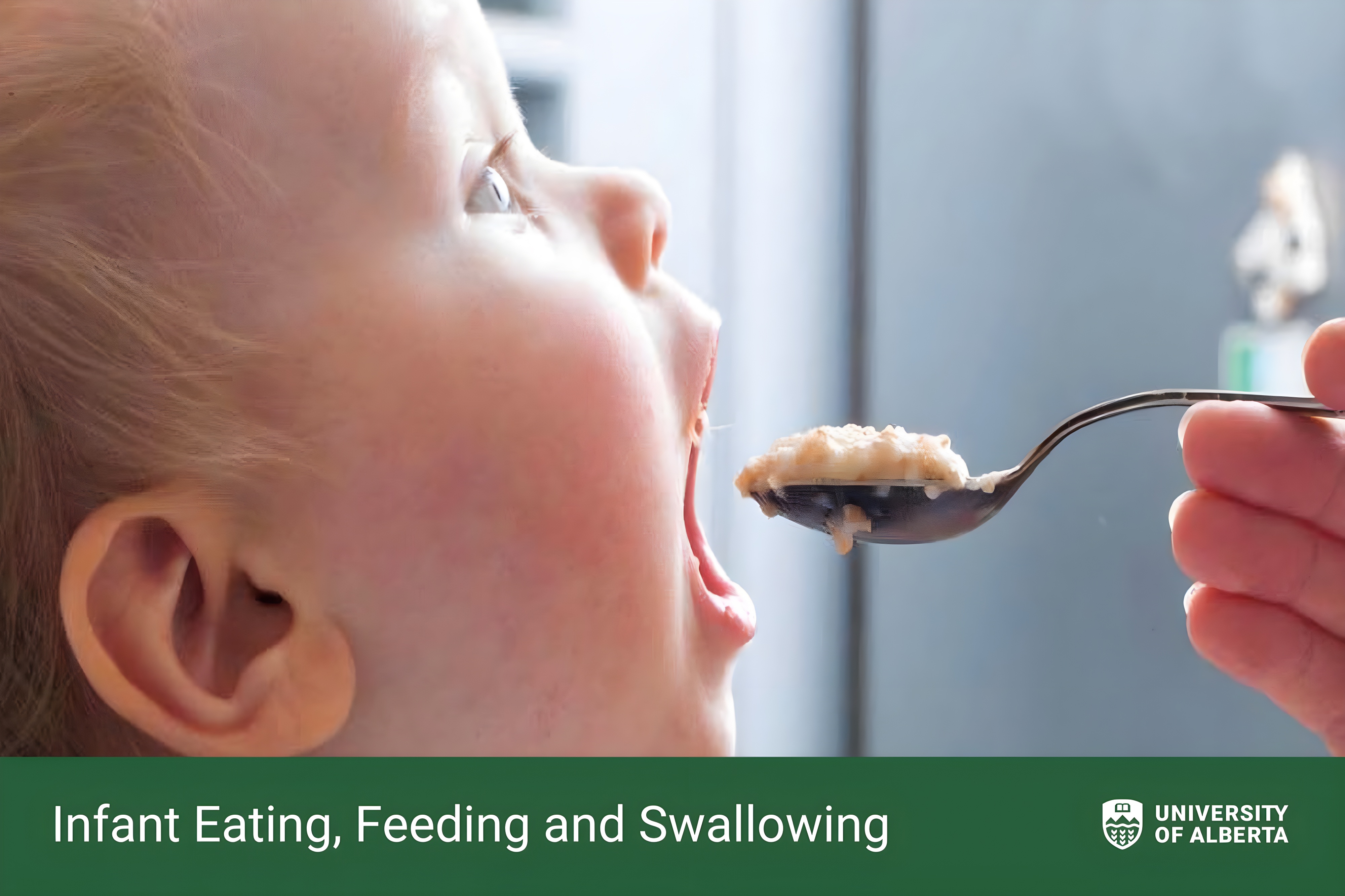
Discover how therapists assess and design therapy plans for feeding and swallowing challenges in infants under 12 months. This course explores how preterm birth and medical conditions affect eating, feeding, swallowing and behavioural organization in young children.
You'll gain an understanding of how oral motor and feeding skills develop in premature infants, newborns and babies up to one year old. Learn about common conditions that impact feeding and swallowing and how to create effective therapy interventions tailored to each infant's needs.
You’ll also put theory into practice by developing an assessment and therapy plan for oral feeding and swallowing skills. These plans will support the growth of feeding and swallowing abilities in a nurturing and responsive way.
Course Registration
Registration now available for the following sections (see details under 'How to Register')
- October 19 - November 27, 2026
- January 11 - Februrary 19, 2027
Join our email list to receive new course and deadline updates! 📧
Course Hours
The course is approximately 12 content hours. Completion times amongst individual participants vary however 35 educational hours appear on the Faculty of Rehabilitation Medicine digital certificate issued after successful course completion. A digital badge issued by UofA CE is also available through MyCreds.

Course facilitator
Julia Giesen, MSc. SLP, R.SLP, S-LP(C) is a speech-language pathologist with 14 years of clinical practice working with pediatric patients in their homes, community programs, rehabilitation, and acute care settings. She previously worked as a clinical educator in the department of Communication Sciences and Disorders at the University of Alberta and is an Assistant Lecturer, teaching the elective course “SLP in the NICU”. She currently works as a feeding and swallowing specialist in the Stollery Children’s Hospital’s Philip C. Etches Neonatal Intensive Care Unit (NICU). She is certified as a NIDCAP professional (the Newborn Individualized Developmental Care and Assessment Program) and as an instructor for Family and Infant Neurodevelopmental Education (FINE). She draws on this learning to coach families and NICU staff in providing developmentally supportive, responsive care for infants.
More Information
Step 1: Complete and submit the faculty CE Unit application form
EXFRM 2711 CE Unit Application Form
Step 2: Proceed to create a UofA CERegister account
Step 3: Register for a course section on CERegister
Cost $285
Visit UofA Continuing Education for information on course withdrawal, refund, and transfer policy.
Course Goals
This course is designed to provide you with a base of knowledge in the roles a feeding therapist plays in the multidisciplinary context of an eating, feeding, and swallowing team. You will develop an understanding of common conditions that affect newborns, their impact on development, feeding, and swallowing, and approaches to assessment and treatment.
Course learning objectives
- Discuss the major milestones in the development of body systems involved in feeding and the impact of preterm birth.
- Identify infant behaviours and what they communicate.
- Explain how to provide responsive interventions for positive feeding experiences.
- Understand the development of oral motor and feeding skills in infants born premature, neonates, and at various stages from birth through 12 months.
- Describe common conditions across body systems and their impact on eating, feeding, and swallowing in the developing infant.
- Discuss the foundational skills for infant feeding.
- Clinically evaluate infant eating, feeding, and swallowing skills.
- Discuss supportive strategies to optimize feeding for infants at risk.
- Discuss strategies supporting families to recognize their infants’ cues, build reciprocal interactions, and establish positive feeding relationships.
- Apply theory learning to practical case study examples.
The course content is delivered 100% asynchronously meaning there is no requirement to be online at a specific class date and time. Participants can complete the learning activities in a place and time of their choosing. Content is accessible twenty four (24) hours-a-day from any location with an internet connection.
There are no grades for this course. Instead, students receive a complete or incomplete score based on satisfactory completion of the course. To successfully complete the course students are required to work through all learning activities and achieve 60% on all the knowledge check quizzes at the end of each module. Students are given unlimited quiz attempts and can challenge these at any time throughout the course.
Upon successful completion of each module participants will be issued a faculty digital certificate noting the number of educational hours.