Neurology Residency Training Program

Welcome to the Adult Neurology Residency Program in the Department of Medicine at the University of Alberta.
FIRST
and only stroke ambulance in Canada
14
subspecialty programs
GRADUATED
responsibilities include on call and on service
Interview/CaRMS Specific Information
The Neurology match at the University of Alberta is processed through CaRMS. Please see the CaRMS website for detailed program information and a description of the requirements for applying to our residency program.
Neurology CaRMs candidates will be scheduled for four 15-minute interviews with a combination of Neurology staff and current residents.
Information sessions will be held prior to interviews to give candidates an opportunity to speak with residents and the Program Director about the program. Individual time with the Program Director or one of our residents can be arranged prior to the start of the file review period. Please contact Brenda DuVal (medneuro@ualberta.ca) to arrange an individual meeting.
Contact Information
7-132 Clinical Sciences Building
11304 - 83 Avenue (enter via Mazankowski building)
Edmonton, AB T6G 2B7
Phone: 780-248-1237
Email: medneuro@ualberta.ca
Dr. Grayson Beecher
Program Director
Dr. Amy Wagner
Associate Program Director
Brenda DuVal
Medical Education Program Coordinator
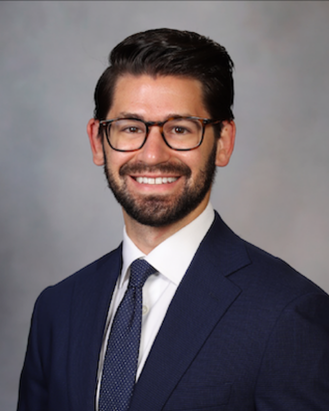
Dr. Grayson Beecher
Program Director

Brenda DuVal
Medical Education Program Coordinator
WELCOME TO OUR PROGRAM
We proudly offer a strong collegial environment, supportive mentorship and the flexibility to allow our residents to thrive in the career path they choose.
In the University of Alberta Adult Neurology Residency program, we are fortunate to have an incredible family of residents, administrative personnel, allied health and faculty. With a ratio of residents to faculty of approximately 1:2, our residents develop life-long connections with our faculty who are actively engaged in resident education.
Our program strongly believes in creating an environment that is conducive to personal and professional growth. For this reason, resident wellness is a priority and the residents themselves play a critical role in the running and progression of the program.
The strengths of our program are many. Our program offers a wide range of subspecialties within Neurology including several that are unique across Canada. Our program affords residents several months of dedicated time to use towards electives (internal and external) and/or research. By virtue of our geographic location, we serve a huge catchment area that spans Northern BC, Northern Alberta, Northern Saskatchewan and all the territories, including Nunavut. This provides unique and diverse pathology to aid in developing excellent clinical acumen. Our residents have ample opportunity to become educators themselves through teaching of off-service residents, medical students and sessions through the Undergraduate Medical Education office.
Our program has cultivated an environment which allows residents to thrive as they transition to practice: some trainees join community practices after their residency, others have completed prestigious fellowships around the world (Mayo, Cleveland Clinic, Duke, Toronto, McGill, etc), and a few have even been awarded Clinical Investigator Program funding to complete Masters and PhD programs throughout the course of their training.
Edmonton as a city is a wonderful place to live. It boasts a lively and diverse culture with year-round festivals, world class entertainment and a thriving culinary scene. Faculty members and residents with young children can attest to the great community, excellent school systems, and wonderful year-round family programming. For outdoor enthusiasts we have the largest connected urban parkland in all of Canada (with amazing running and bike trails) and are a short drive away from the beautiful Alberta Rockies.
We are delighted by the opportunity to meet you!
Our Program
The Adult Neurology Residency Program trains physicians to become independent Neurological Consultants, experts in the prevention, diagnosis, and management of patients with diseases of the nervous system.
Residents completing training in this program will be equipped to work in a variety of environments depending on the career objectives of the resident, including community-based and academic practice.
Program Highlights

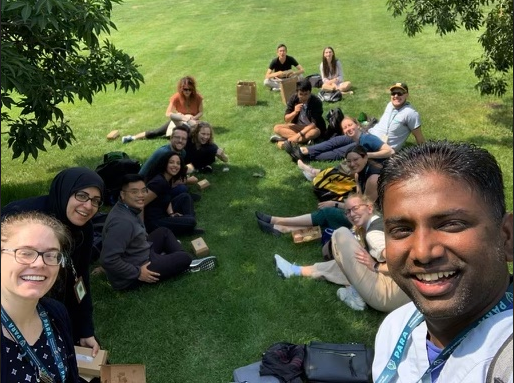
Committed teaching staff and a collegial, supportive resident group

Large catchment area provides a wide variety of clinical exposure and breadth of rotational experiences

Full complement of sub-specialty expertise across the entire spectrum of clinical neurology

Flexible elective opportunities tailored to the career objectives of the individual resident

Ratio of residents to faculty is approximately 1:2

Ample opportunity for research initiatives depending on resident interest and opportunity for pursuing a graduate research project and receiving a MSc during the R3-4 years
Residency at a Glance
Learn about each year of the program with an overview of each year.
In this stage, residents build on foundations skills and their approach to assessing and managing patients with acute and chronic neurological presentations in cases with greater complexity. They perform special neurological examination techniques and procedures and request and interpret reports of advanced investigations. They lead patient care teams and communicate with patients and families in complicated situations. This stage also includes maintaining clinical records and managing adverse events. A longitudinal clinic will start at the beginning of this stage and conclude in the end of Transition to Practice.
The written portion of the Royal College Examination will occur at the end of this stage.
In this stage, the resident will spend time on the adult neurology service as a "junior consultant". In this role, the resident will directly supervise in-patient management on the neurology ward under the guidance of one of the consultant neurologists and take outside phone calls. This stage will help residents become more familiar with running a Neurology practice on their own. Trainees will continue to participate in weekly continuity clinics during this final year. The research projects should be completed.
Rotations needed to complete certification requirements for EEG/EMG exam, can be completed, depending on individual goals.
The OSCE portion of the Royal College Examination will occur at the end of this stage.
It should be noted that some rotations may not be available during the specific PGY year mentioned above, but may be taken a year earlier or later.
Elective options include (but not limited to): Pain management, Neuro ophthalmology, sleep medicine, rural neurology, community clinics, Neuro radiology, research, EMG, Neuro rehab, headache, Neuro psychiatry as well as electives in other provinces or international electives. The first 2 years of residency are largely composed of mandatory internal medicine rotations, and selectives, with more elective opportunities arising through Foundations of Discipline. Elective rotations comprise a significant component of the required neurology rotations listed above. This allows us to tailor the residents' training to their areas of personal interest.
Teaching Hospitals
University of Alberta Hospital
Glenrose Rehabilitation Hospital
Rural electives available in Lethbridge and Red Deer, Alberta
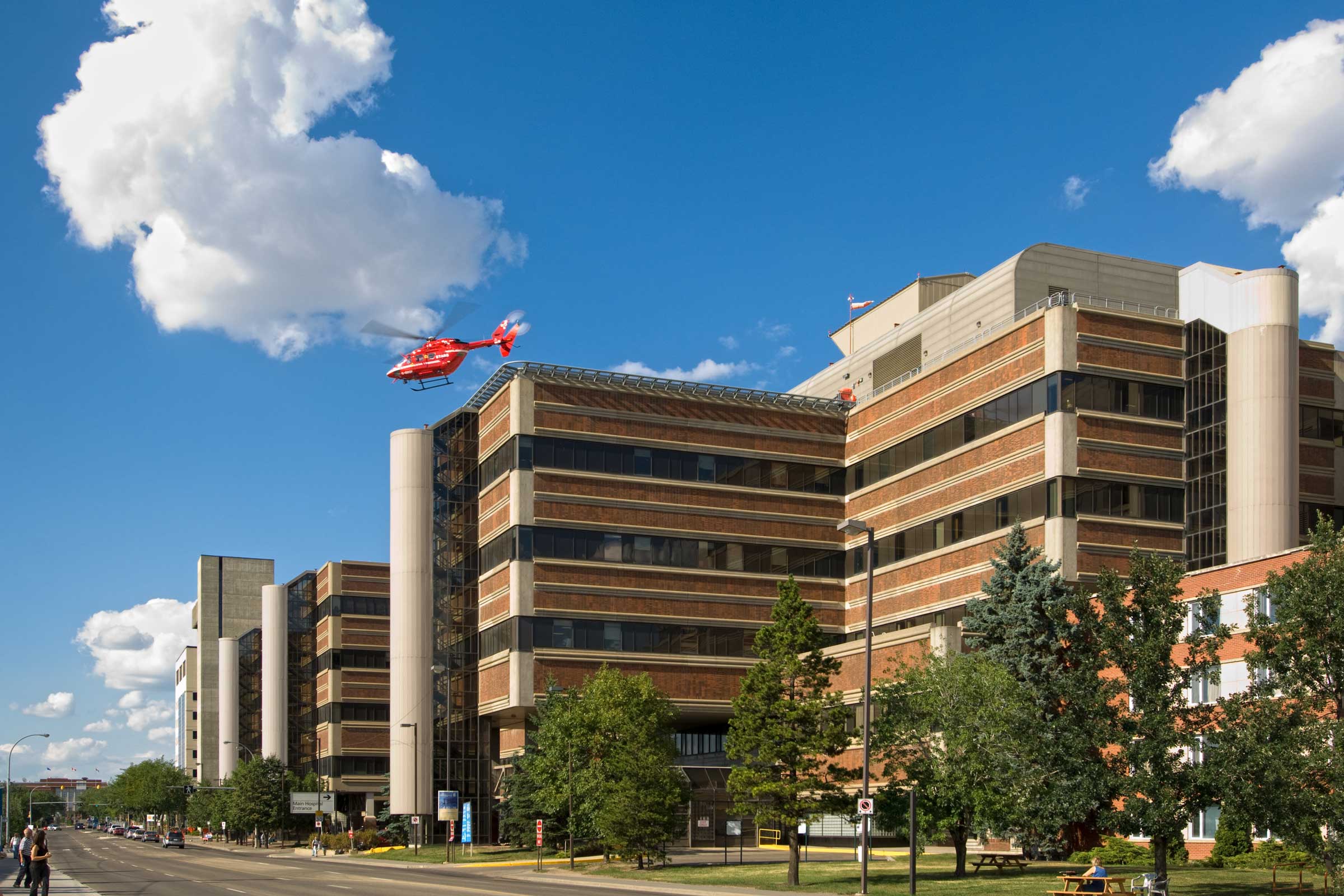
The Brain Centre
Interviews and tour through the Brain Centre at the University of Alberta Hospital.
Subspecialties
- Stroke
- Epilepsy
- Multiple Sclerosis/ Neuroimmunology
- Neuro-infections
- Movement Disorders and Deep-Brain Stimulation
- Neuromuscular/EMG
- Neuro-Ophthalmology
- Neurogenetics
- Concussion
- Headache
- Cognitive Neurology
- General Neurology
- Neuro-Oncology
- Autonomic Neurology
Frequently Asked Questions
Residents are regularly assessed on EPAs through the cbme.med system. Residents regularly receive informal feedback from preceptors at the end of each week of in-patient service. There is an annual resident OSCE for junior residents (TTD and Foundations) and two annual OSCEs for senior residents (Core and TTP) that are conducted in conjunction with the University of Calgary and the University of Saskatchewan. Written examinations are completed through an in house examination prepared by the faculty annually and starting from the Foundations stage residents complete the Residency In-service Training Examination (RITE) administered through the AAN. Residents are evaluated as teachers through SATER assessments. Long case oral examinations are completed annually starting in the Foundations through a STACER exam. Summative 6-month reviews are completed on a one-to-one basis with the program director. These reviews also include discussions regarding future plans and life outside of residency.
Resident Testimonials
We asked our residents what they like about Edmonton, their highlights of the program, and one piece of advice for applicants about the interview process. Here is what a few of them had to say.

Jeyaram Thangeswaran
(PGY5)
Why Neurology?
Neurology is an incredible field because it never stops fascinating you. Every patient brings a different story, a different presentation, and a new opportunity to think deeply about localization, diagnosis, and management. I have always been drawn to the way neurology combines careful clinical reasoning with meaningful patient care.
What I love most is that neurology keeps you humble. Sometimes the localization is elegant and clear; other times, the presentation challenges what you think you know. That uncertainty is part of what makes the field so exciting. There is always more to learn, and the specialty continues to evolve in ways that make it both intellectually stimulating and deeply rewarding.
What do you like about Edmonton?
I was honestly surprised by how much I ended up liking Edmonton. Coming from Sri Lanka, a tropical country, I did not expect to enjoy the winters or the city as much as I do now. But Edmonton has really grown on me.
It is a great city if you enjoy a vibrant life but also want to avoid the constant traffic and overwhelming busyness of a larger city. It has a good balance of work, family life, community, and outdoor space. I also never imagined that I would start watching hockey, but I have recently become a very enthusiastic Oilers fan. Edmonton has truly become home, and I hope to stay here long term.
What are the highlights of the program for you?
One of the greatest strengths of the University of Alberta Neurology program is how supportive and resident-focused it is. The program does a wonderful job of tailoring training to residents’ needs while also giving us the independence and exposure required to grow into confident neurologists.
Because we serve such a large catchment area, residents see a wide variety of neurological conditions, from common presentations to very rare and complex cases. That breadth of exposure is one of the major highlights of training here.
Most importantly, we have excellent leaders, teachers, and mentors who genuinely care about resident development. They shape us, not only clinically, but also professionally and personally. I have really enjoyed my time in this program, and I felt especially well-supported during my first two years of residency, which made a big difference in my transition into neurology training.
What advice would you give applicants about the interview process?
My advice is to be genuine. Interviews are not only about showing your achievements, they are also about helping the program understand who you are, how you think, and what kind of colleague you will be.
Take time to reflect on why neurology matters to you, what kind of training environment helps you thrive, and what you are looking for in a residency program. I have always valued a friendly and supportive work environment, where colleagues feel encouraged rather than scrutinized. I also try to create that same supportive environment for junior colleagues. Ask thoughtful questions, be honest about your goals, and try to enjoy the process. The interview is not just the program choosing you, it is also your opportunity to see whether the program feels like the right fit for you.

Gurpreet Chaggar
(PGY3 in 2023-24)
Why Neurology?
I am drawn to neurology for its focus on anatomy, variety of clinical presentations and disease processes, and the rapid advancements within the field. The approach to any neurologic problem is initially being able to localize it. Having a strong understanding of neuroanatomy and being able to use that knowledge clinically is very rewarding. Neurology has a wide range of subspecialties within it, which gives the opportunity to manage both high acuity clinical presentations and/or chronic conditions with varying degrees of complexity. Finally, neurology is a rapidly advancing field with new, significant research being published regularly and new treatment options continuously being discovered.
What do I like about Edmonton?
Edmonton is a great, multicultural city that has much to offer. The food scene here is excellent, very diverse, and growing. Regardless of where you live or where you visit, it is easy to find a new favorite place to eat. Edmonton's coffee/cafe scene is likewise growing, and the city is home to some great cafes. We are in close proximity to the Rocky Mountains if you enjoy hiking or being outdoors, and the river valley in Edmonton itself has beautiful scenery year-round. Edmonton experiences all seasons fully; so although it can be cold and snowy, this provides the opportunity to participate in winter sports such as skating, skiing, hockey, etc.
Program Highlights
The program here in Edmonton is great. We run a full neurology service and have a large catchment area, which provides trainees lots of patient interaction and a variety of clinical presentations. We also have many subspecialties within neurology that trainees can explore and incorporate into their training at the University of Alberta. The neurology resident group is large and very supportive. The academic and career mentorship provided by our neurology staff is amazing. Within the neurology program, there is a plethora of opportunities to get involved in research and participate in teaching learners of all stages. Overall, the neurology program at the University of Alberta is a great place to train and caters to all career paths.
Mary Turbinska
(PGY2)
Why Neurology?
I think that neurology is the most precise and least ambiguous field in medicine. If you enjoy getting to the root of a problem, exploring the underlying pathophysiology, and are not satisfied with simply treating symptoms, this is the right field for you. There is something deeply satisfying about combining your clinical knowledge with an understanding of pathophysiology to localize a lesion, and then confirm it through imaging or other investigations. What keeps me going is that there is always something new to learn, a new question to explore, and an opportunity to make a difference through research and patient care.
What do you like about Edmonton?
Edmonton is a great city with plenty of green spaces and parks. Having moved from Calgary, one of the first things I noticed was how green Edmonton feels, thanks to large, established trees...ha-ha. It was built around a strong sense of community, and it has one of the best food scenes in Canada. I love that you can visit Elk Island Park for a quick escape into nature or drive to Jasper for a day of hiking. Overall, the city has its own unique vibe, shaped by its communities, festivals, and great food.
What are the highlights of the program for you?
Our program is one of the strongest academically in Canada. Because of the high patient volumes and coverage of rural and remote sites, you get to see rare and interesting presentations you won't see anywhere else. Also, the program is very receptive to feedback and to new ideas from residents, so the residents feel heard and validated. There is always a chance to adjust the curriculum to your needs and interests, which is really amazing.
What is one piece of advice that you want to share with applicants about the interview process?
My advice would be to prioritize self-care before your interview, as the application process can be physically and emotionally draining. Spend some time thinking about memorable cases or experiences that reflect your values and beliefs. Also, remember that the program is not only interviewing you, but you are interviewing us as well! So, prepare a few thoughtful questions that you are genuinely curious about, as this can help you determine whether the program is the right fit for you.
Samantha Dolter
(PGY5)
Why Neurology?
Since undergrad, I have always been fascinated by how the brain and nervous system work, and the field of neuroscience is even still figuring this out! Neurology is a field that is still developing and making huge discoveries, and we have so much more to learn. That's why I find it exciting, and I can't image doing anything else.
What do you like about Edmonton?
I am not from Edmonton, and after spending medical school in Calgary, I was nervous about what to expect. I needn't have worried; I immediately felt at home. The summers are incredible...from music festivals, art shows on the sidewalk of Whyte Ave, to the year-round farmer's markets, there is always something to do. The river valley is accessible from the university and has gorgeous running and biking trails. Yes, the winters can be cold, but the locals will give you great tips on gearing up and staying warm, and you can even enjoy the winter festivals like the ice sculpture competition on Whyte Ave.
Highlights of the Program
It is a common answer, but it is absolutely true: the highlights of the program are my co-residents and the staff physicians. In neurology, but also on our off-service rotations like internal medicine and cardiology, the residents and attendings are always very supportive. The University of Alberta is also home to world-class clinicians, researchers, and teachers. I feel very fortunate to learn from and work alongside them.
Advice for CaRMS and interviews:
CaRMS is a stressful and daunting process; there is no denying that. But our program (as with most programs) truly wants to get to know you! Be prepared, be confident, and be yourself. At the end of the day, trust that the process works and that you'll end up in a program that is right for you.
Michael Potemkin
(PGY2)
Why Neurology?
I love the strong focus on clinical history and interacting with patients face to face. I love how my diagnosis and differential changes often times on exam alone!
What do you like about Edmonton?
The techno music scene in the city is absolutely blowing up. With local heavy hitters, like Alokin and Lost Endings, and constant international touring artists, there is so much to do on your days off.
What are the highlights of the program for you?
I love the program’s responsiveness to feedback and ability to implement change. I always feel like I can bring up issues and difficulties I have been having and the program always responds and takes concerns seriously. There is also a strong culture of the same in seniors, and I always feel that my colleagues are open to implementing new policies and SOPs if they improve workflow, patient care or resident wellbeing!
What is one piece of advice that you want to share with applicants about the interview process?
However cheesy that sounds, but I would try to be yourself. It's always better to talk like a unique person with their own passions, hobbies and opinions than a cookie-cutter applicant that doesn’t stand out or says what they think all programs want to hear!